
00Contents and Introduction
Thucydides Trap: 2026
January 2026 | Data as of the end of 2025
Why Write This Report
At the end of 2024, Admiral Paparo, Commander of the U.S. Indo-Pacific Command, mentioned in a closed-door meeting: "If war breaks out tomorrow, we can win, but it will be extremely difficult." Almost simultaneously, a retired Chinese general stated in an interview: "We are not afraid to fight, but we do not want to fight."
These two statements reveal a commonality: both sides have the capability to make the other pay an unbearable price, but neither has an absolute certainty of victory.
Many military analyses often degenerate into lists of equipment or fall into simplistic arguments of "who is stronger." This report attempts to answer a different question: if neither side can win such a war, who is better able to endure it?
The answer lies not in weapon parameters, but in three key dimensions: geography (who is fighting on their home turf), industrial capacity (who can replenish consumption faster), and political will (whose society can better withstand the costs of war). This report will be organized around these three dimensions.
This report is not a prediction of war. Just as in 1914, no European leader wanted a world war to break out, yet war happened nonetheless because all parties misjudged the determination and capabilities of their opponents. Sober awareness is more important than blind optimism or fear.
Unique Value of This Report
In the Chinese-speaking world, in-depth analysis of the US-China military comparison is relatively scarce. Official media mostly serves propaganda purposes, academic research often remains at the theoretical level, and while reports from Western think tanks are professional, they primarily originate from a US perspective. This report attempts to fill this gap: starting from the concerns of Chinese-speaking readers while absorbing the essence of both Chinese and Western research, striving to present the strategic logic of both sides. The reliability of data is clearly marked; the report does not pretend to have definitive answers, nor does it use uncertainty as an excuse to avoid judgment.
Key Judgments
The following are the core findings of this report. These judgments are argued in detail in the main text; please refer to the respective chapters for specific data and reasoning processes.
Regarding Military Spending and Resources
The gap in nominal military spending can be misleading. If Purchasing Power Parity (PPP) and the concentration of resources are considered, the actual gap in investment in key theaters is much smaller than what nominal figures suggest. Almost all of China's military spending is used to prepare for a war on its doorstep, while the United States must maintain a global presence simultaneously.
Regarding Maritime Power
In terms of the number of vessels, the Chinese Navy is already the largest in the world, but the United States still maintains significant advantages in total tonnage, nuclear-powered aircraft carriers, and nuclear-powered attack submarines. The real point of concern is the trend: China's shipbuilding speed far exceeds that of the United States, and the gap is narrowing. The key question is not "whose navy is stronger," but "in which waters and for what missions": the US holds the advantage globally, while in the coastal waters of the Western Pacific, China may have already formed a local advantage.
Regarding Air Power
For the first time since the jet age began, China has led the United States at a key technological milestone in aviation. Although a first flight does not equal service entry, and technological leadership does not equal systems leadership—the US still possesses deep accumulation in engines, pilot training, and combat experience—a 70-year-old assumption has been broken: the United States is no longer always the leader in the field of aviation technology.
Regarding Missile Power
Missile power is perhaps China's most obvious area of asymmetric advantage. China possesses the world's largest arsenal of medium-range ballistic and cruise missiles, and its anti-ship ballistic missiles force US aircraft carriers to stay far from the Chinese coast. Furthermore, in the field of hypersonic weapons, China's deployment progress also leads that of the United States.
Regarding Military-Industrial Capacity
China has an overwhelming advantage in shipbuilding capacity, reflecting immense potential for wartime mobilization. A more realistic concern lies in ammunition production capacity. The war in Ukraine has exposed severe deficiencies in US ammunition stockpiles and production capacity, and the consumption of ammunition in a high-intensity conflict over the Taiwan Strait could far exceed that of Ukraine.
Regarding the Taiwan Strait Scenario
Most think tank wargames reach a similar conclusion: in the event of US and Japanese intervention, a large-scale amphibious landing is extremely difficult. However, "unable to win" does not mean "will not happen," and it certainly does not mean "costs are controllable." The significance of wargaming lies not in predicting results, but in revealing risks. There are no winners in a Taiwan Strait conflict, only differences in the magnitude of losses. Over time, the window of US maritime advantage in the Western Pacific is closing.
Table of Contents
Part I: Introduction and Foundations
- Chapter 01 Introduction: A New Era of Great Power Competition
- Chapter 02 Military Spending and Economic Foundations
Part II: Traditional Combat Domains
- Chapter 03 Air Power
- Chapter 04 Maritime Power
- Chapter 05 Land Power
- Chapter 06 Missile and Nuclear Forces
Part III: Emerging Combat Domains
- Chapter 07 Space Warfare
- Chapter 08 Cyber Warfare and Electronic Warfare
- Chapter 09 Unmanned Aerial Vehicles and Swarm Combat
Part IV: War Support Systems
- Chapter 10 Military-Industrial Supply Chains
- Chapter 11 Logistics and War Sustainability
- Chapter 12 Personnel, Recruitment, and Military Systems
- Chapter 13 Intelligence, Surveillance, and Reconnaissance (ISR) and Early Warning
Part V: Strategic Environment
- Chapter 14 Alliance Systems and Geopolitical Landscape
- Chapter 15 History and Strategic Culture
Part VI: Wargaming and Conclusions
- Chapter 16 Taiwan Strait Wargaming: Conflict Scenario Analysis
- Chapter 17 Conclusion and Future Outlook
Appendix
How to Read This Report
For readers with limited time, it is recommended to prioritize Chapter 01 (Introduction), Chapter 16 (Taiwan Strait Wargaming), and Chapter 17 (Conclusion). If interested in specific fields, the chapters are relatively independent: for the Navy, see Chapter 04; for new technologies, see Chapters 07-09; for geopolitics, see Chapters 14-15.
About the Data
The report's data is primarily sourced from public materials such as SIPRI, IISS "The Military Balance," CSIS, the RAND Corporation, the US Department of Defense "China Military Power Report," the Congressional Research Service, "Jane's Defence Weekly," as well as China's Defense White Papers and research from Chinese academic institutions like Tsinghua and Fudan. Since the Chinese Ministry of National Defense rarely publishes detailed military data, the sections involving China rely mainly on estimates from Western think tanks, which may contain biases. Specific explanations can be found in the Appendix.
Disclaimer
This report is based on the collation and analysis of public information and does not represent the official position of any government or institution. Given that military intelligence is highly uncertain and many data points are estimates, this report is for research reference only and should not be used as the sole basis for any decision-making.
The purpose of analyzing the comparison of military strength is not to advocate for war or promote nationalism, but to more clearly recognize the costs and risks of war. The best outcome is that war never happens.
Report Version: v1.0
Release Date: January 2026
Data Cutoff: End of December 2025
01Introduction: The New Era of Great Power Competition
导论:大国博弈的新时代
2025年12月26日,成都冬日的阴云下,三架外形独特的飞行器从成都飞机工业集团的跑道升空。三台发动机、无垂直尾翼、扁平宽大的机身,既不像传统战斗机,也不像轰炸机,更像一架具备隐身能力的中型轰炸机。全球航空爱好者的社交媒体瞬间热议,24小时内,美国情报机构确认中国的"第六代战斗机"(内部代号J-36)完成了首飞。更令人震惊的是,三架原型机同时升空,这在航空史上尚属首次。
消息传到五角大楼时,一位高级官员私下对记者说:"这是自冷战以来的第一次。我们需要重新评估一切。"要体会这句话的分量,必须回顾美国技术领先的历史。
技术代差的历史
1991年1月17日凌晨2时30分,巴格达。伊拉克防空指挥官穆罕默德·比拉尔上校在值班室里打瞌睡,突然全城灯光熄灭。几秒后,第一枚飞行了800公里的战斧巡航导弹穿窗而入,精确命中防空指挥中心的通信枢纽,比拉尔成为海湾战争最早的伤亡者之一。
与此同时,数十架F-117隐身战斗机在巴格达上空执行任务,伊拉克雷达屏幕上一片空白,这些造价数千万美元的先进战机在雷达上的反射截面积仅有一只鸟那么大。指挥官们还没反应过来,导弹已穿透掩体的钢筋混凝土。
接下来的43天空袭中,以美国为首的多国部队执行了超过10万架次空中任务,精确制导武器命中率超过90%,“一枚炸弹一个目标”成为现实。伊拉克拥有中东最强陆军(超100万人、5000辆坦克、约700架战斗机),其指挥系统在战争第一天就被瘫痪。地面战打响时,许多伊军士兵甚至还不知道战争已持续六周,仅100小时后科威特即被解放,伊军全面溃败。
海湾战争给全球军事规划者的警示极为明确:技术代差面前,数量优势几乎失去意义。
中国对此体会尤深。1991年时,解放军还在用1960年代技术水平的装备,一场发生在中东沙漠的战争让北京的将军们深感震惊,意识到如果类似冲突发生在台湾海峡,后果可能更为严重。此后三十年,中国军事现代化以极快速度推进,起点正是这场全球震动的“技术碾压”。
海湾战争后,美国在军事技术上长期保持“代差领先”。对手还在研发三代机时,美国已装备四代机;对手刚接近四代机门槛,美国五代机已批量服役。F-22猛禽2005年服役时,俄罗斯的五代机还停留在图纸阶段,中国甚至还没开始同类研发。2011年歼-20突然在成都首飞,美国情报界大为吃惊,原本预计中国至少要到2020年才能研制出五代机。
J-36的出现将上述趋势推向新高。
几乎同一时间,美国下一代战斗机项目NGAD刚刚完成招标,新飞机命名为F-47。但这架飞机目前还停留在设计阶段,首飞最乐观也要等到2028年。换句话说,在航空技术这个美国引以为傲的领域,中国首次走在了前面,哪怕只是首飞这个节点。
当然,情况远非一边倒。首飞不等于服役,服役也不等于形成战斗力。F-22从首飞到服役用了8年,从服役到真正具备多线作战能力又用了3年,J-36能否打破这一规律、中国的发动机技术是否真正成熟、系统集成和软件能力能否跟上,这些问题目前还没有定论。另一位国防部官员则表示:“五年后再看情况。”
分歧本身值得关注,反映出美国战略界对中国军事现代化速度的深刻不确定。这种不确定促使分析界认真思考,中美军事竞争的实质是什么,以及未来可能的走向。
修昔底德的幽灵
公元前431年,伯罗奔尼撒战争爆发,古希腊最强的两个城邦雅典与斯巴达爆发了一场持续27年的惨烈冲突,最终导致雅典帝国的覆灭和整个希腊文明的衰落。
古希腊历史学家修昔底德亲历了此次战争,在《伯罗奔尼撒战争史》中写下了流传千古的话:
"使战争不可避免的真正原因是雅典势力的增长以及因此而引起的斯巴达的恐惧。"
修昔底德的洞见在于,战争的导火索可能是科西拉岛的内乱,可能是波提狄亚的叛变,可能是雅典对墨伽拉的禁运,但这些都只是表面。真正的原因在于权力转移:一个崛起大国与既有霸主之间的力量变化必然引发紧张,而紧张终将以某种方式释放。
两千五百年后,哈佛大学肯尼迪政府学院教授格雷厄姆·艾利森将此规律命名为“修昔底德陷阱”。艾利森的团队梳理了过去500年间16次类似案例(崛起大国挑战既有霸主),其中12次以战争收场,战争概率高达75%。
几个关键案例值得关注。16世纪末,西班牙是欧洲霸主,崛起的英国1588年击败“无敌舰队”,开启三百年海上霸权。19世纪末,统一后的德意志帝国工业产值在1900年超过英国,海军扩张让伦敦感到威胁。1914年萨拉热窝的枪声引发连锁反应,约1700万人死亡,四个帝国崩溃。20世纪中叶,美苏在柏林、朝鲜、古巴、越南反复对峙,核战争阴云笼罩四十年,但冷战最终没有演变为热战,核武器的威慑起了关键作用。
艾利森的理论影响广泛,但也受到不少批评。历史学家指出修昔底德本人并不认为战争不可避免,案例选择可能有偏差。更深层的批评认为,核武器让大国战争代价极高,中美经济相互依存远超1914年的英德,国际制度也为冲突提供了替代解决渠道。不过,即使修昔底德陷阱不是宿命,这一理论描述的压力是真实的,关键在于如何管理压力,而不是否认其存在。
清华大学阎学通教授在《世界权力的转移》中提出,中国崛起的独特之处在于“有限目标”,即不是取代美国的全球霸主地位,而是确保周边安全和影响力。如果这个判断成立,中美竞争的烈度可能低于历史先例。只是美国是否相信中国目标有限,历史表明守成国往往倾向于假设最坏情况。
米尔斯海默的预言
约翰·米尔斯海默是芝加哥大学政治学教授,也是进攻性现实主义理论的代表人物。2001年,米尔斯海默在《大国政治的悲剧》中做出了一个当时看来颇为激进的预言。
彼时中国GDP还不到美国的八分之一,军费只有美国的二十分之一,全球化正盛,中美关系被描述为“战略伙伴”或至少“建设性接触”。米尔斯海默却冷静地断言:中国的崛起不可能是和平的。他的逻辑是,国际体系处于无政府状态,没有高于主权国家的世界政府,没有国际警察,国家间承诺无法强制执行。在这种环境下,任何国家都无法确定别国真实意图,今天的朋友可能明天变成敌人,和平承诺也可能随权力变化而作废。
为了生存,国家只能依靠自己,最可靠的方式就是成为最强大的国家:不是第二,不是“足够强”,而是最强。理性的大国必然追求权力最大化,最终目标是成为本地区霸主,同时阻止其他地区出现霸主。
美国历史正好验证了上述逻辑。从1803年路易斯安那购买开始,美国在19世纪不断扩张,先后击败或驱逐西班牙、英国、墨西哥在北美的势力。1823年门罗主义明确宣布美洲是美国的后院,欧洲列强不得插手。1898年美西战争将西班牙彻底赶出西半球。1962年古巴导弹危机证明,美国无法容忍任何大国在家门口部署威胁性力量,即使代价是核战争边缘。
米尔斯海默认为中国正在走一条类似道路,动力不是领导人的野心,而是国际政治的深层逻辑,即任何处于中国位置的大国都会做出同样的选择。一个崛起的中国必然试图将美国军事力量排除在西太平洋,就像19世纪的美国将欧洲列强赶出西半球一样。
美国也必然会尽力阻止这一进程。不是因为美国领导人仇视中国,而是因为一个在亚洲占据主导地位的中国将有能力在全球范围挑战美国利益。美国曾两次参加世界大战以阻止德国统治欧洲,曾打了三年朝鲜战争和十年越南战争试图遏制共产主义扩张,因此美国不会坐视中国成为亚洲霸主。
这套理论同样受到不少批评。自由主义学派认为经济相互依存和国际制度可以改变大国行为,今天中美之间的贸易、投资、供应链交织程度远超1914年的英德。建构主义学派则指出中国的战略文化与西方殖民帝国不同,历史上的中国更多通过朝贡体系和文化吸引力维系影响力,而非海外征服。
米尔斯海默回应说,意图可以改变,实力带来的诱惑却始终存在。即使今天的中国领导人真心追求和平发展,新的领导人、国内压力、国际环境变化都可能改变战略选择。在无法确定未来的情况下,理性的国家只能为最坏情况做准备。经济相互依存确实提高了战争成本,但1914年的教训是,当领导人相信战争会很短、代价可控时,经济考量会被抛在脑后。
争论仍在继续,无论是否接受米尔斯海默的全部理论,有一点难以否认:中美之间的战略竞争正在加剧,而这种竞争有着深刻的结构性根源。
地理:被低估的决定性因素
理解中美军事竞争,地理因素不可忽视。
一个假设情境有助于说明:假如明天美国海军全部11艘航母战斗群在大西洋中部集结,中国海军倾巢出动与之决战。在这种情况下,美国海军凭借更强大的航母舰载机联队、更成熟的舰队协同作战经验和完善的全球后勤保障网络几乎肯定获胜,但这种场景永远不会出现。
现实中如果发生军事冲突,战场几乎一定在台湾海峡、南海或东海等西太平洋区域,在这片海域情况就完全不同了。
从福建沿海到台湾海峡中线仅65公里,歼-20战斗机5分钟即可抵达。从上海到台湾北端650公里,已在巡航导弹和反舰导弹射程范围内。中国东部沿海部署了数千枚弹道导弹和巡航导弹,射程覆盖第一岛链每个角落。
相比之下,美国最近的大型空军基地在630公里外的冲绳嘉手纳,主要后方基地在2700公里外的关岛,太平洋舰队总部在8000公里外的夏威夷,而美国本土(真正的战略后方)远在10000公里之外。距离差异带来的后果是,中国空军可以依托大陆本土的数十个机场作战。即使部分机场受损,飞机可以分散到其他机场。战斗机从沿海机场起飞,可以在台海上空停留数小时执行任务后返航、加油、重新出击。飞行员被击落后跳伞,可能落在己方控制区获救。
美国必须跨越半个太平洋投送力量。航母虽然是“移动机场”,但每艘航母只能搭载约75架舰载机,远少于中国大陆机场可起降的飞机数量。舰载机作战半径有限,F/A-18E/F超级大黄蜂作战半径约740公里,这表明航母必须接近台湾以东数百公里的海域才能有效支援作战,而这片海域正好在中国东风-21D和东风-26反舰弹道导弹的射程范围内。
航母靠近会被导弹锁定,航母远离则舰载机无法覆盖战场,陷入两难。
1982年马岛战争是距离影响战争结果的典型案例。英国最终赢得了战争,但过程远比伦敦预期艰难。皇家海军损失2艘驱逐舰、2艘护卫舰、1艘登陆舰和1艘集装箱船,多艘舰艇受损,255人阵亡。而阿根廷距离福克兰群岛仅约500公里,英国却远在约13000公里之外。
事后分析发现一个令人后怕的细节:阿根廷空军投下的炸弹中,约有30%因引信设置问题没有爆炸。如果这些炸弹正常引爆,英国可能还会损失更多舰艇。一位英国海军军官后来回忆:“我们离失败只差几枚引信。”中国相对台湾的地理优势远大于阿根廷相对福克兰群岛的优势,美国跨越太平洋作战的难度也远大于英国跨越大西洋。
反介入:中国的战略逻辑
理解地理因素后,中国的核心军事战略就不难理解,美国分析师称之为“反介入/区域拒止”(A2/AD)。其核心逻辑很直接:如果无法在正面对决中击败美国海军,那就让美国海军无法安全接近战场。
“反介入”针对更远距离。通过弹道导弹打击冲绳、关岛甚至日本本土的美军设施等敌方基地,通过远程反舰导弹攻击敌方舰队,通过潜艇和水雷封锁关键海峡,目标是阻止敌方军事力量进入西太平洋战区。
“区域拒止”则针对更近距离。即使敌方突破外围防线进入战区,也要通过潜艇伏击、近程反舰导弹、密集防空火力和电子战干扰限制其行动自由,使其无法有效支援盟友,而该战略的物质基础正是中国独特的导弹力量。
东风-21D是全球首款专门用于打击移动舰艇的中程弹道导弹,射程约1500公里,从内陆发射可覆盖整个第一岛链海域。导弹末端速度超过10马赫,从太空高速俯冲而下,美国海军宙斯盾防空系统在设计时主要针对低空掠海飞行的反舰巡航导弹,对付这种攻击角度的威胁难度更大。
东风-26射程更远,达到约4000公里,足以覆盖美国在西太平洋最重要的战略基地关岛,被称为“关岛杀手”,可携带常规弹头或核弹头,既能打击固定目标也能打击航母。
2024年起,东风-27开始部署。这是一种高超音速滑翔武器,从弹道导弹上发射后在大气层边缘以超过10马赫的速度滑翔,其不规则机动轨迹使拦截极为困难。射程据信达到5000至8000公里,可以覆盖第二岛链甚至更远。
这些武器从未在实战中打击过移动航母,实际效果存在很大争议。乐观者认为在茫茫大海中持续跟踪航母战斗群极其困难,末端制导在高超音速重返大气层后能否保持精度也未可知。但悲观者反驳,即使命中概率只有10%,航母指挥官也不敢拿一艘130亿美元的军舰和5000条生命去冒险。
A2/AD战略的精髓就在于:不必真的击沉航母,只要让航母指挥官觉得靠近是不明智的。
抵消战略:美国的应对
面对中国A2/AD挑战,美国并非无计可施,实际上美国有应对类似挑战的历史经验,即“抵消战略”。
第一次抵消发生在1950年代。当时苏联常规力量在欧洲占据压倒性数量优势,华约坦克数量是北约的三倍。艾森豪威尔政府的应对是依赖核武器威慑,“新面貌”政策明确表示美国可能对任何苏联入侵动用核武器。这种“以核抵常”的策略确实阻止了苏联进攻西欧,但随着苏联也发展出可靠的洲际核力量,核威慑的可信度开始下降。毕竟为了保卫汉堡而毁灭芝加哥,美国总统真的会这样做吗?
第二次抵消发生在1970年代末到1980年代。国防部长哈罗德·布朗和副国务卿威廉·佩里(后来也成为国防部长)推动了一场军事技术革命:精确制导武器、隐身技术、卫星侦察、数据链网络。其逻辑是既然数量上无法与苏联匹敌,就用质量来抵消。F-117隐身战斗机、B-2隐身轰炸机、战斧巡航导弹、联合直接攻击弹药等武器系统让美国能够用少量精确打击取代大规模火力覆盖。海湾战争验证了这套战略,美国领导的联军以约300人的阵亡代价,击溃了拥有超百万人的伊拉克军队。
第三次抵消在2014年由时任国防部长哈格尔正式提出,核心是人工智能、无人系统和人机协同,这是对中国A2/AD能力崛起的回应。部分成果已经显现:远程反舰导弹LRASM射程超过900公里,使水面舰艇可以在更远距离外发动攻击;B-21“突袭者”隐身轰炸机设计用于穿透先进防空系统;CCA协同作战无人机将与有人战斗机编队作战,降低飞行员风险。
目前五角大楼正在酝酿所谓“第四次抵消”,核心概念是“决策优势”:在OODA循环(观察、判断、决策、行动)中比对手更快、更准确地完成每一步。技术基础是AI大模型、边缘计算、自主系统,关键项目是JADC2(联合全域指挥与控制),目标是将分散在陆海空天网各域的传感器和射手连成一个无缝的智能网络,实现“任一传感器、任一射手”的理想状态。至于抵消战略能否再次奏效,乐观者指出美国在基础研究和前沿技术方面仍然领先。
OpenAI、谷歌DeepMind、英伟达等定义AI时代的公司都在美国。硅谷的创新生态系统、顶尖大学的人才储备、风险资本的充沛,都是中国难以复制的优势。
悲观者则认为,中国在应用层面的进展速度更快,而美国的国防采办体制臃肿低效(详见第10章)。人才流向也是一个问题,硅谷最聪明的头脑宁愿去创业公司做社交APP,也不愿意去国防部做武器系统。
更深层的问题是,抵消战略的实质是用技术创新维持领先,而中国也在进行同样的创新。历史上前两次抵消之所以成功,一个重要原因是对手苏联最终经济崩溃了,而中国的经济规模和韧性让类似情景难以重现。
安全困境的螺旋
国际关系学者用“安全困境”描述大国竞争的一个悖论:一方为增强自身安全采取的措施,往往让另一方感到不安全,从而引发军备竞赛的螺旋上升。双方都认为自己在防御,结果却是紧张升级,这一理论正在变成现实。
中国发展东风-21D的官方说法是防止外部势力干预中国内政,属于防御性措施。但在五角大楼看来,这是对航母的威胁。于是美国加强反导系统,如SM-3、萨德(THAAD)以及导弹防御局的各种项目。中国看到美国加强反导能力,担心自身核威慑被削弱,因为如果美国能够拦截中国的洲际导弹,中国的“相互确保毁灭”就不再可信。于是中国扩充核武库,从约300枚核弹头向1000枚以上迈进。美国看到中国扩充核武库,更加确信中国是潜在威胁,于是进一步强化在西太平洋的军事存在。双方都认为自己在防御,同时也都觉得对方在进攻。
1898年到1914年的英德海军竞赛是安全困境导致灾难的典型案例。德国通过《舰队法》建造战列舰,理由是保护海外贸易和殖民地利益。英国作为岛国,安全完全依赖海上通道控制,将德国造舰视为生存威胁,加速造舰回应。1906年“无畏号”下水使所有现有战列舰过时,竞赛进入新阶段。1912年霍尔丹勋爵赴柏林谈判军备限制宣告失败,两年后一战爆发。讽刺的是,那些战列舰在战争中几乎没有派上用场,而十六年的竞赛制造的敌意氛围让战争更容易爆发。
安全困境并非无法克服,核武器让战争代价极高,经济相互依存增加冲突成本,危机沟通机制可以降低误判风险,只是意识形态竞争、国内政治压力与联盟承诺的牵连都可能让安全困境加剧。
核阴影下的竞争
讨论中美军事对比时不能忽视一个深层背景,即两国都是核武器国家,而核武器改变了一切。自1945年以来,没有两个核武器国家之间爆发过大规模战争。柏林封锁、台海危机、古巴导弹危机、中苏边境冲突、印巴卡吉尔冲突,每一次,当事方都在核门槛前止步。
1962年10月的古巴导弹危机是人类最接近核战争的时刻。解密档案显示了多个险些失控的瞬间:一架U-2侦察机误入苏联领空引发双方战斗机对峙;另一架U-2被古巴导弹击落,白宫差点下令报复轰炸;一艘携带核鱼雷的苏联潜艇被美国驱逐舰逼迫浮出水面,三名指挥官中两人主张发射,只有瓦西里·阿尔希波夫一人投了反对票。
危机最终以苏联撤出导弹、美国秘密承诺不入侵古巴并从土耳其撤出中程导弹而结束。此后美苏建立了直通热线,危机沟通机制开始成形。
核武器的存在带来了“稳定-不稳定悖论”。在战略层面,核威慑让全面战争极不可能,但正因如此,大国竞争转移到核门槛以下的灰色地带行动、代理人战争与常规军事对峙。核稳定反而可能鼓励常规层面的冒险。
更令人担忧的是升级控制问题。假设台海冲突场景:中国导弹打击和海上封锁→美国舰队介入→中国反舰导弹击沉美国驱逐舰→美国巡航导弹打击中国大陆导弹基地→中国威胁使用战术核武器……这条升级阶梯上每一步似乎都是“理性的”回应,但最终可能走向不可控。
古巴导弹危机的教训至今仍有意义:危机中充满不确定,意外可能导致失控升级,需要给对方留下体面的退路,直接沟通渠道至关重要。今天的中美之间,危机沟通机制是否足够有效?在民族主义情绪高涨、社交媒体放大每一次摩擦的时代,领导人是否还有足够空间做出妥协?
本报告的目的
理解了上述背景,可以更清楚地界定本报告的目的。本报告不预测战争,任何声称能够预测战争时间表的分析都是在兜售确定性的幻觉。报告也不试图判断谁会赢,答案取决于地点、方式、目标、规模、盟友参与等无数变量。它更不是一份数字清单,质量差异、体系整合、后勤保障、盟友支持等“软”因素往往比“硬”数字更重要。
这是一份理解中美军事竞争的尝试:在不同地理环境、作战场景和时间维度下,两国军事力量将如何相互作用。报告会尽量呈现不同立场的观点,明确标注不确定性,让读者自行判断。
最终这是一份为了避免战争而写的报告,理解的目的是为了更清醒地认识风险,从而更好地避免灾难性的误判。
正如孙子所言:“知彼知己,百战不殆。”但孙子同样说过:“百战百胜,非善之善者也;不战而屈人之兵,善之善者也。”
最理想的结局是战争永远不会发生。
关键不确定性:
- 中国的战略目标究竟是什么?北京的真实意图外界难以确知,而意图可能随领导层更替而变化。如果目标是“有限的”区域影响力,中美尚有共存空间;如果目标趋向全球主导地位,冲突将从可管理变为深层不可避免。
- 美国的安全承诺有多可靠?如果华盛顿在危机中犹豫,台湾和日本将被迫发展独立威慑能力,西太平洋同盟体系可能在一夜之间瓦解。如果美国过度承诺,则可能被拖入一场代价远超预期的战争。
- 核威慑的稳定性如何?常规冲突升级为核战争的门槛模糊不清。如果双方对彼此“红线”的理解存在偏差,一次常规打击就可能触发核升级螺旋,而这条螺旋难以逆转。
- 危机管理机制是否足够?当前中美军事沟通渠道时断时续。如果危机中通讯失灵或信号被误读,双方可能在48小时内从摩擦滑向单向的军事对抗。
参考文献
- 修昔底德.《伯罗奔尼撒战争史》. 约公元前5世纪.
- 米尔斯海默,约翰.《大国政治的悲剧》. 诺顿出版社, 2001年; 2014年更新版.
- 艾利森,格雷厄姆.《注定一战:中美能避免修昔底德陷阱吗?》. 霍顿米夫林出版社, 2017年.
- 阎学通.《世界权力的转移:政治领导与战略竞争》. 北京大学出版社, 2015年.
- 吴心伯.《论中美战略竞争》.《世界经济与政治》, 2020年.
- 杰维斯,罗伯特.《国际政治中的知觉与误知觉》. 普林斯顿大学出版社, 1976年.
- 克拉克,克里斯托弗.《梦游者:1914年欧洲如何走向战争》. 哈珀出版社, 2012年.
- 美国国防部.《2025年中国军力报告》.
- 兰德公司.《与中国开战:想不可想之事》. 2016年.
- 多布斯,迈克尔.《午夜边缘:肯尼迪、赫鲁晓夫与卡斯特罗在核战争边缘》. 2008年.
02Military Spending and the Economic Foundation
Military Spending and Economic Foundations
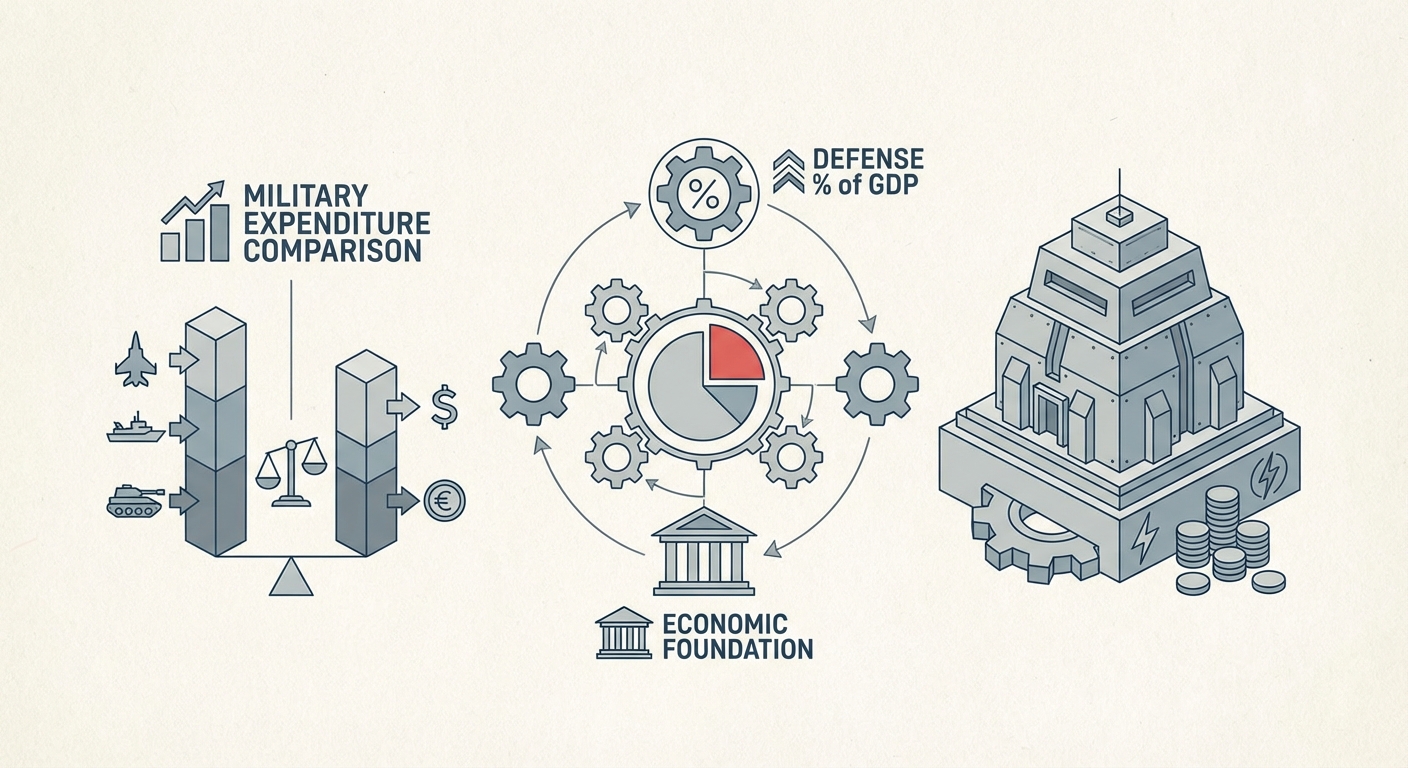
In Fiscal Year 2026, the U.S. defense budget reached $901 billion, setting a record high. In the same year, China's officially announced defense budget was approximately 1.67 trillion RMB, which, when converted at the market exchange rate of the time, was about $285 billion.
Looking at the numbers alone, U.S. military spending is 3.2 times that of China. This seems to suggest that the United States possesses an overwhelming resource advantage.
But this conclusion is almost certainly incorrect.
The Trap of Numbers
In 1985, the Central Intelligence Agency (CIA) released a classified assessment report on the Soviet economy. The report estimated Soviet GDP to be about 55% of that of the U.S., with an annual growth rate of about 3%. These figures suggested that while the Soviet economy was lagging, it was fundamentally healthy. Six years later, the Soviet Union collapsed. Data released after the collapse showed that the true state of the Soviet economy was far worse than the CIA's assessment: actual GDP may have been only one-third of that of the U.S., many products produced by factories were unused, and agricultural efficiency was so low that grain had to be imported from the U.S.
This lesson remains worth remembering: the first step in military-economic analysis is to doubt the numbers themselves.
The comparison of U.S. and Chinese military spending faces two profound problems. First, the two countries use different currencies, and exchange rate fluctuations change the comparison results. In 2014, the RMB to USD exchange rate was about 6.1; by 2023, it once dropped to 7.3. The same RMB military expenditure, when calculated in USD, shrank by nearly 20%. Second, the same dollar can buy different military capabilities in different countries. The average annual cost of a U.S. soldier is about $150,000, while the corresponding cost for a People's Liberation Army (PLA) soldier is about $30,000. The reason lies in China's lower price levels, not that the quality of life for PLA soldiers is only one-fifth that of U.S. soldiers.
Economists use "Purchasing Power Parity" (PPP) to handle this issue. Its core idea is simple: the basis of comparison should not be currency, but the actual goods and services that the currency can buy.
In the field of military spending: the construction cost of a Type 055 destroyer is about $900 million, while the cost of a U.S. Arleigh Burke Flight III destroyer with similar technical parameters is about $2.2 billion. This indicates that with the same $2.2 billion budget, China can build more than two 10,000-ton destroyers, while the U.S. can only build one. A 155mm artillery shell costs about $3,000 in the U.S. and about $800 in China. A Type 99A main battle tank costs about $4 million, while an M1A2 Abrams costs about $10 million.
Research by the Stockholm International Peace Research Institute (SIPRI) and the International Monetary Fund (IMF) shows that if adjusted for purchasing power parity, China's actual military expenditure could reach an equivalent of $450 billion to $550 billion. In other words, the gap between U.S. and Chinese military spending has narrowed from 3.2:1 on paper to an actual 1.6-2:1.
Of course, PPP adjustments also have limitations. The Russian-made S-400 missile systems imported by China must be paid for at international market prices, where PPP adjustment does not apply. Certain cutting-edge technologies (such as the most advanced aero-engines and high-end chips) that China cannot yet produce independently require massive investment to catch up. Intellectual property licensing fees for Western companies are also priced in USD. Overall, however, completely ignoring purchasing power differences seriously overestimates the U.S. resource advantage.
Where the Military Spending Goes
The core paradox of the $901 billion U.S. military budget is that most of the money is spent on maintaining the operation of the existing system rather than building new combat capabilities. China is exactly the opposite, with a higher proportion of military spending flowing directly into equipment procurement. This structural difference indicates that the 3.2-fold gap on paper is compressed in the dimension of "new combat power."
The largest expenditure item in the U.S. defense budget is "Operations and Maintenance" (training, base operations, equipment maintenance, daily operations), accounting for about 34% of the total budget, exceeding $300 billion. "Personnel Costs" (about 20.5%) rank second, followed by "Procurement" (about 19.4%) in third, and "Research and Development" (about 16.1%) in fourth. In other words, more than half of the budget is used to "maintain" existing personnel and equipment, while less than one-fifth is used to "buy" new equipment.
The U.S. has an all-volunteer professional military and must compete for talent with the private sector in the job market. The basic salary of an ordinary soldier is about $45,000; adding housing allowances, health insurance, pension plans, education benefits, and various stipends, the total per capita cost is about $115,000, not including indirect management costs and future veteran benefits. Moreover, this figure is rising rapidly: since 2000, U.S. military personnel costs have increased by about 70%, while inflation during the same period was only about 60%.
A larger "hidden cost" comes from the global military presence. The U.S. has about 750 military bases in more than 80 countries, with over 220,000 troops stationed abroad (about 54,000 in Japan, 35,000 in Germany, and 28,000 in South Korea). Maintaining overseas infrastructure alone consumes about $50 billion annually; this money maintains the global order rather than combat capabilities against China in the Western Pacific.
Maintenance of aging equipment is another cost black hole. The B-52 bomber first entered service in 1955 and is planned to serve until the 2050s; the F-15 has been in service for nearly 50 years; the average age of Nimitz-class aircraft carriers exceeds 30 years. The unit maintenance cost of main equipment has doubled in the past 20 years, and a large part of the growth in on-paper military spending has been consumed by maintaining old equipment.
In contrast, China's military spending structure presents different characteristics.
Although official detailed data is not released, external analysis agencies estimate, based on equipment procurement, military enterprise financial reports, and industry news, that equipment procurement accounts for 35-40% of China's military spending, much higher than the 19.4% of the U.S. The reason is that China is in the process of large-scale military modernization: in 2015, China did not have a single J-20; by 2025, there are about 500; the Type 055 destroyer went from zero to 8 ships in less than ten years; the total naval tonnage has nearly doubled in a decade.
China's personnel costs are relatively low. The PLA implements a system combining conscripts and volunteers. Conscripts serve for two years with an average annual cost of about $5,000; the treatment of non-commissioned officers and officers has been repeatedly improved over the past twenty years, yet the average annual cost remains about one-fourth to one-fifth that of the U.S. military. China has only one formal overseas military base (Djibouti) and does not need to bear the huge maintenance costs of a global base network. China's main equipment is relatively new (average ship and aircraft ages are more than ten years younger than those of the U.S. military), and maintenance costs are correspondingly lower.
Taking all factors into account, of the $901 billion U.S. military budget, the part that can be used to actually enhance combat power may only be about $760 billion; while China's $285 billion military budget, due to a higher proportion for equipment procurement, lower personnel costs, and fewer overseas burdens, may have an actual effect equivalent to $410 billion to $450 billion. The gap further narrows to about 1.7:1.
Hidden Military Spending
Official military spending figures are just the tip of the iceberg. Both countries have significant military-related expenditures that are not included in the defense budget.
Western analysis agencies have long believed that China's officially announced defense budget underestimates actual military spending. Items that may not be included include: the People's Armed Police (about 660,000 people, funding may come from public security expenditures, estimated at about $30-40 billion annually); government subsidies for civil aerospace and aviation in military-civil fusion projects indirectly support military capabilities; self-raised R&D funds by military enterprises, defense mobilization funds from local governments, and Coast Guard operating costs, etc.
SIPRI estimates that China's actual military expenditure is about 4% higher than the official figure. The U.S. Department of Defense's estimate is higher, suggesting it may be 15-30% higher.
The situation in the U.S. is equally complex. In addition to the Department of Defense budget, military-related expenditures are scattered across multiple departments: the Department of Energy's nuclear arsenal maintenance is about $32 billion annually; the Department of Veterans Affairs is about $325 billion annually (more than one-third of the defense budget); 16 intelligence agencies are about $85 billion annually. "Broad-gauge" military-related expenditures are about $1.37 trillion.
| Comparison Method | USA | China | Ratio |
|---|---|---|---|
| Official Defense Budget | 901B | 285B | 3.2:1 |
| PPP Adjusted | 901B | Approx 500B | 1.8:1 |
| Including Major Hidden Spending | Approx 1370B | Approx 350B | 3.9:1 |
| Effective Combat Power Investment | Approx 760B | Approx 410B | 1.9:1 |
The truth likely lies somewhere between these figures. However, one thing is certain: simply comparing official military spending figures is misleading, and the 3.2:1 figure seriously overestimates the relative resource advantage of the United States.
Economic Foundations
The sustainability of military spending depends on the economic foundation.
In 2025, U.S. GDP was about $28 trillion (nominal), and China's was about $19 trillion. At market exchange rates, the U.S. is still about 50% higher, but by purchasing power parity, China's GDP has exceeded $35 trillion, surpassing the U.S. by about 25%. Nominal GDP measures international market purchasing power, while PPP GDP measures the ability to mobilize domestic resources; by the latter, China is already number one in the world.
More noteworthy is the military spending burden rate. China's military spending accounts for about 1.5% of GDP, far lower than the U.S.'s approximately 3.2%, the world average of about 2.3%, and even lower than Japan's (about 2%) and India's (about 2.4%). If increased to 2%, military spending would increase by about 30%; if increased to 2.5% (only on par with the UK), it would increase by about 70%. During the Cold War, the Soviet Union spent 15-20% of its GDP on the military, which eventually led to collapse, but China's current 1.5% is far from the danger zone.
Even adjusted for PPP, China's military spending still accounts for only about 1.5% of GDP, far lower than the U.S.'s 3.2%, Russia's 3.5%, and even lower than the world average of 2.3%. This indicates that China has considerable room for growth in military spending without harming the economy. Current military investment is "restrained," not an arms race at any cost, but a limited investment matched with limited strategic goals.
The U.S. fiscal situation faces more challenges. Federal government debt has exceeded 125% of GDP, totaling more than $35 trillion. Annual debt interest payments are close to $1 trillion, exceeding defense spending for the first time in FY2024. The CBO predicts that by 2030, debt will reach 140% of GDP, and interest will exceed $1.5 trillion. Another profound problem is that mandatory spending (Social Security, Medicare, Medicaid) as a proportion of the federal budget has risen from 26% in 1962 to about 70%, repeatedly squeezing discretionary spending (including defense).
In short: China has the capacity to increase military spending without harming the economy, while the U.S. faces increasingly tight fiscal constraints.
But the scale of military spending does not determine the outcome of a war. What determines the outcome is who can sustain longer under sanctions, blockades, and a war of attrition. China's PPP advantage in military spending is meaningful in peacetime; the same money can buy more warships and missiles. The logic of a wartime economy is completely different: it depends on energy self-sufficiency (China's oil import dependence exceeds 70%), food security (China's soybean import dependence is about 85%), and the resilience of the financial system (the US dollar still dominates global settlements). In these dimensions, the gap between China and the U.S. presents a very different picture from what military spending figures show. A high-intensity conflict lasting a year tests not whose military spending is higher, but whose economy will not collapse first under the pressure of war.
The Foundation of Manufacturing
What truly determines long-term military capability may not be military spending figures, but the manufacturing foundation.
Clausewitz said "War is the continuation of politics," and in the industrial age, war is even more the "continuation of the economy."
During WWII, the U.S. produced about 300,000 military aircraft and thousands of warships while fighting on both the Pacific and European fronts. The foundation of these achievements was the then-unrivaled manufacturing strength: in 1940, U.S. steel production accounted for about 40% of the global total, oil about 60%, and automobiles about 80%.
Eighty years later, the situation has undergone a subversive change.
In 2024, China's manufacturing value added was about $5 trillion, twice that of the U.S., accounting for about 30% of the global share. China produced about half of the world's steel, about 60% of its cement, about 70% of its solar panels, and about 80% of its rare earths. In the shipbuilding industry, known as the "mother of industry," China's advantage is even more startling: annual shipbuilding volume is about 24 million deadweight tons (2023 data), accounting for more than 50% of the global share, while the U.S. has only about 100,000 tons—a gap of nearly 200 times.
This 200:1 figure is often cited but needs careful interpretation.
Most of China's shipbuilding capacity is civilian: tankers, container ships, and bulk carriers. These civilian ships cannot be directly converted into warships. Warship construction requires special facilities, materials, and processes; the capacity of military shipyards is the key indicator. By this standard, China's annual warship construction capacity is about 800,000 to 1,000,000 tons, while the U.S.'s is about 150,000 to 200,000 tons—a gap of about 4 to 5 times, not 200 times.
However, the strategic significance of civilian shipbuilding capacity should not be underestimated, as it indicates huge potential for wartime mobilization: a mature supply chain, sufficient skilled workers, and docks and dry docks that can be rapidly expanded. During WWII, U.S. civilian automobile plants were converted into tank and aircraft factories, and Detroit's assembly lines shifted from producing sedans to producing bombers. Theoretically, China's civilian shipyards could also partially shift to warship construction in wartime.
A more realistic concern is ammunition production capacity.
The Ukraine war has exposed a serious shortfall in the U.S. military-industrial system: insufficient ammunition production capacity. Before the war, the monthly production of 155mm artillery shells in the U.S. was about 14,000 rounds, enough for low-intensity conflicts, but on the Ukrainian battlefield, the Ukrainian army consumes about 3,000 to 7,000 rounds per day. The U.S. urgently expanded capacity, increasing it to about 60,000 rounds/month by 2025, which is still difficult to meet demand.
The situation for high-end precision-guided weapons is even tighter. Javelin anti-tank missiles were produced at a rate of about 2,100 per year before the war, but about 8,500 were provided to Ukraine in the first year of the war, equivalent to four years of production. The situation for Stinger anti-aircraft missiles is similar. Ammunition for HIMARS rocket launchers is being rapidly consumed from stockpiles, and the replenishment speed cannot keep up with the usage speed.
What do these figures illustrate? Imagine a Taiwan Strait conflict.
Wargame simulations by the Center for Strategic and International Studies (CSIS) estimate that in a three-week Taiwan Strait conflict, the U.S. might consume about 5,000 long-range anti-ship and anti-aircraft missiles. Currently, the annual production of these missiles is only about a few hundred. If the conflict lasts longer or is of higher intensity, the U.S. may face a "running out of ammunition" dilemma, not because of a lack of money, but because of insufficient factory capacity.
Little is known about China's ammunition production capacity, but there is reason to believe the situation is better. China has a more complete manufacturing system, more factories and workers, and shorter supply chains. Moreover, for a war occurring at its doorstep, China's logistical replenishment difficulty is far lower than that of the U.S. transporting across the Pacific.
The Efficiency Gap
What can the same money buy?
A Type 055 destroyer costs about $900 million, while a U.S. Arleigh Burke Flight III with similar technical parameters costs about $2.2 billion. With the same budget, China can build 2.4 ships, while the U.S. can only build one. The gap in construction speed is also significant: the Type 055 takes about 3 years from keel-laying to commissioning, while the Burke Flight III takes about 4-5 years. By the end of 2025, China already has 8 Type 055s in service and at least 4 under construction, while the first U.S. Burke Flight III only entered service in 2024 (see Chapter 10 for a detailed comparison).
These gaps stem from multiple factors: the average annual salary of a Chinese shipyard worker is about $12,000, while in the U.S. it is about $60,000; the profit margin of Chinese military enterprises is about 3-5%, while listed U.S. military companies are about 10%; China has the world's most complete manufacturing supply chain, with most components sourced domestically; the huge scale of the civilian shipbuilding industry dilutes fixed costs. Institutional differences also have an impact: the cumbersome bidding, approval, and compliance requirements in the U.S. procurement process add costs at every layer of bureaucracy.
The F-35 is an extreme case of U.S. military-industrial inefficiency: when launched in 2001, the estimated unit price was about $50 million; now it has risen to about $82 million, and the total life-cycle cost has soared to about $1.7 trillion. Joint requirements from the three services led to repeated design compromises, and suppliers are distributed across 48 states to ensure congressional support, sacrificing supply chain efficiency for political considerations (see Chapter 10 for details).
China's aircraft carrier construction demonstrates a different level of efficiency. The Fujian is estimated to cost about $8 billion with a construction cycle of about 5-6 years; the first U.S. Ford-class ship cost about $13 billion with a construction cycle of 11 years. The cost per unit tonnage is about 50% cheaper, and the construction speed is about twice as fast.
Of course, efficiency does not equal quality. U.S. equipment has been proven in decades of actual combat, with mature system integration and smooth interoperability with allies. Chinese equipment iterates quickly but has limited combat experience, and its software systems and maintenance frameworks are still being refined.
From Spanish Bankruptcy to the Soviet Collapse
Military spending races are not a new phenomenon.
The U.S.-Soviet arms race during the Cold War provides another lesson. In the 1980s, Soviet military spending as a proportion of GDP was as high as 15-20%, while the U.S. was only 5-6%. The Reagan administration's arms expansion ("Star Wars" program, 600-ship Navy, MX missiles) did indeed put pressure on the Soviet Union.
However, a more profound reason was the inefficiency of the Soviet economic system. Allocating an excessively high proportion of resources to the military squeezed civilian economic development. Shortages of consumer goods, stagnation in technological innovation, and lagging living standards for the people eventually led to the collapse of the regime's legitimacy. The arms race was not the sole cause of the Soviet collapse, but it exacerbated economic difficulties and accelerated the process of decline.
What enlightenment does this history provide for today's U.S. and China?
Arms races often stem from both sides believing they are "defending" (see the Anglo-German naval race case in Chapter 01). Military spending must match the economic foundation: in the 16th century, Spain spent 70-80% of its fiscal revenue on military expansion, resulting in multiple national bankruptcies; the Soviet Union spent 15-20% of its GDP on the military, eventually leading to systemic collapse. Today, China's military spending is only 1.5% of GDP, and the U.S.'s 3.2% burden rate is also within a controllable range, though debt pressure is limiting future growth space.
Although arms control dialogue is difficult, it is not impossible. During the Cold War, the U.S. and Soviet Union managed the nuclear arms race through treaties such as SALT and START. However, U.S.-China arms control faces unique challenges: asymmetric nuclear arsenal sizes (U.S. about 4,500, China about 500 and growing rapidly), difficulty in verifying conventional weapons, and a domestic political atmosphere unfavorable to "compromise" agreements.
Trends and Uncertainties
Over the past twenty years, China's military spending has maintained an average annual growth rate of about 7%, higher than the U.S.'s approximately 3%. The U.S.-China military spending ratio has narrowed from about 15:1 in 2000 to about 3.2:1 today (nominal), or about 1.8:1 (PPP adjusted).
If the trend continues, the gap after PPP adjustment may narrow to about 1.5:1 by 2030 and further to about 1.3:1 by 2035. According to the current trajectory, by 2028, U.S. federal debt interest payments will exceed 1.2 times the defense budget. However, linear extrapolation is often unreliable; the actual direction depends on: whether China's economy can maintain growth (drags such as real estate adjustments, population aging, and technology controls); whether the U.S. can control its debt; how technological changes alter the form of warfare; how the international environment evolves; and the factor of allies—the total military spending of about 60 U.S. allies exceeds $1.5 trillion, though uncertainties exist regarding reliability and mobilization speed.
Ultimately, military spending is just an input indicator. How military spending translates into combat power depends on strategy, systems, technology, personnel, and combat testing. Historically, there are many examples of armies that spent less but were well-organized defeating armies that spent more but were inefficient.
Key Uncertainties:
- The true scale of China's military spending? Hidden expenditures such as the Armed Police, military-civil fusion, and self-raised R&D by military enterprises are difficult to estimate accurately, with estimates from various parties differing by tens of billions of dollars. Different estimates directly change the denominator of the U.S.-China military spending ratio.
- Can the U.S. reform its procurement system? Under the current system, the combat power output of every dollar of U.S. military spending is far lower than the theoretical value. If efficiency increases by 10%, it would be equivalent to an extra $90 billion out of thin air; if inefficiency continues, China's cost advantage will grow deeper over time.
- Can China's economic growth continue? The growth rate of military spending is anchored to the GDP growth rate. If the GDP growth rate drops from 4% to 2%, the room for military spending growth will be compressed by nearly half, and the modernization timetable will be delayed accordingly.
References
- U.S. Department of Defense. FY2026 Defense Budget Overview.
- Stockholm International Peace Research Institute (SIPRI). Global Military Expenditure Report 2025.
- International Institute for Strategic Studies (IISS). The Military Balance 2025-2026.
- Yan Xuetong. The Shift of World Power: Political Leadership and Strategic Competition. Peking University Press, 2015.
- RAND Corporation. Comparing U.S. and Chinese Military Expenditures: Beyond Exchange Rates. 2017.
- U.S. Congressional Budget Office. The Long-Term Budget Outlook. 2025.
- Kennedy, Paul. The Rise and Fall of the Great Powers. 1987.
- U.S. Government Accountability Office. F-35 Joint Strike Fighter Program Assessment. 2024.
- Center for Strategic and International Studies (CSIS). Rebuilding American Military Power. 2024.
03Air power
From the Skies Over Britain to the Jungles of Vietnam
The Battle of Britain: The Advantage of Home Defense
In the summer of 1940, the Luftwaffe launched the prelude to "Operation Sea Lion," attempting to gain air superiority over the English Channel. According to German plans, once the Royal Air Force was destroyed, the army could be covered for a cross-channel landing.
On paper, Germany held an overwhelming advantage. The Luftwaffe had about 1,000 Bf 109 fighters and 1,400 bombers, with pilots hardened by the Polish and French campaigns, and high morale. Britain had only about 700 "Hurricane" and "Spitfire" fighters; some pilots had no combat experience, and many volunteers from occupied countries like Poland and Czechoslovakia had only received a few weeks of training.
However, geographical factors turned the tide. German Bf 109s, flying from French bases, could only operate over London for about 15-20 minutes after crossing the English Channel before having to return. British pilots fought over their homeland; if they bailed out, they could be rescued and continue fighting, while German pilots who bailed out became prisoners of war. Throughout the campaign, Britain lost about 1,500 pilots, but a significant portion were rescued and returned to duty; Germany lost about 2,500 pilots, almost all of whom were irrecoverable.
More crucially, Britain had the "Home Chain" radar network. 21 tall radar stations lined the coast, capable of detecting incoming aircraft formations up to 200 kilometers away, allowing the Royal Air Force to concentrate its forces to meet each attack. The Germans never realized the value of this system and failed to prioritize destroying the radar stations.
From August to October, the Luftwaffe lost about 1,700 aircraft and about 2,500 pilots. On October 12, Hitler indefinitely postponed "Operation Sea Lion." Churchill's famous quote was born: "Never in the field of human conflict was so much owed by so many to so few."
The Battle of Britain proved a rule: the home defender enjoys a massive advantage. Radar, geography, logistics, and pilot survival rates—all factors favor the defender.
The Vietnam Air War: The Trap of Technological Pride
"Operation Rolling Thunder" in Vietnam from 1965 to 1968 presented a completely different picture.
The US Air Force deployed its most advanced fighter of the time, the F-4 "Phantom II," a twin-engine supersonic fighter with a top speed exceeding Mach 2, equipped with radar-guided "Sparrow" missiles and infrared-guided "Sidewinder" missiles. Designers believed that in the missile age, close-quarters dogfighting was obsolete; the F-4 was not even equipped with an internal cannon.
Reality delivered a slap to this technological pride. The SA-2 surface-to-air missiles deployed by North Vietnam forced US planes to lower altitudes, exposing them to dense anti-aircraft fire. During the three years of "Rolling Thunder," the US Air Force lost 922 aircraft. Even more surprising was the air combat performance: the kill ratio of US fighters against North Vietnamese MiG-21s dropped from about 10:1 during the Korean War to about 2:1.
The reasons were multi-faceted. The hit rate of radar-guided "Sparrow" missiles in the humid tropical environment was only about 10%; rules of engagement required pilots to visually identify targets before firing, negating the advantage of long-range missiles; and US pilots, believing in "missilery," had severely neglected close-quarters combat training.
After the Vietnam War, the US Navy established the famous "Topgun" (Navy Fighter Weapons School) in California. The core philosophy was simple: have pilots face off against the best "aggressor" pilots in simulated combat, practicing repeatedly until dogfighting became instinct. Subsequently, during "Operation Linebacker" in 1972, the Navy's kill ratio rose back to about 12:1; the Marine Corps even set a staggering record of about 24:1. Meanwhile, the Air Force, which had not established a similar school, saw its ratio remain stuck at about 2:1.
The lessons of Vietnam remain relevant today: no matter how advanced the technology, it requires people to use it; training and tactics are more important than paper specifications; and over-reliance on a single technology can lead to disastrous consequences.
The Bekaa Valley: A Paradigm of Systemic Warfare
On June 9, 1982, the Israeli Air Force launched "Operation Mole Cricket 19," creating what is perhaps the most lopsided result in modern air combat history.
Syria had deployed 19 SA-6 surface-to-air missile batteries in the Bekaa Valley, supported by about 200 MiG-21 and MiG-23 fighters. The SA-6 was an advanced Soviet missile at the time, which had caused heavy losses to the Israeli Air Force during the 1973 Yom Kippur War. The Syrians were confident in their air defense network.
The Israeli offensive was a carefully choreographed symphony. First, small "Mastiff" drones flew into the Bekaa Valley, simulating the radar signatures of fighters. Syrian SA-6 radars switched on to lock them, falling right into the Israeli trap. E-2C Hawkeye AWACS aircraft lurking on the flanks immediately recorded the location and frequency parameters of every radar. Moments later, dozens of F-4s carrying anti-radiation missiles pounced on the exposed radar stations. Simultaneously, F-15 and F-16 fighter formations, guided by the AWACS, intercepted the Syrian fighters coming to the rescue.
The battle lasted less than two hours. The result: all 19 SA-6 batteries were destroyed, and between 82 and 86 Syrian fighters were shot down (numbers vary by source), while Israel suffered zero losses.
The victory in the Bekaa Valley was not because Israeli fighters were more advanced (the F-15 and MiG-23 were close in performance on paper). Victory came from the integration of the system: AWACS provided global situational awareness, drones lured the enemy into exposing their positions, electronic warfare aircraft jammed enemy radars, anti-radiation missiles destroyed air defense systems, and fighters used their information advantage to defeat the enemy piecemeal. This was a clash of system against system, while Syria had only a collection of units fighting in isolation.
This lesson deeply influenced China's air force development strategy: rather than simply pursuing the performance of a single fighter, they sought to build a complete system including early warning, electronic warfare, and command and control.
2025 Indo-Pakistani Air Confrontation: The Victory of Datalinks
In May 2025, the most intense air confrontation since the 2019 Balakot crisis broke out between India and Pakistan near the Line of Control in Kashmir. The results of this conflict shocked international military observers: the Pakistan Air Force (PAF) shot down multiple Indian Rafale fighters in several engagements while suffering minimal losses.
The Rafale is a masterpiece from France's Dassault, hailed as Europe's most advanced 4.5-generation fighter. India purchased 36 units in 2016 for approximately $7.9 billion, at a unit price of about $220 million. Equipped with the advanced RBE2-AA AESA radar, "Meteor" beyond-visual-range missiles, and the SPECTRA electronic warfare suite, its performance is top-tier among European fighters. The Indian Air Force had high hopes for the Rafale, viewing it as a "game-changer" against Pakistan and China.
However, the reality on the battlefield delivered a blow to these expectations.
The mainstay of the PAF's combat force was the JF-17 Block 3, a lightweight fighter co-developed with China. On the surface, this fighter—costing about $32 million per unit—is far inferior to the Rafale in paper specifications: shorter radar detection range, smaller payload, and weaker maneuverability. But the JF-17 Block 3 has a key advantage: it is equipped with an advanced Chinese-developed datalink system that allows seamless connection with the PAF's ZDK-03 AWACS and ground radar networks.
The pattern of battle repeated across multiple engagements. Pakistani ZDK-03 AWACS (also Chinese-made) circled at high altitudes in the rear, their radars detecting Indian fighter formations hundreds of kilometers away. The AWACS transmitted target data in real-time to the JF-17 formations ahead; pilots did not need to turn on their own radars to obtain a complete battlefield picture. The JF-17 formations maintained radar silence, approaching quietly under AWACS guidance until they entered the optimal launch envelope for SD-10A air-to-air missiles (the export version of China's PL-12).
The Indian Rafale formations faced a dilemma: their radar warning receivers detected no threat signals because the JF-17s never switched on their radars. When missiles arrived from unexpected directions, Rafale pilots had almost no reaction time. The SPECTRA electronic warfare system, designed to jam enemy radar locks, was far less effective when the attacker used AWACS datalinks for guidance.
Even more lethal was Pakistan's "swarm tactics." Due to the JF-17's low cost, Pakistan could deploy multiple fighters simultaneously, creating a numerical advantage. In one key engagement, eight JF-17s guided by AWACS reportedly faced off against four Rafales, launching attacks from three directions at once. Even with superior individual performance, the Rafales struggled to handle threats from multiple directions simultaneously. The Chinese datalink system made multi-aircraft coordination fluid and natural: every JF-17 knew the positions of its wingmen, the missiles fired, and its assigned sector. While the Rafale formations also had datalinks, coordination between Indian fighters faltered under Pakistani electronic interference.
After the conflict, the Indian Air Force discovered that the Rafale's excellent performance was neutralized by Pakistan's systemic combat capabilities. A deeper issue was that India's early warning and datalink systems were not as tightly integrated as Pakistan's; with only three A-50EI AWACS, datalink compatibility with the Rafale was not as smooth as the Pakistani system—a typical problem with mixing equipment from different countries.
The 2025 Indo-Pakistani air confrontation once again validated the lesson of the Bekaa Valley: the system beats the individual aircraft. What China exported to Pakistan was not just the JF-17, but an entire "systemic solution" including AWACS, datalinks, and ground radars. For the US, its allies' reliance on American systems means that if the network is breached or jammed, the air combat capability of the entire alliance will be paralyzed simultaneously.
Fifth-Generation Fighters: From Catching Up to Competing
Fighters are typically classified by "generations." The core characteristics of fifth-generation fighters are all-aspect stealth, supersonic cruise, and sensor fusion. The revolutionary leap in capability gives them an overwhelming advantage over previous generations. Currently, only three countries have truly mastered fifth-generation technology: the United States, China, and Russia.
The F-22 "Raptor" was the first fifth-generation fighter in history to enter active service, starting in 2005. Its radar cross-section (RCS) is estimated at about 0.0001 square meters, roughly the size of a bee. Twin F119 engines allow it to cruise at Mach 1.82 without using afterburners, far exceeding 4th-gen fighters that must use afterburners to go supersonic. In large-scale exercises like "Red Flag," the F-22 has recorded staggering kill ratios against 4th-gen fighters, such as 108:0 and 144:1. While exercise conditions differ from real combat, these numbers remain impressive.
However, the fate of the F-22 became a lesson in US defense decision-making. The project originally planned to procure 750 aircraft, but in the "peace dividend" atmosphere after the Cold War and the prioritization of the "War on Terror" after 2001, it was repeatedly cut. Ultimately, only 187 were produced (including about 8 test aircraft), and the production line was closed in 2011. At the time, the Department of Defense assessed that China would not have a fifth-generation fighter before 2020, and that 187 F-22s would suffice for foreseeable threats. The high unit cost of about $330 million (including R&D) was another reason for the cuts. If conflict breaks out in the Taiwan Strait in 2027, the US will have to use 187 F-22s to face over 500 J-20s. This numerical gap is not just a victory for China's defense industry, but the bill for Secretary Gates' 2009 decision to close the production line—the due date was simply deferred by twenty years.
Reality proved the assessors wrong. The J-20 made its first flight on January 11, 2011 (nearly a decade earlier than the US intelligence community expected) and officially entered service in 2017. This large, twin-engine stealth fighter uses a canard layout, emphasizing supersonic performance and long range, making it particularly suitable for long-distance operations in the Western Pacific. By the end of 2025, the number of active J-20s is estimated at 400-500, with an annual production capacity of about 100-120 units, and it is still accelerating.
The F-35 is the mainstay of the fifth-generation fleet for the US and its allies. Its design philosophy differs sharply from the F-22, pursuing "affordable multi-role" capability to meet the needs of the Air Force, Navy, and Marine Corps simultaneously. These conflicting requirements—stealth and range for the Air Force, carrier catapult takeoff and landing for the Navy, and vertical takeoff for the Marines—resulted in every version being a compromise. Initially estimated at $50 million per unit, the F-35A's price reached about $82.0 million by 2025, with total lifecycle project costs hitting approximately $1.7 trillion. Israel's combat use has proven its excellent stealth penetration capabilities.
The J-35 is China's medium-sized fifth-generation fighter, positioned similarly to the F-35, with both Air Force and carrier-based versions. By the end of 2025, about 50 were in service, with an annual production capacity of about 40 units, filling the gap left by the J-20, which is too large for carrier operations and more expensive.
Russia's Su-57 is another fifth-generation project, but progress has been slow. As of late 2025, only about 30 are in service. Hampered by sanctions, upgrading engines and avionics has been difficult, and it is not a primary player in this report's analysis.
Based on current trends, by 2030, the total number of Chinese stealth fighters (J-20 plus J-35) could reach about 1,000, comparable to the US (about 180 F-22s plus about 1,200 F-35s, including allies). The intensity of the change is shocking: in 2015, China did not have a single fifth-generation fighter in service, while the US already had over 200.
Sixth-Generation Fighters: Who Defines the Future?
The "sixth-generation fighter" is a concept that has not yet been fully defined. Sixth-gen fighters envisioned by various nations typically include: enhanced all-spectrum stealth (not just radar, but infrared and visible light), AI-assisted decision-making, optional manning (crewed or uncrewed), the ability to command drone swarms, longer range, and larger weapon payloads.
The appearance of the J-36 sparked intense debate. Based on public imagery analysis, the J-36 uses a triple-engine layout (an extremely rare design), lacks vertical stabilizers, and features a flying-wing plus lifting-body shape. It has an estimated wingspan of about 20 meters and a length of about 25 meters, making it much larger than the J-20. The simultaneous first flight of three prototypes was also an unprecedented move.
Several distinct viewpoints have formed regarding the significance of the J-36.
The "Sputnik Moment" school believes this marks China's historic leapfrog in aviation technology, citing the shock delivered to the US when the Soviet Union launched the first satellite in 1957. Delays in the US NGAD program (pushed from a 2024 first flight to 2028) reflect deep-seated issues in the defense acquisition system.
The "Don't Panic" school points out that there is typically an 8-10 year gap between first flight and service for flight testing, evaluation, and refinement. The F-22 took 15 years from its 1990 first flight to its 2005 service entry; the F-35 took 9 years from its 2006 first flight to initial operational capability in 2015. The triple-engine layout might actually indicate that China's single-engine thrust is insufficient, necessitating three engines to provide enough power. System integration and software are the real bottlenecks; software issues were reported in early J-20 models.
The "Different Strengths" school argues that the two countries have fundamentally different design philosophies. The J-36's large airframe and long range might mean it is a long-range interceptor or stealth bomber rather than a traditional "fighter." The F-47 might be a more traditional air superiority design. The two aircraft might not even be competitors in the same category.
The US NGAD program has had a turbulent path. In 2020, the Air Force Secretary revealed that a full-scale prototype had already been flown in secret, causing a sensation. However, the project was later re-evaluated due to cost concerns, with reports suggesting a unit cost of $300 million—beyond what the Air Force could afford. In early 2025, Boeing beat Lockheed Martin for the contract, and the new aircraft was officially named the F-47. The first flight is expected around 2028, about four years later than originally planned.
The accompanying CCA (Collaborative Combat Aircraft) program might be more important than the F-47 itself. The plan is to produce over 1,000 low-cost uncrewed "loyal wingmen," with a target unit price of $20-30 million, commanded by F-47 or F-35 pilots. These drones can perform reconnaissance, electronic warfare, or even air combat missions, reducing the risk to crewed aircraft. If CCA succeeds, it could change the economics of air combat, using low-cost consumables against high-value targets.
Regardless, the J-36's first flight is a landmark event. This is the first time since the jet age began that China has led the US at a key technological milestone in aviation. Although it is only a single point—the first flight—and the performance comparison of the final products remains uncertain, the fact itself carries immense psychological and strategic weight.
[Editor's Note] The debate triggered by the J-36 reflects deep-seated differences in how the US and Chinese strategic communities perceive each other. US analysts tend to emphasize the technical hurdles China still needs to overcome (engines, software, system integration), while Chinese observers emphasize speed and trends: ten years ago China had no 5th-gen fighters; today it leads in 6th-gen. Both perspectives have merit, but both may underestimate the opponent. Historically, the US has repeatedly underestimated the speed of its rivals' catch-up (the Soviet atomic bomb, the Chinese J-20), while challengers often overestimate their own capabilities (Japan's misjudgment of US industrial potential in the Pacific War). The true significance of the J-36 may only be assessable in a decade: whether it becomes a game-changing weapon or just a transitional technology demonstrator remains to be seen.
Beyond Fighters: The Clash of Systems
Modern air combat is not a duel between individual aircraft types, but a confrontation between systems.
AWACS are "force multipliers." The US possesses about 100 early warning aircraft of various types, including 31 E-3s and about 25 E-2Ds. The E-2D's APS-145 radar can track about 2,000 targets simultaneously, and with over 50 years of operational experience, the US holds a clear advantage in this field. China has about 50 AWACS aircraft, including the KJ-500 and KJ-2000, with technology levels close to those of the US. The carrier-based KJ-600 is currently in testing, which will give Chinese aircraft carriers their first organic early warning capability.
Tankers represent the largest gap between the US and China. The US Air Force has about 480 tankers, while China has only about 35—a ratio of nearly 14:1. The US Air Force can operate continuously anywhere in the world, while China's long-range power projection is severely limited.
In a Taiwan Strait scenario, the significance of this gap needs re-evaluation. Chinese fighters taking off from coastal airports in Fujian can reach the airspace over the Taiwan Strait in 5 minutes. The J-20's combat radius of about 1,500 km is enough to cover all of Taiwan and its surrounding waters. Conversely, US forces must fly from Okinawa (630 km away) or Guam (2,700 km away), relying heavily on tankers. These tankers, being large and non-stealthy, are priority targets for China's long-range missiles.
Electronic warfare (EW) capability is equally critical. The US has about 160 EA-18G "Growler" dedicated electronic attack aircraft, which can suppress or destroy enemy radar and communication systems. China has about 40 J-16Ds; though it started late, it has progressed rapidly. The US remains ahead in experience and numbers, but the gap is narrowing.
The comparison of air power should not just look at fighter numbers and generations. The key question is: in a high-intensity conflict lasting several weeks, whose air force can maintain its sortie rate? The US has 480 tankers and a global network of bases, but global deployment means forces are spread thin—from the Middle East to Europe to the Indo-Pacific, every theater competes for the same pool of aircraft. China's geographical concentration means it can commit its entire air power to a single battlefield, but it also means high base density and proximity; a single missile volley could paralyze multiple bases. The gap in engine lifespan is a maintenance cost issue in peacetime, but in wartime, it becomes a hard constraint on sorties. "Endurance" rather than "strike power" is the true measure of air power; whoever can maintain an effective aerial presence after losing 30% of their fighters wins air superiority.
Bombers: The Long Arm of Strategic Strike
The B-52 may be the longest-lived military aircraft in human history, having first flown in 1952 and planned to serve into the 2050s. Its value lies not in penetrating enemy air defenses, but in serving as a cruise missile carrier, launching precision-guided weapons from a safe distance.
The B-2 "Spirit" was the world's first stealth strategic bomber. With about 19 in active service, its flying-wing design gives this massive 52-meter wingspan aircraft a radar signature equivalent to a bird. Each unit cost over $2 billion. During the 1999 Kosovo War, B-2s flew 30-hour round trips from the US mainland to bomb Serbia without a single loss.
The B-21 "Raider" is the latest stealth bomber, having first flown in 2023 and expected to enter service around 2027, with plans to procure at least 100. At about $700 million per unit, it is much cheaper than the B-2 and specifically designed to counter adversaries with anti-access/area-denial (A2/AD) capabilities.
China's H-6 series is based on the 1950s Soviet Tu-16 design, though major upgrades have made it unrecognizable from the original. There are about 180 H-6K/N/J models in service. They lack stealth and have limited survivability against modern air defenses. However, as missile carriers armed with CJ-20 cruise missiles (range ~1,500-2,000 km) or YJ-21 hypersonic anti-ship missiles, the H-6 can launch attacks from outside air defense range. A formation of 24 bombers can launch about 144 cruise missiles—a saturation attack that would challenge any defense system.
The H-20 is China's long-rumored stealth bomber project, yet to be officially confirmed. The appearance of the J-36 has sparked new speculation: is the J-36 what the outside world rumored to be the "H-20," or are they two independent projects? There is currently no definitive answer.
Engines: The Jewel in the Industrial Crown
Aero-engines are called the "jewel in the industrial crown," representing the most complex and sophisticated technology in the aviation industry. Engines determine a plane's thrust, fuel consumption, range, lifespan, and stealth. Only three countries—the US, UK, and Russia—manufacture world-class aero-engines. China has long lagged in this field, making it the biggest bottleneck for its aviation development.
Why are aero-engines so hard to build? Turbine blades operate at temperatures around 1,700°C (far exceeding the melting point of the blade's metal) while spinning at about 20,000 RPM, enduring centrifugal forces 10,000 times that of gravity. This requires materials, processing techniques, and aerodynamic designs at the absolute limits of human technology.
The US F135 engine (used in the F-35) has a maximum thrust of about 191 kN, a turbine inlet temperature exceeding 1,900°C, and an overhaul interval of about 6,000 hours. The F119 (used in the F-22) has about 156 kN of thrust, enabling the F-22 to cruise supersonically without afterburners.
China's WS-10 series ("Taihang") went through a long journey from being unusable to basically reliable. The project started in 1987, and early models had overhaul intervals of only 300-500 hours. After nearly 30 years of improvement, the latest WS-10C has an overhaul interval of about 1,000-1,500 hours, meeting the basic needs of early J-20 models, though a 3-4x lifespan gap remains compared to US engines.
The WS-15 ("Emei") designed for the J-20 aims for a thrust of 160-180 kN, comparable to the F119. It is reportedly nearing finalization, and some J-20s have begun refitting. If it meets design specs, the J-20 will truly possess supersonic cruise capability.
The practical impact of this gap is that shorter engine lifespans mean more spare parts, more frequent maintenance, and a higher logistical burden. In high-intensity combat, engine wear will limit the number of sorties.
The Taiwan Strait Air War: A Thought Experiment
If conflict breaks out in the Taiwan Strait in 2027, how might the air war unfold? The following analysis is not a prediction, but a thought experiment based on public information.
In the early stages, China might launch ballistic and cruise missile strikes against Taiwanese airbases. Taiwan's five major airbases (Songshan, Ching Chuan Kang, Chiayi, Tainan, Hualien) are all within range of DF-15 and DF-16 short-range ballistic missiles. Missiles would target runways, hangars, fuel depots, munitions stores, and command facilities. Precision-guided weapons can crater runways to prevent takeoffs; even if craters are repaired, frequent missile attacks would constantly interrupt the work.
Taiwan's air force has about 300 fighters, including about 140 F-16Vs (modernized F-16s), about 55 Mirage 2000s, and about 120 IDF "Ching-kuo" fighters. These aircraft are dispersed across bases and auxiliary airfields, with some hidden in mountain hangars in Hualien. Losses in an opening surprise attack could be 30-50%, including both directly destroyed aircraft and those grounded by damaged runways.
Simultaneously, J-20 formations might sortie to hunt high-value targets: Taiwan's E-2 AWACS and tankers. Taiwan has only six E-2K AWACS and no dedicated tankers. Losing these vulnerable targets would severely degrade Taiwan's situational awareness, leaving its fighters to fight "blind."
The challenge for the US is distance and time. Kadena Air Base in Okinawa is about 630 km from Taiwan, hosting about 60 F-15C/Ds and F-22s. Andersen Air Force Base in Guam is about 2,700 km away. Both are within range of China's DF-26 missiles. The US would need time to make political decisions, mass forces, and coordinate joint actions with Japan—a window China would likely use to establish dominance.
Carrier strike groups can provide more carrier-based aircraft support but must stay at a safe distance outside anti-ship missile range. If a carrier stays about 1,000 km east of Taiwan, the combat radius of carrier-based F/A-18E/Fs is about 740 km, allowing them to cover the waters east of Taiwan but making it difficult to effectively support the western battlefield. If the carrier moves closer to about 600 km, it enters the threat zone of the DF-21D—a risk carrier commanders must weigh.
A 2023 wargame by the Center for Strategic and International Studies (CSIS) conducted 24 simulations. In most scenarios, the US-Japan alliance succeeded in preventing a Chinese cross-strait military operation, but at a heavy cost: the US and Japan lost about 270-370 aircraft, Taiwan's air force was almost entirely destroyed, and China lost about 150-200 aircraft. A key finding was the severe damage to US and Japanese bases: in many simulations, runways at Kadena and Guam were repeatedly destroyed, severely limiting sorties. This validates the effectiveness of China's A2/AD strategy: even if it cannot completely stop US intervention, it can significantly degrade its operational effectiveness.
However, the value of wargaming lies not in predicting precise outcomes, but in revealing key variables: AWACS survival determines who gains the information advantage; tanker availability determines if the US can sustain operations; runway repair speed determines the sortie rate for both sides; and precision-guided weapon stockpiles determine how long high-intensity combat can last.
Honest Acknowledgment of Uncertainty
It is necessary to face significant uncertainties in this analysis. Western estimates of the J-20's radar cross-section range from 0.01 to 0.1 square meters; the actual value depends on radar frequency, observation angle, coating condition, and other factors. The true status of the WS-15 is equally opaque. Regarding pilot training, US pilots fly an average of 180-200 hours annually with extensive combat experience, while Chinese pilots are estimated at 100-150 hours with no combat record.
Regarding "who would win a Taiwan Strait air war," analysts favoring China emphasize geographical advantages and the ballistic missile threat to US bases; those favoring the US emphasize the overall performance and combat experience of the F-22/F-35; balancists argue China has the advantage in near-shore combat, while the US prevails in the open sea.
The comparison of air power is like Schrödinger's cat: until the box of war is opened, no one knows what is inside. And this uncertainty itself is one of the barriers to peace.
Key Uncertainties:
- How good is the J-20's stealth? Western estimates of its RCS range from 0.01 to 0.1 square meters. A tenfold difference means completely different tactical realities. If it is near 0.01, the effective detection range of US AWACS will be significantly shortened, compressing the F-35's beyond-visual-range advantage into dogfighting range. If it is near 0.1, the J-20's survivability against the US system will be far lower than China expects.
- Is the WS-15 truly mature? If the WS-15 fails to meet standards, the J-20 will continue to lack supersonic cruise capability, leaving it at a disadvantage in long-range interception and energy maneuvering. China's numerical advantage in 5th-gen fighters would be partially offset by this performance shortcoming.
- What is the real gap in pilot training? US pilots fly about 180-200 hours annually with combat experience, while Chinese pilots are estimated at 100-150 hours without it. If the gap is as the numbers suggest, China's loss rate in high-intensity combat could be much higher than models predict. However, if China's simulator training and adversarial exercises are near-combat quality, the actual impact of this gap will be smaller than the paper figures.
- When will the J-36 reach combat capability? It usually takes 8-10 years from first flight to service, but the simultaneous flight of three prototypes suggests the project may have already passed key milestones. If the J-36 achieves initial combat capability before 2030, while the US F-47 has yet to fly, China will for the first time possess a time-window advantage in a generation of equipment at the cutting edge of aviation technology.
References
- Douhet, Giulio. The Command of the Air. 1921.
- US Air Force. 2025 Air Force Annual Report.
- Aviation Week & Space Technology. Multiple reports, 2024-2025.
- Jane's All the World's Aircraft. 2025-2026 Edition.
- Center for Strategic and International Studies (CSIS). China's Air Force Modernization. 2024.
- Center for Strategic and International Studies (CSIS). The First Battle of the Next War Wargame Report. 2023.
- RAND Corporation. Air Superiority: A Comparison of US and Chinese Air Force Capabilities. 2024.
- US Department of Defense. 2025 China Military Power Report.
- US Government Accountability Office. F-22 Program History Series.
- US Government Accountability Office. F-35 Joint Strike Fighter Program. 2025.
- Congressional Research Service. F-35 Joint Strike Fighter Program. 2025.
- Beevor, Antony. The Air War: The Battle of Britain 1940. 2020.
- Overy, Richard. The Bombers and the Bombed. 2013.
04Sea power
Naval Power
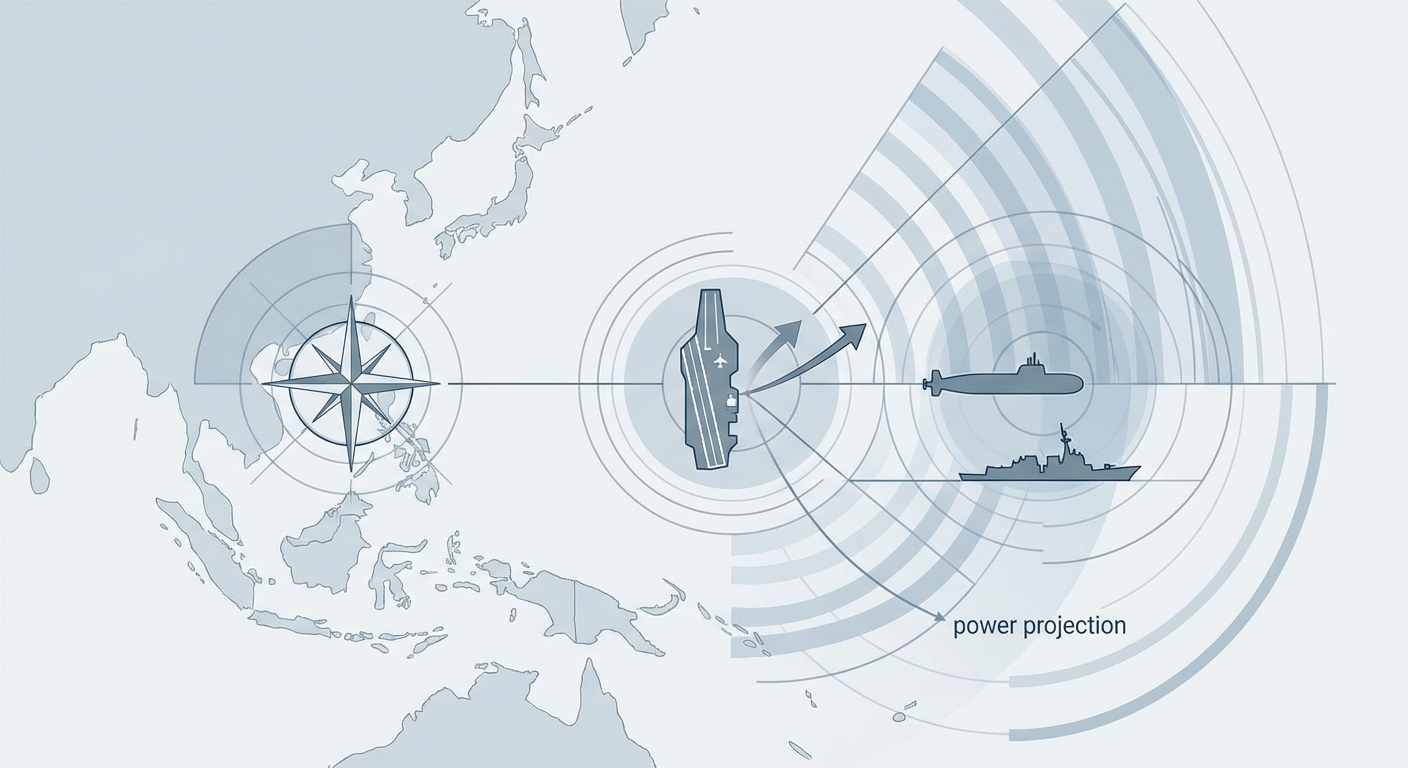
On April 23, 2019, off the coast of Qingdao, the Chinese Navy held a fleet review to mark its 70th anniversary. Thirty-two Chinese warships lined up for inspection, including the first domestically produced aircraft carrier, six newly commissioned 10,000-ton destroyers, and the latest nuclear-powered submarines. Xi Jinping boarded the review ship and delivered a speech: "Building a powerful People's Navy carries the generational aspiration of the Chinese nation to seek strength through the sea."
In the same year, the U.S. Naval Institute released a report, acknowledging for the first time an unsettling fact: by hull count, the Chinese Navy had surpassed the United States to become the largest navy in the world.
These two images—one showcasing rising ambition, the other reflecting realistic alarm—outline the microcosm of modern naval power competition. However, the label of "World's Number One" deserves careful analysis: does a lead in quantity equate to a lead in strength? Can ship numbers be translated into sea control? In different maritime regions and mission scenarios, the answer is not necessarily consistent.
The Ghost of Mahan
In 1890, U.S. Navy Captain Alfred Thayer Mahan published The Influence of Sea Power upon History, a book that profoundly changed the world. By studying the history of European naval warfare in the 17th and 18th centuries, Mahan proposed a core thesis: whoever controls the ocean controls trade; whoever controls trade accumulates wealth; and whoever possesses wealth can influence the world.
Mahan's theory had a massive impact on subsequent naval construction. After reading it, Kaiser Wilhelm II of Germany ordered the expansion of the navy, triggering a shipbuilding race with Britain that became part of the backdrop for World War I. The Imperial Japanese Navy regarded Mahan as a guiding light, pursuing a "decisive fleet battle" with the United States, which ultimately ended in failure at Midway. The United States itself became the best practitioner of Mahan's theory: a two-ocean fleet, a global network of bases, and control over maritime trade routes supported American hegemony in the 20th century.
One hundred and thirty years later, observing today's Sino-American naval competition through Mahan's lens reveals several interesting parallels.
Mahan emphasized the decisive role of geography in sea power. With coasts on both the East and West, the United States is far from the conflicts of Eurasia, allowing it to focus on developing its navy and projecting power outward. China's geographical environment is more complex: an 18,000-kilometer coastline is almost entirely enclosed by the First Island Chain (Japan, the Ryukyu Islands, Taiwan, and the Philippines). For the Chinese Navy to enter the Pacific, it must pass through several narrow straits, all of which are under the surveillance of U.S. allies.
Mahan also proposed the "trinity" of trade, navy, and bases. China is the world's largest trading nation, with about 90% of its foreign trade dependent on maritime transport and 80% of its oil imports passing through the Strait of Malacca, which is only 2.8 kilometers wide at its narrowest point. According to Mahan's logic, a country so dependent on maritime trade yet unable to control the seas is highly vulnerable to external pressure. The United States, meanwhile, possesses approximately 750 overseas military bases globally, with critical facilities in the Western Pacific such as Yokosuka, Sasebo, Okinawa, and Guam. China has only one formal overseas military base—in Djibouti—primarily used for anti-piracy and escort missions.
From these perspectives alone, the United States appears to possess an overwhelming sea power advantage.
However, Mahan's theory targeted global sea power competition. If the scope of competition is limited to the Western Pacific, particularly within the First Island Chain, the situation changes significantly. China does not need a global navy, nor does it need to confront the United States in the Indian or Atlantic Oceans. China's goal is to establish sufficient naval power at its doorstep to make any external intervention prohibitively costly. Such a strategy is less about Mahanian "sea power" and closer to "Anti-Access/Area Denial" (A2/AD): not to control the ocean, but to prevent external forces from controlling it.
Understanding this helps grasp the logic of Chinese naval construction and explains why simply comparing ship counts or tonnage has limited meaning.
Mahan's theory was born in the era of steam-powered maritime trade competition. China has not attempted to replicate the American global sea power model; its strategy is closer to the "fleet in being" concept proposed by German naval theorist Wegener: a fleet strong enough that even if it does not go out for a decisive battle, its mere existence can tie down an opponent and influence strategic decisions. This "limited sea power" approach is not about challenging global U.S. hegemony but is focused on ensuring freedom of action within the First Island Chain.
From Tsushima to Jutland
The Battle of Tsushima: The Cost of Expedition
On May 27, 1905, the Japanese Combined Fleet annihilated the Russian Second Pacific Fleet in the Tsushima Strait, creating one of the most decisive victories in modern naval history.
This battle occurred during the Russo-Japanese War. The Russian Pacific Fleet was blockaded by Japan in Port Arthur, and the Tsar decided to dispatch the Second Pacific Fleet from the Baltic Sea to the rescue. This fleet had to circumnavigate the Cape of Good Hope in Africa, sailing over 30,000 kilometers over seven months. Morale was high at departure, but the long voyage resulted in aging boilers, fouled hulls, and exhausted crews. When they arrived at the Tsushima Strait, they were met by Togo Heihachiro, who had been waiting in a state of readiness.
On paper, the Russian fleet had eight battleships, while Japan had only four. But the result was a one-sided slaughter. Togo employed the "Crossing the T" tactic, cutting across the Russian column and concentrating fire to destroy them one by one. In less than two days, the Russian fleet was almost entirely wiped out: six battleships sunk, two captured, approximately 4,380 killed, and 6,100 captured. Japan lost only three torpedo boats and 117 men.
The lessons of Tsushima remain relevant today. Expeditionary fatigue is a real drain on combat effectiveness. Training and morale are more critical than paper numbers. The advantage of fighting in home waters is immense; Togo could choose the optimal time and place for engagement, while Rozhestvensky could only respond passively.
Projecting these experiences onto today's Sino-American naval competition: a U.S. fleet operating across the Pacific from Hawaii or the mainland faces challenges similar to those of the Russian fleet, though the distance is slightly shorter. The Chinese Navy, operating in near seas, enjoys advantages similar to those of the Japanese fleet of that era.
The Battle of Jutland: The Myth of the Decisive Battle
On May 31, 1916, the British Grand Fleet and the German High Seas Fleet clashed in the waters off the Jutland Peninsula in the largest battleship engagement in human history. Britain deployed 28 battleships and 9 battlecruisers, totaling about 1.5 million tons; Germany deployed 16 battleships and 5 battlecruisers, totaling about 660,000 tons.
The result was unexpected. Britain lost three battlecruisers, three armored cruisers, and eight destroyers, with 6,094 killed; Germany lost one battlecruiser, one pre-dreadnought battleship, four light cruisers, and five destroyers, with 2,551 killed. Tactically, Germany had the upper hand, but strategically, Britain won.
After the battle, the German High Seas Fleet returned to base and never again actively sought a decisive battle with the Grand Fleet until its surrender at the end of the war.
The Battle of Jutland revealed a paradox: a decisive fleet battle may not be as conclusive as Mahan envisioned. Neither side was willing to risk the annihilation of its fleet, thus choosing to disengage at critical moments. The existence of the fleet itself was a deterrent: as long as the fleet existed, the enemy had to remain on guard and could not act freely. This is the "fleet in being" theory.
This lesson has significant implications for today's aircraft carriers. If a carrier is worth $13 billion and carries 5,000 lives, will a commander risk entering dangerous waters where it might be sunk? Or will they remain at a safe distance, like the German fleet after Jutland? There is no simple answer, but it reminds everyone: a warship's combat capability depends not only on its parameters but also on the commander's resolve.
The Battle of Midway: The Value of Intelligence
On June 4, 1942, the Battle of Midway became the turning point of the Pacific War. Japan held a numerical advantage with four aircraft carriers against the United States' three; Japanese pilots were experienced, many having participated in the Pearl Harbor attack. On paper, Japan seemed more likely to win.
However, the United States held a critical advantage: code-breaking. U.S. Navy intelligence broke the Japanese JN-25 code, accurately learning the target and timing of the Japanese fleet's offensive. U.S. carriers set an ambush north of Midway, waiting for the Japanese fleet to sail into the trap.
The battle was filled with drama. Multiple U.S. attacks failed, and torpedo bomber squadrons were nearly wiped out without a single hit. But just as the Japanese carrier decks were crowded with aircraft being rearmed—their most vulnerable moment—U.S. dive bombers emerged from the clouds. In four critical minutes (10:22 to 10:26 AM), three Japanese carriers were hit and set ablaze. The fourth carrier, Hiryu, was sunk later. The United States lost only one carrier, the Yorktown.
The lessons of Midway are multi-layered. Intelligence can drastically alter the course of a battle; if the U.S. had not known the Japanese plan, it might have been caught off guard. Aircraft carriers are extremely fragile; once hit, the fuel and ammunition on deck can turn the entire ship into a torch. Luck also cannot be ignored in war.
The implications for today are equally clear: in the age of satellites and networks, the importance of intelligence warfare only increases. The vulnerability of carriers may be even more pronounced in the era of anti-ship missiles.
The Falklands War: A Preview of Modern Naval Warfare
In 1982, Britain and Argentina fought a war over the Falkland Islands, the first truly modern naval war since World War II. This conflict provided valuable combat data for naval operations and exposed some alarming patterns.
Early in the war, Argentina held a geographical advantage: the Falkland Islands are about 500 kilometers from Argentina but 13,000 kilometers from the British mainland. The Argentine Air Force could fly from mainland bases, while Britain had only two light carriers carrying about 42 Harrier jets. On paper, Argentina should not have lost so catastrophically.
However, Britain had an ace: nuclear submarines. On May 2, the British nuclear submarine HMS Conqueror used old-fashioned torpedoes to sink the Argentine cruiser General Belgrano, killing 323. The psychological shock of this strike far outweighed the material loss; for the remainder of the war, the Argentine Navy never again ventured out to challenge the British fleet. A single nuclear submarine forced the entire Argentine fleet back into port.
Two days later, the Argentine Air Force retaliated. A Super Étendard attack aircraft launched a French-made Exocet missile, hitting the British destroyer HMS Sheffield. This modern warship of over 4,000 tons displacement lost combat capability within hours and eventually sank, with 20 killed. Even more shocking was that the missile's warhead failed to explode; the fire from its remaining fuel alone destroyed the ship.
In subsequent battles, the Argentine Air Force showed great courage. Pilots flew aging Skyhawks and Mirages, launching about 280 sorties against the British fleet without air superiority. These pilots hit about 13 vessels, sinking two destroyers, two frigates, one landing ship, and one cargo ship. Britain ultimately won the war but paid a heavy price: seven ships sunk, about ten damaged, 34 aircraft lost, and 255 killed.
Post-war analysis revealed a chilling detail: about 30% of the aerial bombs dropped by Argentina failed to explode due to fuse setting issues. Had these bombs detonated, British losses might have included several more warships, and the outcome of the war might have been entirely different.
The experience of the Falklands War has direct implications for the Taiwan Strait situation. Anti-ship missiles can sink warships worth billions of dollars at a very low cost. Nuclear submarines possess asymmetric deterrent power. Aircraft carriers are extremely vulnerable without air superiority.
Fleet Size: Beyond Numbers
By the end of 2025, the Chinese Navy possessed approximately 370 combat vessels, while the U.S. Navy had about 295. Looking at numbers alone, China has become the world's largest navy. But this "first place" requires further analysis.
The composition of the fleets differs significantly. The 295 U.S. vessels include 11 nuclear-powered aircraft carriers, each with a displacement of 100,000 tons and carrying about 75 aircraft. China has three carriers, including the Fujian, which has a displacement of about 85,000 tons and is still conventionally powered. The U.S. possesses 22 cruisers and 73 destroyers, most of which are large surface combatants with displacements near 10,000 tons. China has about 55 destroyers, but also includes about 50 frigates and 70 corvettes, the latter having displacements of only around 1,500 tons, primarily used for coastal patrols.
If comparing total tonnage, the U.S. fleet is about 4.5 million tons, while China's is about 2.3 million tons—the U.S. is still double China's size. The average tonnage of a U.S. vessel is about 15,000 tons, compared to about 6,200 tons for China, indicating that U.S. ships are generally larger, more heavily armed, and have longer endurance.
The technological generational gap is also evident. In terms of nuclear attack submarines, the U.S. has 53, all of which are the world's most advanced models like the Los Angeles and Virginia classes. China has only about eight Type 093s, with noise levels estimated to be equivalent to U.S. levels from the 1980s. Regarding strategic nuclear submarines, the 14 U.S. Ohio-class subs each carry 24 Trident missiles capable of striking any target globally. China's six Type 094s carry JL-2 missiles with a range of about 7,400 kilometers; launched from the South China Sea, they cannot cover most of the U.S. mainland.
However, the age structure of the fleets shows the opposite. The average age of the U.S. fleet is about 22 years, with many capital ships in service for over 30 years, leading to high maintenance costs. The Chinese fleet has an average age of about 12 years, with many new ships commissioned in the last decade, representing newer technology and lower maintenance burdens.
The gap in construction speed is even more striking. China launches about 20-30 warships annually, with an annual construction tonnage of about 800,000 to 1,000,000 tons. The U.S. launches about 6-8 ships annually, with a tonnage of about 150,000 to 200,000 tons. China's shipbuilding speed is 4-5 times that of the U.S. At this rate, even if the U.S. fleet currently leads in quality, the gap will gradually close over time.
The root of this gap lies in overall shipbuilding industrial strength. China has about 50 major shipyards and approximately 400,000 shipbuilding workers, with a total annual shipbuilding tonnage of about 24 million tons (including civilian), accounting for over 50% of the global share. The U.S. has only about seven military shipyards and about 100,000 workers, with a total annual shipbuilding tonnage of about 200,000 tons. While civilian shipbuilding capacity cannot be directly converted into warship production, it implies massive wartime mobilization potential: mature supply chains, a sufficient pool of skilled workers, and economies of scale.
Someone within the U.S. Navy used a metaphor to describe the situation: "It's like a marathon where we are temporarily in the lead, but our opponent is running three times faster than we are." Based on current shipbuilding rates, China's total naval tonnage is projected to catch up with the U.S. by 2032. Whether that moment arrives in 2030, 2035, or 2040 depends on the strategic choices and resource investments of both sides.
Aircraft Carriers: Twilight of the Kings?
The aircraft carrier is the ultimate symbol of naval power. The United States stands alone with 11 nuclear-powered carriers, a fleet with strike capabilities exceeding the entire air forces of many nations. But today, as anti-ship missiles become increasingly precise and their ranges expand, these "mobile offshore airfields" are facing unprecedented skepticism.
The U.S. currently operates 10 Nimitz-class and 2 Ford-class carriers. The Nimitz class has a full-load displacement of about 100,000 tons, carries 75-90 aircraft, and has a design life of 50 years. The Ford class introduced new technologies such as electromagnetic catapults, advanced arresting gear, and dual-band radar.
The development of the Ford class exposed deep-seated problems in the U.S. military-industrial complex. The lead ship was originally budgeted at $10.5 billion but actually cost over $13.3 billion; it was originally scheduled for delivery in 2014 but was not completed until 2017; it did not truly deploy until 2024.
China's carrier development has followed a completely different path. The Liaoning (formerly the unfinished Soviet Varyag) was commissioned in 2012, primarily for training. The Shandong, commissioned in 2019, was the first domestically built carrier, still using a ski-jump takeoff. The real breakthrough came with the Fujian, which began sea trials in 2024. With a displacement of about 85,000 tons, it features an electromagnetic catapult system, making China only the second country after the U.S. to master this technology.
The significance of electromagnetic catapults goes beyond the technology itself. The Fujian can launch fixed-wing early warning aircraft (the KJ-600), which the Liaoning and Shandong cannot. Previously, Chinese carriers relied on helicopters for limited early warning, leaving them at a distinct informational disadvantage against U.S. carrier strike groups. The addition of the KJ-600 gives Chinese carriers true system-of-systems combat capability for the first time.
The gap in quantity and experience remains vast. The U.S. has 11 carriers, while China has only three, with only the Fujian truly possessing modern combat potential. The U.S. has operated carriers for over 100 years; China has almost zero carrier combat experience. U.S. carriers are nuclear-powered with nearly infinite range; the Fujian is conventionally powered, limiting its blue-water endurance.
The deeper question is: in the age of anti-ship missiles, is the carrier still worth such massive investment?
The DF-21D has a range of 1,500 kilometers, and the DF-26 reaches 4,000 kilometers. These "carrier killers" have never been tested against a moving target in actual combat, and their true effectiveness is a subject of great debate. Optimists believe that continuously tracking a carrier strike group in the vast ocean is extremely difficult; pessimists point out that even if the hit probability is only 10%, a carrier commander would not dare risk a $13 billion ship and 5,000 lives.
This brings back the lesson of Jutland: if a carrier dares not enter dangerous waters, its combat power cannot be utilized. The carrier may be repeating the fate of the battleship, transitioning from a decisive offensive weapon to a "fleet in being" that is too precious to use.
According to public information, whether the DF-21D can accurately hit a maneuvering carrier in combat remains unanswered. But from a naval warfare perspective, this technical question may not be the most critical. The key lies in its actual impact on carrier operations. In 1996, U.S. carriers could freely project aircraft from 100 nautical miles east of Taiwan, covering the entire Taiwan Strait. Today, if a carrier commander views the DF-21D as a credible threat, the carrier strike group's cruising position might retreat to the vicinity of the Second Island Chain, meaning the aircraft's combat radius would no longer effectively cover the Taiwan Strait battlefield. This suggests that even if not a single DF-21D hits a carrier, it has already weakened U.S. naval air power projection within the First Island Chain by altering carrier deployment positions. From the history of naval warfare, this is consistent with the logic of how aviation forced battleships off the front lines in the 1940s: a weapon does not have to actually destroy a target; it only needs to make the target afraid to appear where it is supposed to be.
The Type 055: A Landmark Achievement
Amid the debate over carriers, one type of warship has received unanimous recognition from all sides: the Type 055 destroyer.
When the lead ship was launched in 2017, the first reaction from Western analysts was shock. With a full-load displacement of about 12,500 tons, it exceeds the U.S. Arleigh Burke-class destroyer (about 9,800 tons) and approaches the U.S. Ticonderoga-class cruiser. It has 112 vertical launch system (VLS) cells, more than the 96 on the Arleigh Burke. It is equipped with advanced dual-band active electronically scanned array (AESA) radar, reportedly capable of detecting stealth targets. Some within the U.S. Navy half-jokingly called the Type 055 the "Chinese Ticonderoga," but 40 years younger than the American version.
Even more impressive are the cost and construction speed. The unit cost of a Type 055 is about $900 million, while an Arleigh Burke Flight III is about $2.2 billion. With the same budget, China can build more than twice as many 10,000-ton destroyers. By the end of 2025, ten Type 055s were in service, with eight more under construction. By 2030, China may possess about 20 of these large destroyers.
The armament of the Type 055 reflects a "multi-functional" design philosophy. For air defense, HHQ-9B long-range missiles provide area protection for the fleet. For anti-ship roles, it can carry not only traditional YJ-18 sub-supersonic missiles but also launch the YJ-21 hypersonic anti-ship missile—the world's first ship-borne hypersonic weapon, with an estimated range exceeding 1,000 kilometers and speeds over Mach 6, theoretically capable of penetrating existing fleet air defense systems. For land attack, CJ-10 cruise missiles (similar to the U.S. Tomahawk) provide long-range precision strike capabilities. For anti-submarine warfare, it is equipped with towed-array sonar, anti-submarine missiles, and helicopters.
The strategic significance of the Type 055 far exceeds a single ship class: it marks China's ability to independently design and build world-class surface combatants, providing reliable escort for carrier strike groups and the ability to execute blue-water missions independently.
By contrast, the U.S. Littoral Combat Ship (LCS) program is considered one of the most failed warship projects in recent years. Originally planned at $220 million per ship, the cost soared to $650 million; originally 55 ships were planned, but only 35 were built, with about 10 already slated for early retirement; the modular design was never truly realized. For the same investment of approximately $15 billion, the U.S. received 23 problematic LCS vessels, while China received 70 Type 056 corvettes, the latter offering far higher cost-effectiveness.
The significance of the Type 055 lies not just in individual performance, but in the systemic capability it reflects. From a design philosophy standpoint, the Type 055 is China's first truly "independently designed" large surface combatant—not a copy of a Soviet design (like the early Type 051 or 052) or a reference to Western blueprints (like the Type 054), but designed from scratch based on China's own operational needs. In terms of construction speed, it took only about five years from the launch of the lead ship to the commissioning of the eighth, whereas the U.S. Burke Flight III took over ten years from contract signing to the commissioning of the lead ship. In terms of cost control, the unit price of the Type 055 is about 40% of the Burke Flight III, despite comparable or even superior performance parameters. The combination of these three points means China has acquired the full suite of capabilities to independently design, rapidly build, and mass-produce world-class surface combatants at low cost. For the U.S. Navy, this may be more alarming than any single weapon system.
The Silent Contest Underwater
If the comparison of surface ships is controversial, the comparison of underwater forces is relatively clear: the United States holds an overwhelming advantage.
Submarines are known as "silent killers." In the Falklands War, after a British nuclear submarine sank an Argentine cruiser, the entire Argentine Navy retreated to port. A single submarine turned a nation's navy into a harbor ornament.
The U.S. Virginia-class nuclear attack submarine is currently the world's most advanced underwater hunter. With a displacement of about 7,900 tons, it is armed with torpedoes, Tomahawk cruise missiles, and mines. Its stealth performance is exceptional, with noise levels reportedly close to ambient ocean noise in certain operating conditions. The U.S. currently has about 23 Virginia-class subs, which, combined with the Los Angeles class, totals about 53 nuclear attack submarines.
China has about eight Type 093 nuclear attack submarines, with noise levels roughly equivalent to early U.S. Los Angeles-class models from the 1980s. The Type 095, believed to be under development, may significantly improve stealth performance, though its commissioning date and performance remain unknown to the outside world.
In the realm of strategic nuclear submarines, the gap is equally pronounced. The U.S. Ohio class has excellent stealth, allowing it to perform strategic patrols covertly for months. Two issues weaken the strategic value of China's Type 094: its noise makes it easy to track, and the limited range of the JL-2 means the Type 094 must risk crossing the First Island Chain into the deep Pacific to strike the U.S. mainland—and the deep Pacific is precisely where U.S. anti-submarine forces are strongest.
In 2025, reports surfaced that China's next-generation Type 096 strategic nuclear submarine had been launched, carrying JL-3 missiles with a range of approximately 12,000 kilometers. If the Type 096 meets expected performance, it could cover the entire United States from the South China Sea without needing to risk crossing the island chains, fundamentally altering the strategic landscape of China's sea-based nuclear deterrence.
China also has an underestimated advantage in the submarine field: about 50 conventionally powered submarines. While conventional subs are inferior to nuclear ones in the open ocean, they can sit on the seabed in shallow coastal waters, producing extremely low noise and making them difficult to detect in complex underwater terrain. China's eastern coast is an ideal hunting ground for conventional submarines.
Amphibious Operations: The Ultimate Cross-Strait Challenge
If a conflict in the Taiwan Strait escalates to the extreme stage of military confrontation, it would almost certainly involve amphibious landings, one of the most difficult types of operations in human military history.
The most successful amphibious landing in history was the Normandy Landings in 1944. The Allies deployed about 6,900 vessels and 11,500 aircraft, delivering about 156,000 troops on the first day at a cost of about 10,000 casualties. The success of Normandy depended on total air and sea superiority, successful deception, a 5:1 numerical advantage, and the fact that the main German forces were tied down on the Eastern Front.
Comparing these conditions to the Taiwan Strait: the strait is about 130 kilometers wide, 2.6 times the width of the English Channel. Taiwan possesses a large number of anti-ship missiles and air defense systems. Satellite reconnaissance makes strategic deception nearly impossible. There are only about 14 beaches suitable for landing. Typhoon seasons and harsh winter sea conditions further narrow the landing windows.
China's amphibious forces have developed rapidly in recent years. Three Type 075 amphibious assault ships, each with a displacement of about 40,000 tons, can carry about 30 helicopters and 900 marines. The Type 076, reportedly under construction, will be equipped with electromagnetic catapults. There are also about eight amphibious transport docks and about 30 tank landing ships.
The total carrying capacity of these amphibious vessels is about 30,000 troops, far from enough to support a large-scale landing operation (Normandy delivered about 156,000 on the first day).
Therefore, many analysts believe a Taiwan Strait conflict is more likely to take the form of a blockade rather than a landing—using missile strikes, maritime blockades, and economic pressure to force Taiwan to yield, rather than launching a Normandy-style frontal assault. This will be discussed in detail in Chapter 16, "Taiwan Strait Simulations."
Strategic Points: Straits and Sea Lanes
Mahan emphasized the importance of controlling strategic maritime points. In the Western Pacific, several straits are of critical significance.
The Taiwan Strait is about 130 kilometers wide (about 180 kilometers at its narrowest point) and is the geographical core of the Taiwan issue. Mainland China and Taiwan face each other across the sea, and any cross-strait military action must pass through these waters.
The Bashi Channel is located between Taiwan and the Philippines, about 200 kilometers wide. The Bashi Channel is one of the primary routes for Chinese submarines to enter the Pacific. Starting from the South China Sea and passing through the Bashi Channel, submarines can enter the Philippine Sea and the deep waters of the Western Pacific. The U.S. has deployed underwater listening arrays in this area to monitor the movements of Chinese submarines.
The Miyako Strait is located between Okinawa and Miyako Island, about 250 kilometers wide. Chinese naval fleets often choose this route to enter the Pacific. The Japan Air Self-Defense Force intercepts hundreds of Chinese military aircraft passing through this area annually.
The Strait of Malacca is the most critical and vulnerable node, only 2.8 kilometers wide at its narrowest, through which about 80% of China's oil imports pass. China has vigorously developed alternatives (the China-Pakistan Economic Corridor, Myanmar oil and gas pipelines, the Arctic route), but their capacity is far from replacing Malacca.
From a map, the First Island Chain forms an almost complete chain separating China's eastern waters from the Pacific. For the Chinese Navy to enter the Pacific, regardless of the route chosen, it must pass through straits monitored by U.S. allies. This is the strategic motivation behind China's heavy investment in long-range missiles and A2/AD capabilities.
Honest Acknowledgment of Uncertainty
Analyses of naval power contain significant uncertainties. The true effectiveness of anti-ship ballistic missiles has never been tested in actual combat. The air defense capabilities of the Type 055 have likewise not been verified in a real confrontation. The Chinese Navy's blue-water operational experience is still in its infancy compared to decades of global U.S. deployment.
Regarding "who would win a naval war in the Taiwan Strait," analyses favoring China emphasize geographical advantages and the threat of missile saturation attacks; analyses favoring the U.S. emphasize the overwhelming advantage of nuclear submarines and allied synergy; balanced views suggest that the closer to the mainland, the greater China's advantage, and the further away, the greater the U.S. advantage.
Comparisons of naval power are full of unverified hypotheses, but uncertainty favors the defender. Uncertainty makes it difficult for an attacker to calculate the probability of victory, and no rational decision-maker dares to launch a war where the probability of victory cannot be calculated.
Key Uncertainties:
- The true effectiveness of anti-ship ballistic missiles? The DF-21D and DF-26 have never hit a moving carrier. If the hit rate reaches over 20%, U.S. carriers will be forced to retreat beyond the Second Island Chain, and Taiwan will lose carrier-based air support in the early stages of a conflict; if the hit rate is near zero, China's A2/AD system will have a fatal gap, allowing U.S. carriers to operate freely within the First Island Chain.
- Carrier survivability in the age of anti-ship missiles? Even if the hit probability is only 10%, would a carrier commander dare enter dangerous waters? If the answer is "no," the combat power of the 11 U.S. carriers will shrink significantly in the Western Pacific, and the $13 billion unit cost will become an unredeemable sunk cost.
- The true performance of the Type 096 nuclear submarine? If the Type 096's noise level approaches that of the Ohio class and the JL-3 range reaches 12,000 kilometers, China will possess a reliable sea-based second-strike capability for the first time, fundamentally changing the structure of Sino-American nuclear gaming; if noise issues remain unresolved, the Type 096 will remain prey for the U.S. anti-submarine network, and China's nuclear deterrence will continue to rely on the single pillar of land-based forces.
References:
- Mahan, Alfred Thayer. The Influence of Sea Power upon History: 1660-1783. 1890.
- U.S. Naval Institute (USNI). 2025 Fleet Force Structure Assessment.
- International Institute for Strategic Studies (IISS). The Military Balance 2025-2026, Naval Chapter.
- Congressional Research Service (CRS). China Naval Modernization: Implications for U.S. Navy Capabilities. 2025.
- Jane's Fighting Ships. 2025-2026 Edition.
- Center for Strategic and International Studies (CSIS). China's Naval Power: The Rise of Surface Forces. 2024.
- U.S. Department of Defense. 2025 Report on Military and Security Developments Involving the People's Republic of China, Naval Chapter.
- RAND Corporation. Sinking Carriers: An Analyst's Guide. 2023.
- Hu Bo. China's Maritime Power in 2049. China Development Press, 2015.
- Zhang Wenmu. On China's Sea Power. Ocean Press, 2014.
- Westwood, John. The Russo-Japanese War 1904-05. 2012.
- Parshall, Jonathan and Tully, Anthony. Shattered Sword: The Untold Story of the Battle of Midway. 2005.
- Freedman, Lawrence. The Falklands War. 2005.
05Land power
Ground Forces
On February 24, 2022, as Russian troops poured into Ukraine from three directions, the world witnessed the first truly large-scale land war of the 21st century. Two years later, the war continues—not as the "three-day occupation of Kyiv" predicted by the West, but as a long war of attrition. Thousands of tanks have been destroyed, tens of thousands of soldiers have been killed, and the front lines have moved only dozens of kilometers.
This war has overturned many assumptions about land warfare. Some say tanks are obsolete, as drones and anti-tank missiles have turned armored columns into mobile coffins. Others say artillery remains the king of the battlefield, with approximately 70% of casualties caused by shellfire. Still others say urban warfare is an unsolvable quagmire, citing the 83-day siege of Mariupol that left the city in ruins.
When discussing the military comparison between China and the United States, the army is often the most easily overlooked domain. The reason is simple: the Pacific Ocean lies between the two countries, making a direct land war almost impossible. However, in the most likely confrontation scenario—the Taiwan Strait conflict—ground forces will play a critical role. If the People's Liberation Army (PLA) is to control Taiwan, it must ultimately rely on ground troops landing on the island; if Taiwan is to resist, urban warfare is inevitable; and if the United States decides to intervene, whether to commit ground forces will be one of the most difficult decisions.
From Chosin Reservoir to 73 Easting
Chosin Reservoir: Will and Cost
On November 27, 1950, in the Chosin Reservoir area of North Korea, temperatures plummeted to -30 to -40 degrees Celsius. Approximately 120,000 troops of the 9th Army Corps of the Chinese People's Volunteers (CPV), under the command of General Song Shilun, launched an encirclement attack on approximately 30,000 troops from the U.S. 1st Marine Division and the 7th Infantry Division. This was one of the most brutal battles of the Korean War and a key to understanding the traditions of the Chinese Army.
The CPV employed the classic "surrounding a point to strike the reinforcements" tactic. Utilizing the cover of night and blizzards, small units infiltrated between American positions, cutting off and surrounding U.S. forces in isolated strongpoints such as Yudam-ni, Hagaru-ri, and Koto-ri. They then launched wave after wave of assaults in the extreme cold, attempting to annihilate the surrounded enemy.
The battle lasted 17 days. Major General Smith, commander of the 1st Marine Division, uttered a line that has since been widely quoted: "Retreat? Hell, we're just attacking in another direction." With close air support from naval aviation, the 1st Marine Division fought its way back along rugged mountain roads, eventually evacuating from the port of Hungnam, taking with them their wounded, equipment, and even the bodies of the fallen.
From a tactical perspective, the U.S. military successfully broke through the encirclement, and the CPV failed to achieve its goal of annihilating the American forces. The cost was staggering: U.S. casualties were approximately 6,000, with about 7,000 cases of frostbite; CPV casualties were estimated between 40,000 and 50,000, with over 30,000 cases of frostbite. The entire 9th Army Corps almost lost its combat effectiveness and had to withdraw from Korea for several months of recuperation.
The lessons of Chosin Reservoir remain thought-provoking more than seventy years later. Logistics can determine the success or failure of a campaign: CPV soldiers wore thin cotton clothes, and many froze to death in the snow before they could even charge. The gap in firepower is difficult to compensate for with numbers, but the value of will is equally undeniable.
This tradition of "defeating the superior with the inferior" is deeply ingrained in the DNA of the Chinese military. The status of Chosin Reservoir in Chinese military narrative is roughly equivalent to Dunkirk for the British—both frame a tactical defeat as a spiritual victory. The difference is that the British learned "never to fight like this again," while the lessons for the Chinese military are more ambiguous. The problem with modern warfare is: when the opponent possesses not 1950s propeller planes but precision-guided weapons and drones, how much of the gap can will still bridge? The PLA's logistical capabilities today far exceed those of 1950, but the challenge of crossing the Taiwan Strait is fundamentally different from crossing the Yalu River.
73 Easting: An Extreme Case of Technological Overmatch
If Chosin Reservoir demonstrated the limits of will against inferior equipment, the Battle of 73 Easting in 1991 demonstrated the one-sided results that technological superiority can bring.
On February 26, 1991, the fourth day of Operation Desert Storm in the Gulf War, the U.S. Army's 2nd Armored Cavalry Regiment, acting as the vanguard of the coalition's "left hook" flanking maneuver, advanced toward the main force of the Iraqi Republican Guard through a sandstorm. At approximately 4:00 PM, Eagle Troop's nine M1A1 tanks and twelve M3 Bradley fighting vehicles encountered a brigade-level position of the Iraqi "Tawakalna" Division at the "73 Easting" grid line.
The Iraqi forces possessed approximately 30 T-72 tanks and 20 BMP infantry fighting vehicles, holding a numerical advantage. However, what followed was not a battle, but a one-sided slaughter.
The thermal imaging sights of the U.S. tanks could penetrate the sandstorm, clearly seeing the outlines of Iraqi vehicles from 2,500 meters away, while the Iraqi Soviet-made night vision equipment could see almost nothing. The M1A1's fire control computer could automatically calculate ballistics, resulting in an extremely high first-round hit rate. In contrast, the T-72's fire control system required the gunner to manually measure distance and aim. The M1A1's composite armor with depleted uranium inserts could withstand armor-piercing rounds from the T-72's main gun, while the T-72's armor was like paper before the American depleted uranium rounds.
The battle ended 23 minutes later. 28 T-72s and 16 BMPs were destroyed, with hundreds of Iraqi casualties. The U.S. losses were zero tanks, zero armored vehicles, and only one person injured.
73 Easting became a classic case study in U.S. Army training manuals. However, its specific conditions must be noted: open desert terrain, Iraqi forces in fixed positions, complete U.S. air superiority, and low Iraqi morale. These conditions are almost impossible to replicate in the Taiwan Strait.
Another lesson from this battle is that technological superiority is not eternal. More than thirty years later, China's Type 99A has approached or perhaps even surpassed the M1A2 in many technical indicators. More importantly, advances in anti-tank technology have made tank duels less critical: a single Javelin missile can destroy any tank from 4 kilometers away.
Kursk: The Logic of Attrition Warfare
The Battle of Kursk in July 1943 was the largest tank battle in human history. The German army committed approximately 900,000 men, 2,700 tanks and assault guns, and 2,000 aircraft; the Soviet army committed approximately 1.9 million men, 5,100 tanks and assault guns, and 2,600 aircraft. Both sides engaged in a life-and-death struggle in the Kursk salient for nearly two months.
The German "Operation Citadel" attempted a pincer attack from the north and south to cut off the main Soviet forces within the salient. The Germans deployed their most advanced weapons of the time: the Tiger heavy tank and the Panther medium tank. The Tiger's 88mm main gun could penetrate any Soviet tank from 2,000 meters, while its thick armor was nearly impenetrable to the Soviet 76mm guns. In the famous tank battle at Prokhorovka on July 12, approximately 300 tanks of the German SS Panzer Corps faced off against approximately 850 tanks of the Soviet 5th Guards Tank Army. The Germans lost about 50-80 tanks, while the Soviets lost about 300-400. The Germans won a massive victory in terms of exchange ratio.
However, the Germans lost the entire campaign. The Soviets had constructed eight defensive lines in the Kursk salient, reaching a depth of 150 kilometers. The Germans broke through the first and second lines, but each breakthrough came at a heavy price, and more lines lay ahead. Soviet reserves were continuously poured into the battlefield, capable of sustaining an exchange ratio of 3:1 or even higher because they had enough men and tanks to expend. By late August, German offensive capabilities were exhausted, and the Soviets shifted to a counter-offensive. From then until the end of the war, the Germans never launched another strategic offensive on the Eastern Front.
The lesson of Kursk is that in a war of attrition, the side that can sustain greater losses and endure longer wins. The German Tiger tank was technologically unparalleled, but it was too few, too expensive, and too difficult to maintain; the Soviet T-34 was inferior to the Tiger in a single-vehicle duel, but the Soviet Union could produce ten times as many.
This lesson has been validated in the Ukraine war, where Russia has been forced to pull decades-old T-62 tanks out of storage. Victory or defeat in war depends not only on whose equipment is more advanced but also on who can continuously produce and replenish losses.
Taiwan's narrow geographical space does not allow for Kursk-style deep defense, but the logic of attrition warfare still applies. If Taiwan can turn a landing operation into a long war of attrition, time will be on the side of the defender.
After Normandy: Successful Landing Does Not Equal Victory
On June 6, 1944, the Allies successfully landed in Normandy, but the war was far from over. The primary task in the first week after landing was to expand the beachhead. From June 18 to 22, storms destroyed the American artificial harbor, severely affecting logistical supplies. It was not until "Operation Cobra" broke through German lines on July 25 that the Allies truly escaped the beachhead predicament—49 days after D-Day. The liberation of Paris on August 25 was exactly 80 days after the landing.
During these 80 days, the Allies suffered approximately 220,000 casualties. Normandy's famous "bocage" terrain severely restricted the maneuverability of armored units, as an anti-tank team could be hidden behind every hedgerow.
Compared to Normandy, Taiwan's terrain is even more complex. The strait is about 130 kilometers wide, 2.6 times the width of the English Channel. Taiwan's western plains are highly urbanized, the Central Mountain Range is a natural barrier, and the east consists of cliffs unsuitable for landing. Most importantly, Taiwan has had decades to prepare its defenses.
The lesson of Normandy is: even if a landing is successful, inland advancement may take weeks or even months. Logistics are equally fragile; the Allies did not have a stable deep-water port until the port of Cherbourg was repaired in late August. In a Taiwan Strait scenario, the PLA faces similar port issues: Taiwan's major ports have strong defensive fortifications, and without a port, it is impossible to offload heavy equipment and sustain supplies.
The Transformation of the PLA Army
The history of the People's Liberation Army Ground Force (PLAGF) can be traced back to the Nanchang Uprising in 1927. For a long time, the PLAGF was known for "human wave tactics," relying on massive manpower to compensate for inferior equipment. In 1950, the PLAGF exceeded 5 million men, accounting for over 90% of the entire military; by the period of Sino-Soviet border tensions in 1969, it had swelled to approximately 6.3 million. At that time, the Chinese Army was prepared for a territorial defensive war to repel a Soviet armored onslaught: drowning invaders with countless infantry and militia.
The 1991 Gulf War was the turning point. The U.S. military destroyed the million-man Iraqi army with minimal casualties, deeply shocking the Chinese military. Since then, the Chinese Army has undergone a long process of "slimming down" and modernization: the million-man disarmament in 1985 reduced total strength to about 4.25 million; in 1997, it dropped to about 2.7 million; in 2003, to about 2.25 million; and by 2025, to about 2 million, with the Army accounting for about 970,000—its share having fallen from 90% to less than 50%.
The reduction in scale has been accompanied by a dramatic shift in structure. The military reforms of 2015-2016 were the most profound in decades: the establishment of the Army Headquarters (previously, the Army had no independent headquarters and was managed directly by the General Staff Department); the dismantling of the decades-old Great Military Region system and the establishment of five Theater Commands; and most importantly, the change from the traditional "Division-Regiment" structure to a "Brigade-Battalion" structure, along with the implementation of "Combined Arms Brigade" reforms.
The Combined Arms Brigade is a product of learning from the U.S. Army's Modular Brigade Combat Teams. Traditionally, the Chinese Army had to temporarily form combined units for operations, drawing infantry, armor, artillery, and air defense from different units and cobbling them together only during wartime—a method that was slow and difficult to coordinate. Combined Arms Brigades integrate multiple arms in peacetime. Each brigade contains 4-6 combined arms battalions (each with its own tanks, infantry fighting vehicles, and mortars), 1-2 artillery battalions, one air defense battalion, and one reconnaissance battalion, allowing them to execute various missions independently.
As of 2025, the PLA Army consists of approximately 80 Combined Arms Brigades, along with about 6 Amphibious Combined Arms Brigades, 6 Airborne Brigades (under the Air Force), about 8 Marine Corps Brigades, and about 13 Special Operations Brigades. Major equipment includes approximately 5,800 main battle tanks (Type 99A, 96A/B, Type 15, etc.), about 9,000 infantry fighting vehicles and armored personnel carriers, about 2,500 self-propelled guns, about 2,400 rocket launchers, and about 300 attack helicopters.
These numbers make the PLA Army far larger in scale than the U.S. Army (approximately 480,000 active duty, with about 2,500 main battle tanks in active service). However, numerical comparisons mask qualitative differences: the U.S. Army's M1A2 has been battle-tested in the Gulf War and the Iraq War, while China's Type 99A has never fired a shot in anger; the U.S. Army has accumulated twenty years of combat experience in Afghanistan and Iraq, while the PLA Army has not fought a real war since 1979.
To compensate for the lack of combat experience, the PLA has continuously strengthened "combat-oriented training" in recent years. The Zhurihe Training Base is known as "China's Fort Irwin," where the "Blue Army" brigade has a high win rate. The PLA has also begun to emphasize "unscripted" exercises, night combat, and training in complex electromagnetic environments. However, there is a fundamental difference between training and actual combat: the Russian military's performance in Ukraine proved that seemingly sophisticated training can be worthless in real combat.
If the PLA cannot test this system in a real joint operation before 2027, the effectiveness of the Combined Arms Brigade reform will remain like the Russian military's "combat readiness status" in 2021—just a good-looking report. How well an army that has not bled can actually fight will always be an unknown.
Challenges for the U.S. Army
Over the past twenty years, the U.S. Army has primarily been involved in counter-terrorism wars in Afghanistan and Iraq. This experience has also brought problems: training focus shifted from large-scale ground combat to small-unit counter-insurgency; equipment procurement favored Mine-Resistant Ambush Protected (MRAP) vehicles over tanks; and commanders became accustomed to dealing with insurgents lacking heavy weapons.
A generation of officers has spent their entire careers in counter-insurgency operations, with limited experience in large-scale armored warfare and artillery duels. When the Ukraine war broke out, the U.S. military found its artillery shell stockpiles insufficient to support a high-intensity war.
Since 2018, the U.S. Army has begun to emphasize "Multi-Domain Operations." A significant development is the improvement of long-range strike capabilities: the LRHW "Dark Eagle" hypersonic missile has a range of about 2,775 kilometers; the PrSM precision strike missile has a range exceeding 500 kilometers. These weapons can be deployed on islands in the Western Pacific to exert military pressure on Chinese fleets and bases. In 2023, the U.S. Army deployed the "Typhon" mid-range missile system in the Philippines for the first time, marking the first U.S. deployment of land-based mid-range missiles in the Asia-Pacific since the end of the Cold War.
However, the fundamental question remains: in a Taiwan Strait scenario, how would ground forces be committed? Transporting heavy armored brigades across the Pacific takes time and many ships; deploying to Taiwan would mean direct U.S. intervention, a massive political decision.
The main U.S. Army force in the Indo-Pacific is the 25th Infantry Division (about 15,000 personnel) based in Hawaii, which has recently shifted from counter-insurgency training to jungle warfare and island hopping, yet as a light infantry division, it lacks heavy armor. The 2nd Infantry Division in South Korea has about 28,000 personnel, but its primary mission is to counter the North Korean threat; diverting it during a Taiwan Strait conflict would leave a gap on the peninsula. Overall, the U.S. Army's presence in the Western Pacific is far less prominent than that of the Navy and Air Force.
The Fate of the Tank
The destruction of numerous tanks by anti-tank missiles and drones in the Ukraine war has once again sparked the "tank obsolescence theory." However, history shows that this argument appears after every war but has never come true. In the 1973 Yom Kippur War, Israeli tanks were destroyed in large numbers, leading some to declare the end of the tank era; yet ten years later in the Lebanon War, armored units remained the main force. In the Ukraine war, both sides continue to deploy tanks because they remain indispensable for tasks such as breaking through defensive lines and providing direct fire support for infantry.
The real question is not whether the tank is obsolete, but how it is used. Tanks acting alone are sitting ducks, but tanks operating in coordination with infantry protection, air defense cover, and electronic warfare support remain the core force of ground warfare.
China's Type 99A and the U.S. M1A2 SEP v3 are the most advanced main battle tanks of both countries. The Type 99A weighs about 58 tons, has a 125mm smoothbore gun, and can fire gun-launched missiles; the M1A2 weighs about 66 tons and has a 120mm smoothbore gun. Their armor-piercing capabilities and frontal protection are roughly comparable. The Type 99A is lighter and has better mobility; the M1A2 has depleted uranium armor to enhance side protection. The production cost of the Type 99A is about 40% of the M1A2, meaning China can procure more than twice the quantity for the same budget. However, the M1A2 has been battle-tested, while the Type 99A has never proven itself on the battlefield.
Active Protection Systems (APS) are changing the landscape of armored warfare. Israel's "Trophy" system has proven effective at intercepting RPGs and anti-tank missiles. The U.S. has installed the Trophy system on some M1A2s. APS has limited effectiveness against high-speed kinetic energy penetrators, and its defense against cheap FPV drone swarms remains an unknown.
In a Taiwan Strait scenario, the role of tanks may be strictly limited. The Type 99A is too heavy to be landed directly by amphibious landing ships and must wait for a port to be captured before being transported by Ro-Ro ships. In the early stages of a landing, the PLA can only rely on the Type 05 amphibious assault vehicle (about 26 tons, 105mm gun), which has far less protection and firepower than a main battle tank. The U.S. military faces similar challenges; transporting M1A2s from the mainland or Guam by ship takes weeks.
Taiwan's current tank force consists primarily of aging M60A3s (about 460) and CM-11s (about 450), with 108 M1A2Ts on order. Taiwan's "porcupine strategy" does not rely on tank duels but rather on numerous anti-tank missiles to make landing armor pay a heavy price at the beachhead, and utilizing urban terrain to make tank advantages difficult to exploit.
The Renaissance of Rocket Artillery
The Ukraine war has made the HIMARS (High Mobility Artillery Rocket System) a star. Ukraine began receiving HIMARS in June 2022. GMLRS guided rockets can precisely hit targets from 80 kilometers away with a circular error probable of less than 5 meters. The Ukrainian military systematically attacked Russian ammunition depots and logistical nodes, forcing the Russian military to move its supply facilities further back.
This "long-range precision strike" capability is exactly what the U.S. Army is developing for the Indo-Pacific theater. HIMARS can be transported by C-130s and rapidly deployed to islands; the next-generation PrSM missile will have a range exceeding 500 kilometers.
China's PHL-191 is the latest model, with a 370mm module range of about 280 kilometers and a 750mm module range of about 500 kilometers, exceeding HIMARS in both range and payload. Combined with about 600 sets of PHL-03 (range about 150 kilometers), China's rocket artillery system is quite substantial in terms of quantity and range.
In a Taiwan Strait scenario, the PLA's Type 191 can strike the entire island of Taiwan from the mainland coast. If the U.S. military deploys HIMARS and PrSM in Japan or the Philippines, it could strike assembly areas along the Chinese coast, though this involves political questions of whether allies would allow attacks to be launched from their territory.
Airborne: A High-Stakes Gamble
Capturing key targets (airports, ports, communication hubs) can be achieved through airborne operations, but history shows that airborne operations are extremely risky.
In Operation Market Garden in September 1944, the Allies committed approximately 35,000 paratroopers in an attempt to capture a series of bridges in the Netherlands. The British 1st Airborne Division encountered an unexpectedly stationed German SS Panzer Division at Arnhem. Ground armored forces failed to arrive in time, and only about 2,000 out of 10,000 men managed to break out. In the 1941 Battle of Crete, German paratroopers successfully captured the island but suffered about 7,000 casualties—nearly half of the participating paratroopers. Hitler never authorized another large-scale airborne operation again.
Market Garden exposed the fatal weaknesses of large-scale airborne operations: intelligence can be seriously flawed; communications often fail; ground forces may not link up in time; and paratroopers lack heavy weapons, making it difficult to face armored units head-on.
The PLA Airborne Corps has about 30,000 personnel, organized into 6 airborne brigades. The Y-20 (about 50 aircraft) and Il-76 (about 20 aircraft) can deliver about 10,000 personnel in a single wave. However, transport aircraft are large, slow targets. Taiwan possesses Patriot missiles, Tien Kung air defense systems, and numerous man-portable air defense missiles. Any transport aircraft formation crossing Taiwan's airspace will face heavy losses. Even if paratroopers land successfully, they will have to face Taiwanese defenders equipped with tanks and artillery without heavy weapons of their own.
China has about 4 air assault brigades, equipped with Z-10 attack helicopters and Z-20 utility helicopters, which may be a more practical means of rapid insertion than traditional airborne operations. However, the approximately 130-kilometer width of the Taiwan Strait is at the edge of a helicopter's maximum range.
In modern warfare, division-level airborne operations are too risky in the face of modern air defense systems, while small-scale special operations-style airborne drops (infiltration, sabotage, decapitation) remain feasible.
Taiwan's Porcupine Strategy
Faced with the mainland's overwhelming numerical advantage, Taiwan's pragmatic strategy is the "porcupine strategy": making a landing operation so costly that China is unwilling to bear it.
The Taiwanese Army has about 100,000 active-duty personnel and approximately 1.5 million reservists (of which about 500,000 to 800,000 can be rapidly mobilized). It is equipped with numerous anti-ship missiles (about 400 Hsiung Feng III, supersonic, range over 150 kilometers) and thousands of anti-tank missiles (Javelin, TOW, etc.).
Taiwan's terrain favors the defender. The western plains are the primary landing direction but are highly urbanized, with almost no open ground. The Central Mountain Range runs north to south, with peaks over 3,000 meters forming a natural barrier. The eastern coast consists mostly of cliffs unsuitable for landing. There are only about 14 beaches suitable for amphibious landings, allowing the defender to concentrate forces for defense.
Urban warfare will be the ultimate fortress of Taiwan's defense. About 90% of Taiwan's population lives in cities, with nearly 7 million in the Taipei metropolitan area. History has repeatedly proven that urban warfare is an attacker's nightmare: Stalingrad lasted 5 months, and the siege of Mariupol lasted 83 days. If the PLA attempts to capture Taiwanese cities, it may face weeks or even months of street fighting.
In recent years, Taiwan has strengthened its urban defense preparations: reserve training has added urban warfare content, the Taipei metro system and underground malls can be converted into shelters and logistical nodes, and civil defense organizations are being reactivated. This "all-out defense" concept draws on the experiences of Switzerland and Israel.
[Editor's Note] Taiwan's will to resist is the most difficult variable to quantify in all military analyses, yet it may be the most important. Polls show that about 60-70% of Taiwanese express a willingness to fight to defend their home, but there is a huge gap between polls and actual action. The experience in Afghanistan showed that an army lacking the will to fight can collapse in days; the experience in Ukraine showed that determined resistance can hold out for years. The key variables are whether the leadership remains after the first wave of strikes and whether international support is visible within 72 hours.
Lessons from the Ukraine War
The Russia-Ukraine war since 2022 has provided the most important experience in large-scale ground warfare since World War II.
Artillery remains the primary means of lethality, with about 70% of casualties caused by shellfire. Ammunition supply has become the key to victory or defeat. Ukraine was once forced to limit its firepower due to shell shortages, while Russia barely maintained its consumption by relying on ammunition imported from North Korea.
The drone revolution has arrived. From reconnaissance and strike drones to cheap FPV suicide drones, drones provide all-weather battlefield surveillance, making concealment almost impossible and destroying expensive armored targets at extremely low cost.
Defense is superior to offense. Ukraine's 2023 summer offensive faced multiple layers of Russian defenses, minefields, and drone reconnaissance, paying a heavy price for only a few kilometers of advancement. This is good news for Taiwan, though Taiwan's depth is limited, and it cannot trade space for time as Ukraine did.
Logistics determine the outcome of a protracted war. The Russian military's failure in the early stages of the war was largely due to a logistical collapse. In a Taiwan Strait conflict, the PLA's challenge is crossing the strait, while Taiwan's challenge is how long it can hold out under blockade.
"Quick victory" may be an illusion. Russia originally planned to occupy Kyiv within days, but the war has lasted for years. Once Taiwan chooses to resist, the conflict may evolve into a long war of attrition.
In a Taiwan Strait scenario, the role of the army is not decisive; sea and air power and missiles will be the protagonists in the first few weeks of the war. The true significance of the army lies in its capacity for "post-war occupation" and "sustained presence." If the conflict evolves from a blitzkrieg into a long-term standoff, the numerical advantage of the 2 million-strong PLA will manifest, and the United States will face a Vietnam-style question: is it willing to commit ground troops to an island and sustain continuous casualties? This is precisely the core of the entire military competition: the outcome of the war depends not on who can win the first week of battle, but on who can sustain the first year of attrition. Ukraine has proven that in a war where neither side is willing to back down, industrial capacity and political will are more important than any weapon parameters.
The future evolution of the situation depends on several key uncertainties. The true level of China's amphibious landing capability is foremost. Since China has never conducted a large-scale amphibious operation, its actual delivery capability under enemy fire remains an unknown, despite possessing about 8 Type 071 landing platform docks, about 3 Type 075 amphibious assault ships, and civilian Ro-Ro ships. If the first wave of delivery is less than 30,000 personnel, the landing forces may be defeated piecemeal at the beachhead. Correspondingly, Taiwan's will to resist constitutes another extreme variable: if Ukraine-style determined resistance occurs, the PLA will be bogged down in months of urban warfare; if Afghanistan-style rapid collapse occurs, the entire security architecture of the Western Pacific will disintegrate within weeks. In this game, whether U.S. ground forces intervene becomes the most difficult choice. Committing ground troops means massive casualty risks and political costs, while not committing them may lead to Taiwan being overwhelmed in a ground war. Furthermore, technological change has brought new unknowns, particularly the impact of drones on landing operations. If cheap FPV drones can effectively strike landing fleets, the casualty rate of amphibious operations may far exceed any historical precedent.
References
- International Institute for Strategic Studies (IISS). The Military Balance 2025-2026, Army Chapter.
- U.S. Department of Defense. 2025 China Military Power Report, Ground Forces Chapter.
- RAND Corporation. Assessment of PLA Army Combined Arms Brigade Reforms. 2023.
- Center for Strategic and International Studies (CSIS). Defending Taiwan: An Asymmetric Strategy Assessment. 2024.
- Institute for the Study of War (ISW). Ukraine War Analysis Series Reports. 2022-2025.
- David Glantz. When Titans Clashed: How the Red Army Stopped Hitler. University Press of Kansas, 2005.
- Antony Beevor. Stalingrad. Viking Press, 1998.
- Academy of Military Sciences. History of the War to Resist U.S. Aggression and Aid Korea. Military Science Press, 2000.
- Qiao Liang and Wang Xiangsui. Unrestricted Warfare. PLA Literature and Art Publishing House, 1999.
- Cornelius Ryan. The Longest Day. Simon & Schuster, 1959.
- Max Hastings. Overlord: D-Day and the Battle for Normandy. 2004.
- U.S. Army War College. Multi-Domain Operations Concept. 2018.
- U.S. Army Training and Doctrine Command. HIMARS Operations Manual.
06Missile and Nuclear Forces
Missiles and Nuclear Forces
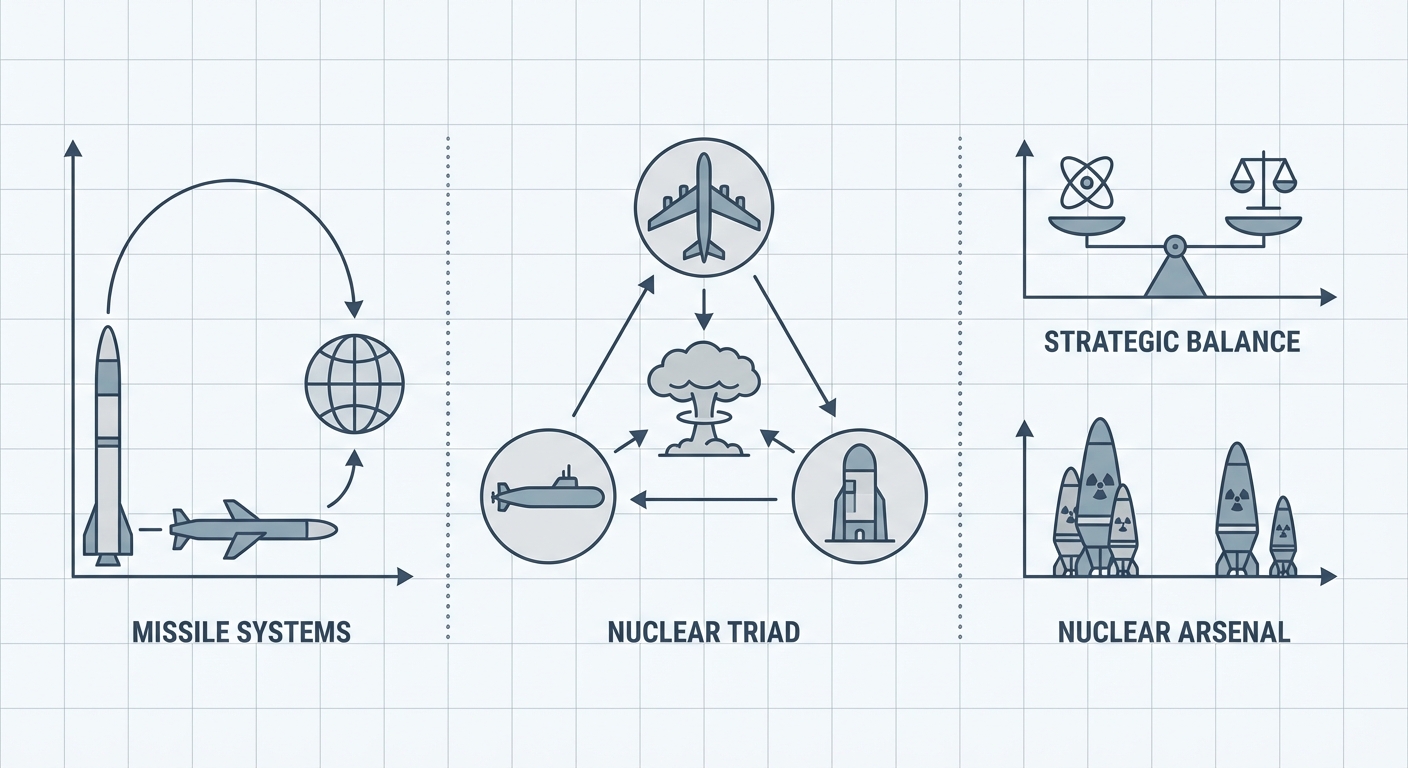
One night in July 2021, a rocket lifted off from a location in Northwest China, carrying an unusual payload: a hypersonic glide vehicle. The rocket launched the glide vehicle into low Earth orbit, where it circled the globe for most of its flight before re-entering the atmosphere and being released near its target area. U.S. intelligence agencies tracked the entire process. Weeks later, General John Hyten, then Vice Chairman of the Joint Chiefs of Staff, said in an interview: "It’s very close to a Sputnik moment."
The weight of this statement must be understood within its historical context. In 1957, the Soviet Union launched the first artificial satellite, "Sputnik," shocking a United States that had assumed its own technological superiority. That event prompted the U.S. to overhaul its education system, establish NASA, and ignited the Space Race. Sixty-four years later, Hyten's comparison of China's hypersonic test to that historical moment was no exaggeration; rather, it was a blunt awakening for the Pentagon: in the field of missile technology—a domain once dominated by the U.S. and the Soviet Union—China has entered the front ranks.
The even more sobering context is that in the thirty years following the end of the Cold War, the U.S. shifted its focus toward counter-terrorism and precision-guided munitions, leading to slow progress in missile technology. Meanwhile, China developed anti-ship ballistic missiles, hypersonic glide vehicles, and various types of cruise missiles. When the U.S. looked back, it found itself being overtaken by a rival in a critical military field for the first time since the Cold War.
The Return of the Missile Era
In 1987, the U.S. and the Soviet Union signed the Intermediate-Range Nuclear Forces (INF) Treaty, destroying all land-based ballistic and cruise missiles with ranges between 500 and 5,500 kilometers. These weapons were considered the "most dangerous": their range was sufficient to strike deep into the opponent's territory, and their short flight times left little room for early warning or decision-making. The two sides destroyed a total of 2,692 missiles. China was not a party to this treaty.
While the U.S. and the Soviet Union were reducing their intermediate-range missiles, China quietly advanced its missile industry. The Dongfeng-21 (DF-21) entered service in the late 1980s, and during the 1996 Taiwan Strait Crisis, China fired missiles into the waters near Taiwan as a show of force. Over the next twenty-plus years, the scale and capabilities of the Rocket Force continued to grow, while the U.S., constrained by the treaty, was unable to develop similar land-based systems. The Rocket Force (formerly the Second Artillery Corps) now possesses thousands of missiles of various types, from tactical short-range to intercontinental nuclear missiles, forming a complete system of strike capabilities.
After more than thirty years, the treaty finally collapsed. Russia was accused of violating it with the 9M729 cruise missile; more crucially, the U.S. estimated that China possessed approximately 2,000 intermediate-range missiles that were not subject to any restrictions. In 2019, the U.S. withdrew from the INF Treaty, and the missile era began anew.
From the Cuban Crisis to the 1983 False Alarm
The Cuban Missile Crisis: Humanity's Closest Brush with Destruction
In October 1962, the Cuban Missile Crisis pushed humanity to the brink of nuclear war. The Soviet Union secretly deployed intermediate-range missiles in Cuba, intending to compensate for its strategic disadvantage relative to the United States. At the time, the U.S. had deployed missiles in Turkey and Italy capable of striking the Soviet Union, while the Soviets lacked a reciprocal threat. Khrushchev planned to deploy 36 SS-4 missiles (2,000 km range) and 24 SS-5 missiles (4,500 km range) in Cuba, which could strike major U.S. cities like Washington D.C. with nuclear warheads.
On October 14, a U.S. U-2 reconnaissance plane discovered the missile sites under construction. For the next 13 days, the world held its breath. President Kennedy formed the Executive Committee (ExComm) to discuss countermeasures, with options ranging from diplomatic protests and airstrikes to a full-scale invasion of Cuba. Ultimately, Kennedy chose a "quarantine"—effectively a naval blockade—demanding that the Soviet Union withdraw the missiles.
October 27 became the most dangerous day of the crisis, known as "Black Saturday." Three incidents occurred that day that nearly triggered nuclear war: a Soviet surface-to-air missile shot down a U.S. U-2 plane, killing the pilot and almost triggering retaliatory airstrikes; another U-2 accidentally entered Siberian airspace due to a navigation error, which the Soviets might have viewed as a precursor to a nuclear attack; most terrifyingly, the Soviet submarine B-59, surrounded by U.S. destroyers near Cuba, was ordered by its captain to prepare to fire a nuclear torpedo. He was dissuaded by Chief of Staff Vasili Arkhipov; otherwise, a nuclear torpedo might have been launched.
The resolution of the crisis relied on both luck and compromise. On October 28, Khrushchev agreed to withdraw the missiles in exchange for a public U.S. pledge not to invade Cuba and a private agreement to withdraw U.S. missiles from Turkey. This secret deal was not disclosed until years later.
The lessons of the Cuban Missile Crisis remain a warning today. Warning time is critical; the shorter the missile flight time, the higher the risk of miscalculation. Communication channels are equally important, which led the U.S. and Soviet Union to establish a hotline after the crisis. Furthermore, one must leave the opponent a way out; public humiliation only escalates danger. Most alarmingly, rationality does not always govern decision-making; irrational behavior can occur under the pressure of a crisis, and field commanders might even use nuclear weapons without authorization. This crisis directly led to the 1963 Partial Test Ban Treaty and the establishment of the Moscow-Washington hotline.
1983: The False Alarm That Almost Destroyed the World
Twenty years later, another nuclear crisis occurred almost without anyone knowing. 1983 was a year of extremely high nuclear war risk during the Cold War, as U.S.-Soviet relations deteriorated sharply. President Reagan publicly called the Soviet Union an "evil empire" and announced the "Strategic Defense Initiative" (popularly known as "Star Wars"); the Soviets shot down the South Korean airliner KAL 007 that had strayed into their airspace; and Soviet leader Andropov was gravely ill, with his hostility and paranoia toward the U.S. reaching a peak.
In the early hours of September 26, 1983, a Soviet missile early warning satellite suddenly detected five U.S. intercontinental missiles flying toward the Soviet Union. The officer on duty, Lieutenant Colonel Stanislav Petrov, faced a life-or-death choice: report it according to procedure, which could trigger Soviet nuclear retaliation; or judge it as a false alarm, risking the destruction of the Soviet Union if he were wrong. Petrov chose the latter, reasoning that only five missiles did not fit the logic of an all-out U.S. nuclear strike, and ground radar had not confirmed the incoming missiles. A subsequent investigation confirmed that the satellite had mistaken sunlight reflecting off clouds for missile launch plumes. The survival of human civilization that morning depended on the intuition of a lieutenant colonel and a passing cloud; all the sophisticated calculations of nuclear deterrence theory seemed exceptionally ironic in the face of this fact.
Even more dangerous was the "Able Archer 83" exercise a few weeks later. From November 7 to 11, 1983, NATO held a large-scale nuclear war simulation exercise, practicing the entire process of escalation from conventional to nuclear war. The Soviet Union misjudged the exercise as actual preparation for a nuclear attack, and its nuclear forces went on high alert, ready for a retaliatory strike. It was not until the exercise ended that the Soviets stood down. The West only learned years later how close they had come to nuclear war.
These events demonstrate that technology can fail, and humans can misjudge; political tension further magnifies the probability of miscalculation. If a system is designed for automatic counterattack, humans may not have the chance to correct errors. The INF Treaty signed in 1987 was partly born from these harrowing moments, as both sides realized that the existence of intermediate-range missiles increased the risk of miscalculation. However, the historical lessons of the Cold War seem to be forgotten today, as the arms control framework has almost collapsed, and the crisis communication mechanisms between China and the U.S. are far less mature than those between the U.S. and the Soviet Union back then.
China's Nuclear Weapons: The Arduous Journey from Nothing to Something
China's nuclear weapons research began in 1955. On October 16, 1964, the first atomic bomb was detonated at Lop Nur; on June 17, 1967, the first hydrogen bomb was detonated. The transition from an atomic bomb to a hydrogen bomb took only 2 years and 8 months, the shortest time among the five nuclear powers. After the Sino-Soviet split, the Soviet Union withdrew all experts and blueprints, and Chinese scientists completed the nuclear weapon design independently under primitive conditions. The hydrogen bomb configuration designed by Yu Min was different from those of the U.S. and the Soviet Union, representing a result of China's independent innovation.
The cost of nuclear weapons research was immense. Among the scientists and military personnel involved in nuclear testing, many were exposed to radiation for long periods. Deng Jiaxian developed radiation-induced cancer in his later years and passed away in 1986. Given the international environment at the time (the U.S. had repeatedly threatened China with nuclear weapons), Chinese leaders believed that possessing nuclear weapons was a matter of national survival.
China's number of nuclear tests (45) is far fewer than those of the U.S. (1,054) and the Soviet Union (715), reflecting a strategic choice of "minimum deterrence": a small number of nuclear weapons is sufficient to deter superpowers, and it is better to concentrate resources on economic development than to build a massive nuclear arsenal. This policy kept China's nuclear arsenal at a scale of several hundred warheads for a long time. This strategic culture is entirely different from the "Mutually Assured Destruction" logic of the U.S. and the Soviet Union. As U.S.-China relations deteriorate and U.S. missile defense capabilities improve, whether this strategic culture is changing has become a core issue worthy of attention.
The Rocket Force: China's "Assassin's Mace"
The Rocket Force is an independent branch of the People's Liberation Army (PLA), formerly known as the Second Artillery Corps established in 1966. After the 2015 military reforms, it was elevated to a full service branch, on par with the Army, Navy, and Air Force, with a size of approximately 120,000 to 150,000 personnel. The Rocket Force is regarded as China's "core of strategic deterrence," bearing a dual mission: serving as the final shield of nuclear deterrence and providing long-range precision strikes in conventional warfare.
The strategic status of the Rocket Force has been further elevated during the Xi Jinping era. In 2023, the leadership of the Rocket Force underwent a major personnel reshuffle, with several high-ranking generals replaced, reportedly related to anti-corruption investigations. Whether these changes affect the Rocket Force's combat readiness and morale remains unknown to the outside world. This reflects a common dilemma: highly centralized organizations face internal oversight challenges, and oversight of nuclear forces is particularly sensitive. How to ensure the reliability of the chain of command, how to prevent unauthorized launches, and how to balance anti-corruption with combat readiness are questions with no ready-made answers.
The organizational structure of the Rocket Force reflects its dual mission. It is generally believed that the Rocket Force oversees six missile bases, each responsible for different geographical directions and tasks. Some bases focus on conventional strikes, deploying short- and intermediate-range missiles targeting Taiwan and the Western Pacific; other bases are responsible for strategic nuclear forces, managing intercontinental missiles and nuclear warheads. This structure allows the Rocket Force to respond flexibly to a variety of scenarios, from conventional conflict to nuclear war.
The Rocket Force's conventional missiles are the core of China's "Anti-Access/Area Denial" (A2/AD) strategy. Short-range ballistic missiles (range within 1,000 km) include the DF-15B and DF-16, numbering about 600 to 800, primarily targeting Taiwan and Okinawa, Japan. Intermediate-range ballistic missiles include the DF-21 series and DF-26, numbering about 400 to 500, capable of striking Guam and U.S. aircraft carriers. Intercontinental ballistic missiles (ICBMs) include the DF-31 series and DF-41, numbering about 200 to 300, capable of striking the U.S. mainland. Additionally, there are approximately 2,000 cruise missiles of various types.
These numbers give China the world's largest land-based missile force, far exceeding those of the U.S. and Russia (both of which were previously restricted by the INF Treaty). The thirty years during which China was not bound by the treaty allowed it to form an overwhelming advantage in the field of intermediate-range missiles.
DF-21D: The Legend of the Carrier Killer
The DF-21D is the world's first ballistic missile specifically designed to strike large surface vessels, dubbed the "carrier killer" by Western media. Its emergence is based on a simple logic: U.S. aircraft carrier strike groups are the core of its military presence in the Western Pacific; threatening these carriers could change the regional power dynamic.
The technical challenges of the DF-21D are immense. An aircraft carrier moves at 30 knots, and it takes 10 to 15 minutes for a ballistic missile to travel from launch to impact, during which the carrier can move 10 to 15 kilometers. The entire kill chain—from satellite detection of the carrier, continuous tracking, calculation of firing parameters, and missile launch to terminal guidance—must operate reliably. Satellite reconnaissance is affected by coverage cycles and weather; the high-temperature plasma generated when a ballistic missile re-enters the atmosphere can block communications (the "blackout" phenomenon); and terminal guidance radar must lock onto the target in an extremely short time. Has China solved all these problems? The outside world does not know, and this uncertainty itself is part of the deterrence.
Debates surrounding the effectiveness of the DF-21D have always existed. Optimists believe China has established a complete kill chain, with multiple tests proving the technical feasibility, and that the terminal speed of the ballistic missile makes interception nearly impossible. Pessimists point out that the missile has never struck a moving target in actual combat, that carriers can maneuver to evade, and that terminal guidance radar could be jammed by U.S. electronic warfare.
[Editor's Note] Discussions about the DF-21D often get bogged down in technical details, but this may miss the point. The true value of the DF-21D lies not in whether it can "sink a carrier," but in whether it can "deny a carrier," making carrier commanders afraid to risk entering dangerous waters. These two concepts seem close but are actually quite different. Sinking a carrier requires overcoming all technical hurdles from target detection to terminal guidance; denying a carrier only requires creating enough uncertainty in the opponent's mind. A retired U.S. Navy admiral once said: "I don't need to know it will hit 100% of the time; I just need to know it might hit." Faced with $13 billion and 5,000 lives, "might" is enough. The essence of asymmetric strategy is: you don't need to defeat the opponent in a direct confrontation; you only need to make the opponent believe the cost of a direct confrontation is unbearable.
Hypersonic Weapons: China's Leading Field
Hypersonic weapons are the most significant military technological breakthrough of the last decade, and China is a global leader in this field. The DF-17 is China's first deployed hypersonic weapon, making its debut in the 2019 National Day military parade. Its warhead uses a hypersonic glide vehicle (HGV), which can glide and maneuver at the edge of the atmosphere at speeds of about Mach 10, with a range of approximately 1,800 to 2,500 kilometers.
Compared to traditional ballistic missiles, the trajectory of a hypersonic glide vehicle is difficult to predict. Traditional ballistic missiles follow a parabolic path, making their impact point calculable; HGVs can maneuver throughout their flight, "skipping" along the edge of the atmosphere (at altitudes of 30 to 100 kilometers), making existing missile defense systems almost powerless to intercept them. Warning time is also significantly reduced—not because they are faster (ICBM re-entry speeds are also very high), but because their flight altitude is lower, meaning radar only detects them when they are already close to the target.
The 2021 test shocked the world even more. China launched a rocket carrying a hypersonic glide vehicle that entered low Earth orbit, circled most of the globe, and then re-entered the atmosphere. This is a "Fractional Orbital Bombardment System" (FOBS), which can enter a target country from any direction, bypassing traditional northward-facing early warning systems. General Hyten's "Sputnik moment" comment was specifically directed at this test.
The reasons for China's hypersonic lead are multifaceted: sustained investment for over twenty years; a large pool of aerospace talent; the world's largest cluster of hypersonic wind tunnels (the JF-22 wind tunnel can simulate Mach 30 conditions); efficient resource allocation brought by a state-led centralized system; and the urgent need to break through U.S. missile defenses. In contrast, the U.S. focused on precision-guided munitions rather than high-speed weapons after the Cold War, leading to slow progress on several hypersonic projects; the AGM-183 ARRW was canceled after multiple test failures, and the "Dark Eagle" (LRHW) is behind schedule.
This gap has caused deep concern within the U.S. strategic community. Hypersonic weapons are one of the few fields where China may be leading, which has shaken U.S. confidence in its own technological superiority and has generated strategic impact in its own right.
The core characteristic of hypersonic weapons is "compressing decision time." During the Cold War, the 30-minute flight time of an ICBM gave leaders a relatively ample decision window; hypersonic glide vehicles could shorten that window to 10 minutes or even less. Even more dangerous is that hypersonic weapons can carry either nuclear or conventional warheads; the party under attack cannot determine whether the incoming strike is nuclear or conventional, which exacerbates the risk of miscalculation and overreaction. Russia's "Kinzhal" air-launched hypersonic missile has already been used in combat in Ukraine, and the "Avangard" and "Zircon" are also in service; the hypersonic era has arrived.
U.S. Missile Forces
U.S. missile forces have taken a different path. After the Cold War, the U.S. focused on "precision strike" rather than "high-speed penetration." The Tomahawk cruise missile is the representative of this philosophy: it flies slowly (subsonic), has extremely high precision (it can fly through a specific window from 1,600 kilometers away), is relatively low-cost (about $2 million), and has been battle-tested in the Gulf War, the Kosovo War, the Iraq War, and many others. The U.S. has an inventory of about 4,000 Tomahawk missiles, deployed on destroyers, cruisers, and attack submarines.
Designed in the 1970s, the Tomahawk is showing its age against modern air defense systems. Its subsonic flight makes it easy to intercept, and it was primarily designed for land attacks, with limited anti-ship capabilities. The U.S. is filling the gap with a new generation of weapons. The AGM-158C LRASM is a new anti-ship missile featuring a stealthy design and autonomous target-recognition AI, capable of finding and attacking enemy ships without external data link support, with a range of over 900 kilometers. The Army's "Dark Eagle" hypersonic missile has a range of about 2,775 kilometers and a speed of about Mach 17, expected to enter service in 2025 or 2026, provided testing goes smoothly.
After withdrawing from the INF Treaty in 2019, the U.S. began redeploying land-based intermediate-range missiles in the Western Pacific. In 2024, the "Typhon" intermediate-range missile system was deployed to the Philippines, capable of launching Tomahawk cruise missiles and SM-6 missiles, with a range of about 1,600 to 2,500 kilometers, theoretically capable of covering China's southeastern coast. This is the first time since the end of the Cold War that the U.S. has deployed land-based intermediate-range missiles in the Indo-Pacific, marking the true return of the missile era.
The deployment of the "Typhon" system is significant. It breaks the U.S. military's long-standing reliance on sea and air platforms to deliver intermediate-range missiles, adding a land-based option. In times of crisis, land-based missiles dispersed across islands are harder to destroy all at once than missiles concentrated on ships. This deployment also faces political resistance: there are opposing voices within the Philippines, fearing they will become targets for Chinese missiles; it remains to be seen whether Japan, South Korea, or Australia are willing to accept similar deployments. China views such deployments as a serious threat and may take military or economic countermeasures; the experience of THAAD in South Korea shows that China has the ability to make host countries pay a price.
A deep-seated problem for U.S. missile forces is the atrophy of the industrial base. After the Cold War, missile production lines were scaled back, skilled workers were lost, and supply chains became fragile. When the Pentagon realized it needed to rapidly replenish ammunition stocks, it found that production speeds were difficult to increase. The war in Ukraine exposed this issue, as the ammunition provided to Ukraine consumed a significant portion of U.S. stockpiles, and the replenishment speed has lagged far behind. This has pushed the U.S. to accelerate investment in missile production, though returning to Cold War-era capacity will take several years.
Nuclear Forces: An Asymmetric Balance
China has long adhered to a "minimum nuclear deterrence" policy, with a nuclear arsenal much smaller than those of the U.S. and Russia. In recent years, China's nuclear forces have grown rapidly. The U.S. Department of Defense estimates that the number of Chinese nuclear warheads increased from about 350 in 2020 to about 600 by 2025, and is expected to reach 1,000 by 2030 and 1,500 by 2035. Estimates from the Federation of American Scientists and the Stockholm International Peace Research Institute are more conservative but also confirm the growth trend.
There are various explanations for the expansion of the nuclear arsenal. The official position emphasizes maintaining an effective nuclear deterrent, arguing that in the face of improved U.S. missile defense capabilities, China needs more warheads to ensure the credibility of its second-strike capability. Strategic analysts see this as a move to counter uncertainty, noting that the U.S. withdrawal from multiple arms control treaties and its strengthened military presence in the Indo-Pacific have prompted China to seek a larger nuclear arsenal as insurance. Critics argue this is a pursuit of nuclear superpower status, viewing the size of the nuclear arsenal as a symbol of great power status. Regardless of which explanation is closer to reality, the result is the same: the nuclear balance in East Asia is changing. If China's nuclear warheads truly reach 1,000 by 2030, the "No First Use" policy will face a logical dilemma: a country that only intends to retaliate does not need 1,000 warheads; and for a country with 1,000 warheads, its "No First Use" pledge will increasingly look like a diplomatic platitude rather than a strategic constraint in the eyes of its opponents.
China is building a "nuclear triad": land-based ICBMs (DF-31 series, DF-41), sea-based submarine-launched missiles (Type 094/096 nuclear submarines carrying JL-2/3 missiles), and air-based nuclear weapons (H-6N capable of carrying air-launched ballistic missiles). In 2021, satellite imagery showed China constructing about 300 new ICBM silos in Gansu, Xinjiang, and Inner Mongolia, drawing intense Western attention.
The strategic significance of these silos has sparked fierce debate. One view is that China is shifting from "minimum deterrence" to "nuclear warfighting" capability, and 300 silos could mean abandoning the practical basis of "No First Use." Another view is that this is a "shell game" strategy—building a large number of silos but only deploying a few missiles to increase the difficulty of a U.S. first strike. Regardless, this marks a major adjustment in China's nuclear strategy, and U.S. nuclear planners must take these silos into account.
The United States possesses the most technologically advanced nuclear arsenal in the world. It has about 1,700 deployed strategic nuclear warheads and a reserve of about 2,000, for a total of approximately 3,700. The nuclear triad includes: 400 Minuteman III land-based ICBMs deployed in silos in Wyoming, Montana, and North Dakota; 14 Ohio-class nuclear submarines carrying Trident II D5 submarine-launched missiles; and about 60 B-52H and B-2A strategic bombers capable of carrying nuclear cruise missiles or nuclear bombs.
The U.S. nuclear modernization plan is underway. The "Sentinel" ICBM will replace the Minuteman III, which has been in service for over 50 years; the Columbia-class nuclear submarines will replace the aging Ohio-class; the B-21 "Raider" stealth bomber has begun production; and the W93 nuclear warhead is under development. The entire modernization plan is expected to cost about $1.5 to $2 trillion and continue into the 2040s. This reflects the U.S. judgment that the era of great power competition has returned and that nuclear deterrence remains the cornerstone of national security.
The Trident II D5 is perhaps the most fearsome weapon in the world. With a range of about 12,000 kilometers, it can carry up to 8 to 14 nuclear warheads with an accuracy of about 90 meters (higher with GPS enhancement). 173 consecutive successful test launches have proven its staggering reliability. One Ohio-class submarine carries 20 Trident missiles, theoretically capable of carrying 160 nuclear warheads; the strike capability of a single submarine exceeds that of China's entire nuclear arsenal.
| Aspect | United States | China | Ratio |
|---|---|---|---|
| Total Nuclear Warheads | ~3,700 | ~600 | ~6:1 |
| Deployed Strategic Warheads | ~1,700 | ~350 | ~5:1 |
| ICBMs | ~400 | ~200 | ~2:1 |
| Nuclear Submarines | 14 | ~8 | ~1.7:1 |
| Second-Strike Capability | Strong | Developing | Large Gap |
The numerical comparison shows the U.S. holds an absolute advantage, but nuclear weapons are different from conventional weapons: having 3,700 warheads does not make one six times stronger than having 600. As long as China maintains a credible second-strike capability, nuclear deterrence holds. The question is, as U.S. missile defense capabilities improve, does China's second-strike capability remain credible? This may be the core motivation behind China's expansion of its nuclear arsenal.
Another key issue in the nuclear balance is the "nuclear threshold." During the Cold War, both the U.S. and the Soviet Union deployed thousands of tactical nuclear weapons, blurring the line between nuclear and conventional war. After the Cuban Missile Crisis, both sides gradually formed a "nuclear taboo," where nuclear weapons were seen as unusable. Today, low-yield nuclear weapons are promoted as "usable" tactical options; is the nuclear threshold being eroded? No one wants to verify the answer through practice.
The Fog of Nuclear Strategy
Since 1964, China has consistently declared a "No First Use" (NFU) nuclear weapons policy, pledging not to be the first to use nuclear weapons under any circumstances and not to use or threaten to use nuclear weapons against non-nuclear-weapon states. This policy has lowered the risk of nuclear war and enhanced China's moral standing. As U.S.-China tensions intensify, the credibility of NFU is facing increasing skepticism.
Skepticism toward this policy stems from multiple reasons. Dual-capable missiles like the DF-26 blur the line between nuclear and conventional weapons, and some Chinese officials have hinted that the policy might not apply to conflicts on Chinese territory (including Taiwan). Furthermore, the rapid growth of nuclear forces seems to suggest a policy adjustment; additionally, the policy is merely a unilateral declaration lacking treaty constraints and can be changed at any time. This ambiguity is likely intentional, as maintaining ambiguity enhances the deterrent effect. If the U.S. fully believed that China would not use nuclear weapons first, the U.S. would be bolder in a conventional war. The cost is an increased risk of miscalculation. Strategic communication in the nuclear age faces a dilemma: too much clarity weakens deterrence, while too much ambiguity increases miscalculation.
The United States, meanwhile, explicitly refuses to adopt an NFU policy, reserving the option to use nuclear weapons first in "extreme circumstances," including responding to conventional attacks, chemical or biological attacks, or attacks on allies. This "policy of ambiguity" is believed to help enhance deterrence: if an opponent is uncertain what situation will trigger a nuclear response, they will be more cautious. The U.S. also provides "nuclear umbrella" commitments to Japan, South Korea, and NATO allies.
Paths to nuclear escalation are varied, including the "use it or lose it" logic, where one side believes its nuclear forces are about to be destroyed and chooses to use them while they still can; miscalculation escalation, where a conventional strike might be misinterpreted as a precursor to a nuclear attack (such as striking early warning radars or nuclear command facilities), triggering a preemptive nuclear strike; and the use of tactical nuclear weapons, where a side losing a conventional war uses a low-yield nuclear weapon to try to turn the tide, and the opponent's reaction determines the outcome. History has never seen a nuclear exchange between two nuclear-armed states; all simulations are merely guesswork.
Missile Defense: The Game of Spear and Shield
The United States possesses the world's most powerful missile defense system, consisting of four layers: Ground-based Midcourse Defense (GMD) to intercept ICBMs outside the atmosphere, with 44 ground-based interceptors deployed in Alaska and California; the Aegis Ballistic Missile Defense system deployed on about 40 ships, capable of intercepting intermediate-range missiles; THAAD (Terminal High Altitude Area Defense) providing terminal high-altitude interception; and Patriot PAC-3 providing terminal low-altitude interception.
However, the actual effectiveness of missile defense is controversial. GMD test success rates are about 50%, and test conditions are far removed from actual combat. More importantly, the emergence of hypersonic weapons may render existing defense systems ineffective; speeds of Mach 10 to 20, irregular glide trajectories, and flight altitudes at the edge of the atmosphere make them difficult for traditional interceptors to handle. The U.S. is developing new solutions, including glide phase interceptors, space-based sensor layers, and directed-energy weapons, all of which are in early research stages.
Missile defense systems also face a severe cost asymmetry. A single ground-based interceptor costs about $70 million, while an attacker can use decoy warheads, saturation attacks, or hypersonic weapons to evade interception. The defender must prepare multiple interceptors for every threat, causing costs to skyrocket. The reason the Anti-Ballistic Missile (ABM) Treaty was seen as a cornerstone of strategic stability during the Cold War was precisely because limiting missile defense helped maintain the balance of terror known as "Mutually Assured Destruction."
Missile defense is also a highly politicized issue. In 2016, the U.S. and South Korea announced the deployment of the THAAD system to counter the North Korean threat, sparking strong opposition from China. China's concern was not the interception capability of THAAD itself (which has limited effect on ICBMs), but the AN/TPY-2 radar. This X-band radar has a detection range of over 1,000 kilometers and can track missiles launched from Northeast China, providing early warning and targeting information for the overall U.S. missile defense system. In China's view, this was equivalent to installing a surveillance camera at its doorstep. China implemented severe economic retaliation: banning South Korean entertainment content, restricting tourism to South Korea, and targeting the Lotte Group, which provided the deployment site, forcing almost all of its operations in China to close. The THAAD case demonstrates the sensitivity of missile defense issues: what one side sees as "defense," the other side may see as "preparation for offense."
The role of missiles lies in "denial" rather than "victory." The strategic significance of China's 2,000 intermediate-range missiles is not to destroy the U.S. military—given the size of the U.S., conventional missiles are unlikely to crush it—but to make the cost of U.S. intervention politically unbearable. Every DF-21D that might hit a carrier, and every DF-26 that covers Guam, raises the bill presented to the U.S. Congress and the White House. The logic of nuclear deterrence is the same: the value of nuclear weapons lies not in their use, but in making the opponent afraid to escalate the conflict to an uncontrollable level. The core of the competition has never been about who can win, but about who can make the other side believe they "cannot win."
The Dilemma of Arms Control
The arms control framework established during the Cold War is disintegrating. The ABM Treaty was withdrawn from by the U.S. in 2002; the INF Treaty expired in 2019; the U.S. and Russia withdrew from the Open Skies Treaty in 2020 and 2021 respectively; and the New Strategic Arms Reduction Treaty (New START) expires in 2026, with neither side having begun renewal negotiations, and Russia suspending compliance in 2023 due to the war in Ukraine. The demise of these treaties has returned nuclear competition to a state without rules.
U.S.-China nuclear arms control faces deep obstacles. China's position is that "the U.S. and Russia should first reduce to China's level," as it is unwilling to participate in trilateral negotiations given the vast disparity in numbers. The U.S. believes that 21st-century arms control must include China. The root of the deadlock lies in the different understandings of the nature of arms control: the U.S. sees arms control as a tool to manage competition; China fears that arms control agreements will solidify existing inequalities. A deeper issue is trust: China fears transparency will expose weaknesses, and the U.S. fears Chinese commitments will be difficult to verify.
In the short term, a formal U.S.-China nuclear arms control treaty is almost hopeless. However, some confidence-building measures might be feasible: establishing nuclear hotlines, pre-notification of missile tests, and strategic stability dialogues. The crisis management mechanisms between India and Pakistan, two nuclear-armed states, could serve as a reference. Despite long-standing hostility, the two sides established military hotlines, ballistic missile test notification mechanisms, and agreements not to attack nuclear facilities. During the 2019 Pulwama crisis, after India launched airstrikes on Pakistan, both sides quickly de-escalated through diplomatic channels, avoiding escalation. If two long-standing hostile neighbors can manage nuclear risks, it should be possible for the U.S. and China as well.
The future evolution of the situation faces multiple key uncertainties. The risk of a conventional conflict escalating into a nuclear war is paramount, as dual-capable missiles like the DF-26 blur the line between conventional and nuclear weapons. In a Taiwan Strait crisis, one side's conventional strike could be misjudged as a precursor to a nuclear attack, triggering nuclear retaliation. If the escalation ladder is accidentally climbed, humanity will face the most dangerous nuclear standoff since the 1962 Cuban Missile Crisis, while the current scale and delivery capabilities of both sides' nuclear arsenals far exceed those of that era.
The ultimate goal of China's nuclear arsenal growth also raises deep concerns. The U.S. Department of Defense predicts its nuclear warheads will reach 1,500 by 2035. If China builds a thousand-warhead-level nuclear arsenal, the credibility of its No First Use pledge will drop significantly, forcing the U.S. to re-evaluate its entire nuclear posture, leading East Asia into its most unstable nuclear competition cycle since the Cold War.
At the level of conventional deterrence, the combat effectiveness of anti-ship ballistic missiles has yet to be tested. The DF-21D and DF-26 have never struck a moving carrier in actual combat, and every link in the kill chain faces technical challenges; U.S. electronic warfare capabilities could render the entire chain ineffective. However, even if the hit probability is only 30%, faced with the stakes of a $13 billion carrier and 5,000 lives, U.S. commanders would likely choose to withdraw. In other words, such missiles can change the power deployment in the Western Pacific without ever actually sinking a carrier.
Furthermore, the reliability of U.S.-China crisis communication mechanisms constitutes the final safety hazard. After the Cold War, the U.S. and the Soviet Union established multi-layered crisis management mechanisms, whereas hotlines and dialogue channels between the U.S. and China are often cut off during periods of tension. If a Taiwan Strait crisis breaks out and communication channels happen to be frozen, both sides will make decisions in an information black hole that could potentially destroy civilization.
References
- U.S. Department of Defense. 2025 China Military Power Report, Nuclear Forces and Missiles Chapters.
- Federation of American Scientists (FAS). Status of World Nuclear Forces. 2025 Update.
- Stockholm International Peace Research Institute (SIPRI). SIPRI Yearbook 2025: Armaments, Disarmament and International Security.
- Congressional Research Service (CRS). China’s Nuclear Force Modernization. 2025.
- Center for Strategic and International Studies (CSIS). Missile Threat Database.
- RAND Corporation. Hypersonic Weapons: Strategic Implications Analysis. 2024.
- Allison, Graham. Essence of Decision: Explaining the Cuban Missile Crisis. 1971.
- Gaddis, John Lewis. The Cold War: A New History. 2005.
- Kissinger, Henry. Nuclear Weapons and Foreign Policy. 1957.
- Waltz, Kenneth. The Spread of Nuclear Weapons: More May Be Better. 1981.
- Sagan, Scott. The Limits of Safety. 1993.
- Lewis, Jeffrey. Minimum Deterrence and China's Nuclear Forces. 2007.
- International Crisis Group. U.S.-China Nuclear Relations: Stability and Risks. 2024.
- Carnegie Endowment for International Peace. Nuclear Posture Review: A Chinese Perspective. 2023.
- Booth, Ken. Nuclear Weapons and Strategic Culture. Routledge, 1999.
07Space warfare
Space Warfare
In the early hours of February 24, 2022, before Russian troops had even crossed the Ukrainian border, an invisible war had already begun in space. A cyberattack instantaneously paralyzed the Viasat satellite communication system used by the Ukrainian military. Tens of thousands of modems were "bricked" by malware, severely crippling Ukraine's coordination capabilities at the most critical moment.
Two days later, Mykhailo Fedorov, Ukraine's Vice Prime Minister, tweeted a plea for help to Elon Musk. Within hours, Musk announced that Starlink service was activated in Ukraine. In the ensuing war, tens of thousands of Starlink terminals were deployed across the Ukrainian front lines, providing a lifeline for drone control, artillery coordination, and intelligence sharing. Russia attempted electronic jamming, cyberattacks, and even threatened physical destruction. SpaceX engineers updated software "several times a day," ensuring that every interference attempt quickly became obsolete.
This rehearsal for 21st-century space warfare points to a new reality: the outcome of modern warfare is likely decided before the first missile is even launched, depending on who controls that invisible battlefield overhead.
Space: The Nervous System of Modern Warfare
When a user navigates with a smartphone, they are relying on space; when a U.S. soldier calls for air support, the communication passes through a satellite. Bomb guidance depends on GPS, real-time drone footage is transmitted back to command via satellite, and early warning systems detect missile launches through space-based sensors. Space has become the nervous system of modern warfare.
If this nervous system is severed, the failure of GPS would turn precision-guided weapons "blind," communication outages would leave fleets and troops uncoordinated, and the paralysis of early warning systems would leave a nation unaware of incoming missiles. The 1991 Gulf War was called the "First Space War," not because combat occurred in space, but because space assets were the key to the overwhelming advantage of the U.S. military. More than twenty years later, both China and the U.S. are clear: the next great power war will begin in space, or be decided there.
The vulnerability of this dependency has already appeared in localized scenarios. In 2018, large-scale GPS interference occurred on the U.S. East Coast; in 2019, multiple reports of GPS signal anomalies emerged in the Persian Gulf, with merchant ship navigation systems showing vessels located over airports. These "gray zone" interferences indicate that even in peacetime, space services face threats. Once conflict erupts, such interference will escalate into full-scale attacks.
The Ground Segment: The Achilles' Heel of Space Systems
Space systems are not just satellites in the sky; they also include ground control stations, data processing centers, and uplink facilities. These ground segments are often more vulnerable than the satellites themselves. Fixed on the ground with known locations, they are easy targets for conventional weapons.
The master control station for the U.S. GPS system is located at Schriever Space Force Base in Colorado, with a backup control station at Vandenberg Space Force Base. These facilities are the nerve centers of GPS operations; if destroyed, satellites would gradually lose accuracy within weeks. The ground processing center for SBIRS early warning satellites is located at Buckley Space Force Base, where infrared signals detected by satellites are converted into actionable warning information. These high-value targets are all within the range of Chinese intercontinental or cruise missiles.
China's ground segment is equally vulnerable. The main control center for the Beidou system is in Xi'an, and data processing centers for remote sensing satellites are distributed across several known locations. In a high-intensity conflict, the ground segments of both sides will become priority targets. Space warfare does not only happen in space; the offense and defense of ground facilities may precede or occur simultaneously with orbital actions.
From Sputnik to the Gulf War
The Sputnik Shock
On October 4, 1957, the Soviet Union successfully launched the first human-made satellite, "Sputnik 1." This metal sphere, 58 centimeters in diameter and weighing 83 kilograms, shocked the United States with its rhythmic radio pulses. President Eisenhower initially tried to downplay its significance, calling it "just one small ball," but public panic forced the government to act.
The shock of Sputnik was multidimensional: psychologically, the American public fell into a panic, believing Soviet technology had taken the lead; militarily, the Soviet Union proved its ability to send objects into space orbit, meaning it could deliver nuclear warheads to the U.S. mainland. Policy-wise, the U.S. quickly established NASA and DARPA, and the Space Race officially began. In December 1957, the American Vanguard rocket failed during a national television broadcast and exploded on the launch pad, further exacerbating domestic panic until the successful launch of Explorer 1 in January 1958 allowed the U.S. to barely save face.
The lesson of the Sputnik moment is that technological breakthroughs can instantly change the strategic landscape. More than sixty years later, when China conducted fractional orbital hypersonic tests, senior U.S. military officials called it a "new Sputnik moment," a direct continuation of this historical memory.
The Gulf War: Space Becomes a Battlefield
In the 1991 Gulf War, GPS allowed coalition forces to navigate precisely in featureless desert terrain. The famous "Left Hook" maneuver, involving a massive 100-kilometer flanking movement through the desert, would have been nearly impossible without satellite navigation. DSP early warning satellites issued alerts within approximately two minutes of Scud missile launches, and KH-11 reconnaissance satellites provided detailed images of Iraqi deployments.
The Gulf War demonstrated the value of space assets to the entire world. Chinese military planners concluded that to contend with the United States, they must develop their own space capabilities while possessing the means to degrade U.S. space superiority. This judgment shaped the two main threads of China's space strategy over the next thirty years: building an independent space system (Beidou, Gaofen series) and developing capabilities to counter U.S. space advantages (anti-satellite weapons).
Cold War Anti-Satellite Tests: Forgotten Pioneers
In fact, the competition for anti-satellite (ASAT) weapons began as early as the Cold War. The U.S. conducted its first ASAT test in 1959; between 1963 and 1982, the Soviet Union conducted about 20 "co-orbital" ASAT tests; and in 1985, the U.S. successfully destroyed an old satellite using an ASM-135 missile carried by an F-15. The trend toward the weaponization of space has existed since the beginning of the space age, and the international community's failure to establish effective space arms control mechanisms during the Cold War remains a regret to this day.
Comparison of Space Power
As of 2025, the distribution of satellites in orbit shows a striking asymmetry. The United States possesses approximately 5,000 satellites in orbit (including commercial), China has about 900, and Russia has about 200. This number can be misleading: the absolute advantage of the U.S. comes primarily from the explosion of commercial space; SpaceX's Starlink project alone contributes about 6,000 satellites. If looking only at military and government satellites, the gap is much smaller: the U.S. has about 250, China about 200, and Russia about 100.
The comparison of annual launch capabilities is equally noteworthy. In 2023, the U.S. conducted 108 launches, with SpaceX alone accounting for 98; China conducted 67 launches; and Russia had only 19. SpaceX's dominance has changed the economics of space, with its single launch cost at approximately $2,700/kg, less than a quarter of traditional launch costs. The commercialization of reusable rockets has made "space cheap," and cheapness means losses can be sustained, which has profound implications for the logic of space warfare.
In specific areas of space capability, the U.S. holds a clear advantage in early warning satellites. SBIRS (Space Based Infrared System) can issue warnings within minutes of a missile launch, winning precious reaction time for defense systems. China's space-based early warning capability is relatively weak, relying more on ground-based radar. In satellite navigation, GPS and Beidou each have their strengths: GPS is more mature with stronger anti-jamming military signals; Beidou has higher accuracy in the Asia-Pacific region and features a unique two-way communication function. In reconnaissance satellites, the resolution of the U.S. KH-11 is estimated at about 10 to 15 cm, while China's Gaofen-11 is about 10 to 20 cm, with the gap narrowing.
Beidou: The Road to Strategic Independence
The direct motivation for China to develop the Beidou system can be traced back to 1999. That year, a U.S. B-2 bomber used GPS-guided JDAM bombs to attack the Chinese Embassy in the Federal Republic of Yugoslavia, killing three Chinese journalists. Whether the bombing was an "intelligence error" or otherwise, the event made China deeply realize that critical military capabilities cannot rely on a potential adversary's infrastructure. If the U.S. controlled GPS, it could shut down or jam signals during wartime, turning China's precision-guided weapons "blind."
Beidou's development followed a "three-step" strategy: Beidou-1 (1994-2003) used three geostationary orbit satellites to achieve regional coverage of China; Beidou-2 (2004-2012) transitioned to "passive positioning" similar to GPS, achieving Asia-Pacific regional coverage; Beidou-3 (2015-2020) completed the global navigation system, officially opening in July 2020.
The strategic significance of Beidou lies in "strategic independence." Even if the U.S. shuts down GPS, China's Dongfeng missiles, cruise missiles, and precision-guided bombs will still function normally. Beidou also retains a unique short message function (two-way communication of up to 1,000 Chinese characters), which has practical value for deep-sea fishing vessels, disaster relief scenarios, and military emergency communications. By 2025, Beidou's accuracy in the Asia-Pacific region had surpassed that of GPS, making it the most precise satellite navigation system in the area.
Strategic Support Force: China's Space Warfare Power
In the 2015 military reforms, China established the Strategic Support Force (SSF), integrating space, cyber, and electronic warfare capabilities that were previously scattered across various service branches. The Space Systems Department is responsible for satellite launches, operations, and space combat, managing China's military satellite network and developing anti-satellite capabilities. Unlike the U.S. Space Force, the SSF also integrates cyber and electronic warfare, forming a "space-cyber-electromagnetic" trinity of information operations.
The advantage of this "grand integration" model is synergistic efficiency, while the disadvantage is a lack of specialization. The SSF must simultaneously support the land, sea, air, and rocket forces, leading to immense coordination pressure and complex command relationships.
US Space Force: The Birth of a New Service Branch
In December 2019, the United States officially established the Space Force, the first new military branch since the Air Force became independent in 1947. The Space Force has approximately 8,700 personnel and a budget of about $30 billion, responsible for military satellite operations, space situational awareness, missile warning, and GPS maintenance. Its core capabilities include a space situational awareness network tracking approximately 47,000 space objects, command and control of about 180 military satellites, and developing capabilities to counter adversary space assets.
The X-37B is the Space Force's most mysterious asset. This unmanned spaceplane has executed multiple long-term orbital missions, the longest exceeding 900 days. Its true purpose has never been disclosed, but it is likely a technology testbed, a reconnaissance asset, or a carrier for anti-satellite weapons.
Anti-Satellite Weapons: Killers in the Sky
Given the importance of space assets, destroying an opponent's satellites naturally becomes a military option. The choice of anti-satellite methods is essentially a strategic trade-off. Kinetic kill, using a missile to directly collide with a satellite, has the most certain effect but also the highest cost: the resulting debris cloud pollutes the entire orbit, harming both the enemy and oneself. Co-orbital kill is more covert, involving the launch of a satellite that slowly approaches the target before acting; it takes weeks or months and is better suited for premeditated rather than emergency use. Laser blinding and electronic jamming follow a "soft kill" route, producing no debris and being difficult to attribute, yet also making it hard to confirm if the target has truly been paralyzed. Cyberattacks infiltrate satellite control systems with the lowest cost and the greatest room for denial, but they become ineffective once the opponent patches the vulnerability. From kinetic to cyber, destructive power decreases while covertness increases. This spectrum determines the logic of escalation in space conflict: parties tend to probe from the "soft" end, but as conventional war pressure increases, the temptation to slide toward the "hard" end becomes difficult to resist.
2007: A Game-Changing Strike
On January 11, 2007, China conducted one of the most controversial anti-satellite tests in human history. A missile launched from Xichang (believed to be a modified Kaituo-1) successfully destroyed a defunct Fengyun-1C weather satellite at an altitude of 865 kilometers. This strike proved that China had mastered kinetic kill ASAT technology, capable of threatening most U.S. low-earth orbit (LEO) satellites.
The international reaction was exceptionally strong. The U.S. expressed "serious concern," Japan demanded an explanation from China, and Europe called for space arms control. The true cost was the debris. This test produced approximately 3,400 pieces of trackable debris, accounting for about 20% of the total LEO debris at the time. To this day, about 2,800 pieces remain in orbit, expected to take decades or even centuries to clear naturally. These fragments have repeatedly forced the International Space Station to perform evasive maneuvers and pose a threat to all spacefaring nations.
The 2007 Chinese ASAT test was a turning point in space security. From China's perspective, it was a successful validation of capability, proving it could threaten U.S. LEO satellites. From the perspective of international reaction, the "PR cost" of the test far exceeded expectations: it not only drew global condemnation, but the resulting debris remains a major threat to space safety and accelerated the militarization of space by the United States. Since then, China's ASAT tests have become more low-key, choosing low-altitude targets to minimize debris issues. This indicates that Beijing is aware of the tension between "demonstrating capability" and "responsible behavior." The question remains: is this restraint a strategic choice or a tactical adjustment? If a conflict were to occur in the Taiwan Strait, would China use ASAT weapons on a large scale, regardless of the debris consequences?
In February 2008, the U.S. responded with Operation "Burnt Frost." Citing the need to "prevent toxic fuel from falling into populated areas," the U.S. military used an SM-3 missile launched from an Aegis cruiser to destroy a malfunctioning spy satellite, USA-193. The target was hit at an altitude of 247 kilometers, and the debris re-entered the atmosphere and burned up within weeks, causing no long-term pollution. This operation sent a clear message to China: the U.S. also possesses ASAT capabilities, and they can be launched from ships, offering greater flexibility.
Kessler Syndrome: The Paradox of Space Warfare
Anti-satellite attacks face a fundamental problem: Kessler Syndrome. In 1978, NASA scientist Donald Kessler warned that space debris would collide to produce even more debris, creating a chain reaction that could eventually render certain orbits unusable.
The current state of space debris is already worrying. There are approximately 36,000 trackable pieces larger than 10 cm, about 1 million pieces between 1 and 10 cm, and over 100 million pieces smaller than 1 cm. Major sources of debris include the 2007 Chinese ASAT test (approx. 3,400 pieces), the 2009 U.S.-Russia satellite collision (approx. 2,000 pieces), the 2021 Russian ASAT test (approx. 1,500 pieces), and debris from daily operations.
The paradox of space warfare is that large-scale destruction of an opponent's satellites could lead to certain orbits (especially LEO) being polluted by debris, ultimately making space assets unusable for both sides. This is a form of "Mutual Assured Loss," similar to the logic of nuclear war, but applied to the space domain.
Directed-Energy Weapons: Invisible Killers
Beyond kinetic kills, directed-energy weapons are becoming the new frontier of space warfare. Laser weapons can paralyze satellites in several ways: low-power lasers can blind a satellite's optical sensors ("soft kill"), while high-power lasers can burn out electronic components or even the structure of the satellite ("hard kill"). Unlike kinetic kills, laser attacks produce no debris, are difficult to track, and can be denied—"it could have been a laser, or it could have been a solar storm."
The U.S., China, and Russia are all developing ground-based and space-based laser capabilities. The U.S. Navy has tested laser weapons on ships against drones, with the next step likely being ASAT applications. China has reportedly "dazzled" passing U.S. reconnaissance satellites with ground-based lasers on several occasions, likely testing blinding capabilities. Russia's "Peresvet" system is considered a mobile laser weapon with potential ASAT capabilities.
Microwave weapons are another direction; high-power microwaves can fry satellite electronics, turning them into space junk without creating a debris cloud. Directed-energy weapons offer a more moderate option than kinetic kills, potentially lowering the threshold for use and making space conflict more likely to erupt.
The Starlink Revolution
Starlink's performance in the Ukraine War has triggered a revolutionary shift in space strategic thinking. The traditional view held that satellites were "high-value targets," each worth hundreds of millions of dollars, and difficult to replace once destroyed. Starlink overturned this logic: a "swarm" composed of thousands of cheap satellites makes individual destruction unfeasible.
By 2023, over 42,000 Starlink terminals were operating in Ukraine, restoring communications and supporting drone control, artillery coordination, and intelligence sharing. Russia's attempts to jam Starlink had limited effect, as SpaceX continuously updated software during the war, sometimes "several times a day."
However, Starlink has also sparked controversy. In September 2022, Musk refused to activate Starlink near Crimea, reportedly preventing a Ukrainian drone boat attack on the Russian Black Sea Fleet. Musk claimed he feared triggering a nuclear escalation and was unwilling to participate in offensive actions, while Ukraine questioned the power of a private company to decide the course of a war. This incident exposed the complexity of civil-military fusion: when commercial systems become military lifelines, the ownership of their control becomes a strategic issue.
China is attempting to catch up, with the Guowang project planning approximately 13,000 satellites and the Qianfan (G60) project planning about 14,000, both aiming for completion by 2030. However, China faces bottlenecks in launch capacity, a gap in reusable technology, and cost control challenges. Conservative estimates suggest China lags behind Starlink by about 5 to 7 years, but this gap is narrowing rather than widening. By 2030, China will have sufficient LEO satellite density to turn the U.S. military's "Starlink dependency" in the Western Pacific from an advantage into a single-point risk: if SpaceX adjusts its service terms for political or commercial reasons, the Pentagon has no backup plan.
Space Situational Awareness: Action Requires Vision
The foundation of space warfare is Space Situational Awareness (SSA)—knowing what is in space, where it is, and what it is doing. The U.S. holds a clear advantage in SSA, with a space surveillance network including about 30 radar and optical sites worldwide; the "Space Fence" radar system can detect objects as small as 1 cm.
China's SSA capabilities are developing rapidly, with the "Tianyan" system providing high coverage in the Asia-Pacific region. China has also launched dedicated SSA satellites. In 2021, the Shijian-21 satellite was observed approaching and "towing away" a defunct satellite. This capability can be used for space debris removal, but also for ASAT operations. The strategic significance of SSA lies in "attribution capability": if a satellite is attacked but the perpetrator cannot be identified, deterrence loses its effect.
Space is the nervous system of modern warfare. GPS, reconnaissance satellites, and communication satellites support everything from precision guidance to command coordination; destroying an opponent's space assets is equivalent to blinding them. But the paradox of space warfare is that both sides are deeply dependent on space and both have the capability to attack each other's satellites, resulting in a "mutual blinding" balance of terror. Kessler Syndrome makes this paradox even sharper; a large-scale ASAT attack could render an entire orbit useless, causing the attacker to lose their own space capabilities as well. In a war where both sides have lost their space advantage, who can better rely on traditional means of combat? The U.S. military's architecture is highly dependent on satellite data links, while the People's Liberation Army's near-shore operations can rely more on ground-based radar and fiber-optic communications. The answer to this question may determine the outcome of a war more than the number of satellites.
The Legal Vacuum of Space Warfare
The 1967 Outer Space Treaty prohibits the deployment of nuclear weapons in space but says nothing about conventional weapons. The treaty stipulates that space should be used for "peaceful purposes," but a consensus on the definition of "peaceful purposes" has never been reached. China and Russia have repeatedly proposed the "Treaty on the Prevention of the Placement of Weapons in Outer Space" (PPWT), which the U.S. has rejected on the grounds that it is "unverifiable." The reason is that the PPWT only limits space-based weapons and not ground-based ASAT weapons, which form the core of Chinese and Russian ASAT capabilities.
The legal vacuum is being filled by gray zone activities. From 2019 to 2020, Russian satellites approached U.S. spy satellites as close as 160 kilometers and released projectiles; China has reportedly used ground-based lasers to "dazzle" U.S. reconnaissance satellites. These actions do not directly violate any treaties but effectively test the boundaries of space conflict. What constitutes a "space attack"? Is an attack on a commercial satellite equivalent to a military attack? Currently, there are no answers.
The lack of rules means that all parties have reservations about being the "first to break the taboo," a reservation built on peacetime rational calculation. Once conflict erupts, the pressures of conventional war will quickly overwhelm respect for space taboos. Space may need to experience its own "disaster" before effective rules can be catalyzed.
Space Warfare and Nuclear Escalation
The link between space warfare and nuclear war is closer than it appears. If a conflict breaks out in the Taiwan Strait, space operations might follow this escalation ladder:
The first stage is soft kill, including GPS or Beidou jamming, communication satellite interference, and laser blinding of reconnaissance satellites. These measures are reversible and have relatively low escalation risks. The second stage is hard kill, namely the destruction of reconnaissance and communication satellites. Once the physical destruction of satellites begins, an important red line has been crossed. The third stage is attacking early warning satellites, which is the most dangerous escalation.
The sensitivity of early warning satellites lies in the fact that the U.S. SBIRS is a critical component of the nuclear early warning system. Destroying the early warning system is a logical prelude to a nuclear strike. If SBIRS is attacked, the U.S. might misinterpret it as the preparation phase for a nuclear attack and raise its nuclear alert level. A terrifying scenario is one where China destroys a U.S. communication satellite, intending to weaken U.S. conventional combat capabilities, but the U.S. misinterprets it as preparation for a nuclear strike. Under pressure and uncertainty, both sides might make catastrophic decisions.
This escalation risk makes space warfare the field that is "first to erupt but hardest to control."
The future of space warfare faces many critical uncertainties. A core question is where the Kessler threshold actually lies. Kinetic ASAT weapons have never been used on a large scale in actual combat. If China and the U.S. each destroy dozens of the other's LEO satellites in a conflict, would the debris chain reaction cross an irreversible tipping point, making LEO unusable for decades? No one knows this threshold, and once crossed, there is no turning back.
This physical uncertainty extends to the risk of strategic miscalculation regarding whether early warning satellites constitute a nuclear red line. The U.S. SBIRS serves both conventional and nuclear early warning; attacking it could be interpreted as a prelude to a nuclear strike, but not attacking it means giving up on the U.S. military's most critical situational awareness node. Currently, neither side has sufficient crisis communication mechanisms to distinguish conventional space warfare from nuclear escalation signals.
Beyond traditional military logic, the political vulnerability of Starlink poses an unprecedented challenge. Starlink is technically difficult to destroy, but its Achilles' heel is not in space or at ground stations, but in Musk's office. One person's political judgment can determine the communication lifeline of an army, which has no precedent in military history. Although the Pentagon is pushing for a military Starlink alternative, it will not be ready before 2030.
Faced with these increasingly complex challenges, the window for space arms control is rapidly closing. The U.S., China, and Russia are all accelerating the development of ASAT capabilities without any treaty restrictions. It took decades and two nuclear explosions to establish nuclear arms control; once the deployment of space-based weapons becomes a fait accompli, the bargaining structure for negotiations will be fundamentally altered.
References
- U.S. Space Force. 2025 Space Capability Assessment.
- Center for Strategic and International Studies (CSIS). Space Threat Assessment. 2025 Edition.
- Secure World Foundation (SWF). Global Counterspace Capabilities Annual Report. 2025.
- Congressional Research Service (CRS). China's Anti-Space Capabilities. 2025 Update.
- United Nations Office for Outer Space Affairs (UNOOSA). Space Debris Mitigation Guidelines.
- Kessler, Donald. "Collision Frequency of Artificial Satellites: The Creation of a Debris Belt." Journal of Geophysical Research. 1978.
- State Council of the People's Republic of China. China's Space Activities White Paper Series.
- RAND Corporation. Strategic Implications of Space Warfare Report Series.
- U.S. Department of Defense. Space Strategy. 2020.
- Harrison, Todd et al. Space Threat Assessment. CSIS, 2020-2025 Series.
- Wintz, Brian. "The Legal Framework of Space Warfare." International Law Quarterly. 2021.
- Kelly, John. "Starlink and the Future of War." Foreign Affairs. 2023.
- China Aerospace Science and Technology Corporation (CASC). Beidou Navigation Satellite System Development Report. 2020.
- Polyakov, Maxim. Assessment of Russian Anti-Satellite Capabilities. SIPRI. 2024.
- National Aeronautics and Space Administration (NASA). Orbital Debris Quarterly News.
- European Space Agency (ESA). Space Environment Report. 2024.
- McDowell, Jonathan. Space Launch Statistics Database. planet4589.org.
08Cyber and Electronic Warfare
Cyber Warfare and Electronic Warfare
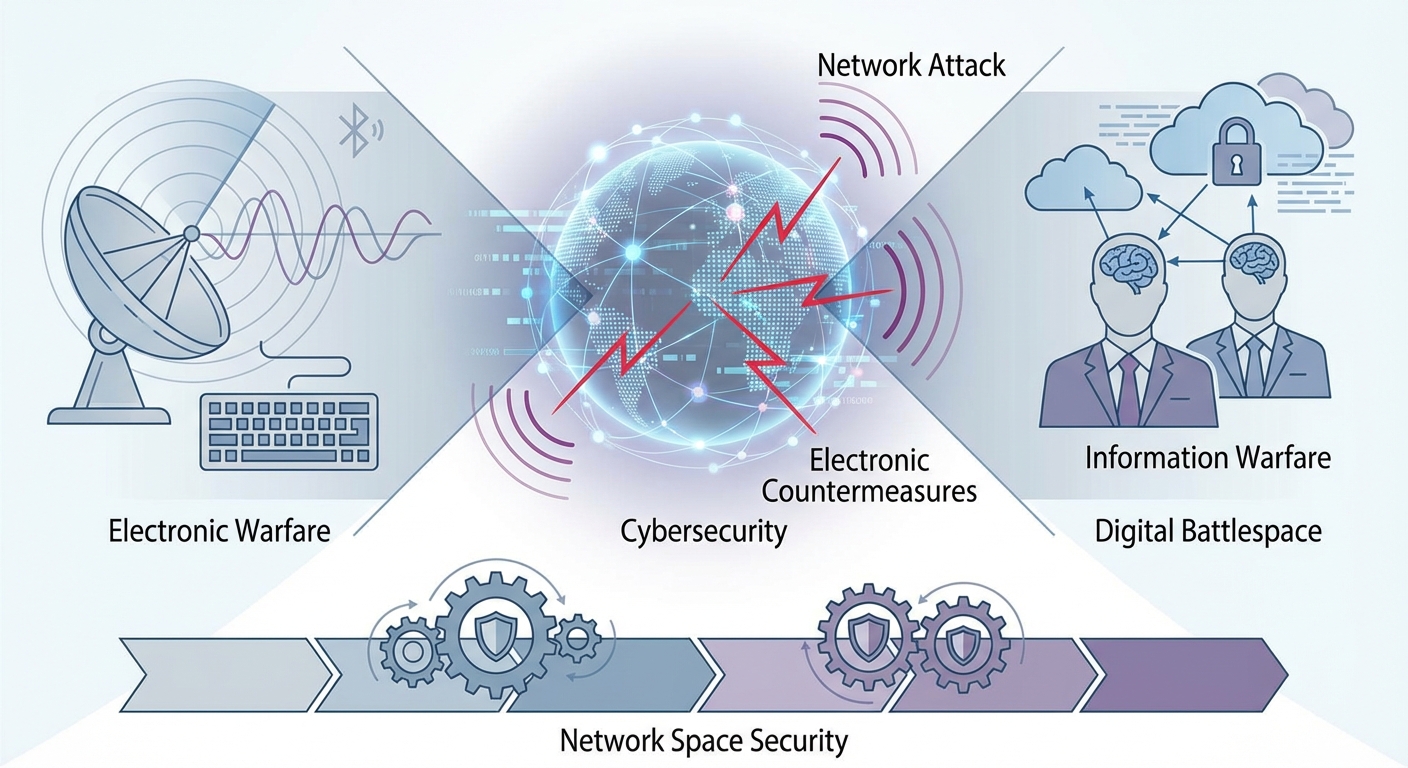
In the summer of 2010, engineers at Iran's Natanz nuclear facility were puzzled. The centrifuges at Natanz, precision instruments worth millions of dollars, began spinning at abnormal speeds and then failed one after another. Control systems showed everything was normal, yet the equipment was being scrapped in a way imperceptible to the naked eye.
The mastermind behind this was the "Stuxnet" virus, the first cyber weapon in human history confirmed to be used for destroying physical infrastructure. Jointly developed by the United States and Israel, Stuxnet spread via USB flash drives and specifically targeted Siemens industrial control systems. Estimates suggest that Stuxnet destroyed approximately 1,000 Iranian centrifuges, setting back Iran's nuclear program by several years. No planes took off, and no missiles were launched, yet the damage caused was comparable to a precision airstrike.
Stuxnet opened a new era: cyber attacks can bring physical damage comparable to traditional military strikes. Electronic warfare (the struggle over the electromagnetic spectrum) determines who can "see" and "speak" on the modern battlefield. These two fields together constitute the "fifth domain of operations," alongside land, sea, air, and space. The particularity of cyberspace and the electromagnetic spectrum lies in their low entry threshold, attacks that can be completed in milliseconds, offensive and defensive capabilities that are difficult to assess before a war, and their lack of constraint by national borders.
The Invisible Battlefield
The 2017 NotPetya attack caused approximately $10 billion in global losses; the 2020 SolarWinds intrusion penetrated core US government agencies; in the war in Ukraine, cyber attacks have been closely coordinated with conventional operations. In the "fifth domain," both China and the US are accumulating strength and exploring boundaries.
Vulnerability of Critical Infrastructure
The critical infrastructure of modern society—power grids, water supply systems, financial networks, and traffic control—is highly dependent on digital systems. Security often lags behind the process of digitalization. Many industrial control systems were born before the popularization of the internet and lack basic security mechanisms; they were later connected to networks to improve efficiency, leaving behind fatal vulnerabilities.
In 2021, the US Colonial Pipeline Company suffered a ransomware attack and was forced to shut down approximately 45% of the fuel supply to the US East Coast for five days. The attackers used a leaked VPN password to intrude, and the Colonial company eventually paid a ransom of about $4.4 million. The US invests about $850 billion annually in its defense budget to defend against missiles and tanks, yet a criminal gang using a stolen password managed to paralyze the fuel supply of the East Coast. If the attack had come from a state actor, the consequences would be even more unpredictable.
Similar vulnerabilities are widespread globally. In 2020, Israel's water system was hit by a cyber attack where attackers attempted to raise the chlorine levels in drinking water to dangerous levels; fortunately, it was discovered in time, otherwise it could have triggered a public health crisis. In 2021, a water treatment plant in Florida was breached, and attackers increased the concentration of sodium hydroxide by about 100 times. These cases illustrate that cyber attacks on critical infrastructure are not just abstract "cyber warfare" concepts but real-world threats that can endanger lives.
Both China and the US have conducted deep cyber reconnaissance of each other's critical infrastructure. Reports show that Chinese hackers have penetrated US power grid control systems, water treatment facilities, and the operational networks of natural gas pipelines; they are currently mainly in a dormant and reconnaissance phase, but could switch to destructive attacks during a conflict. The US has similarly penetrated Chinese infrastructure; although details are not public, documents leaked by Snowden show that the NSA has deep access capabilities to Chinese communication systems. This state of "mutual pre-positioning" means that once a conflict breaks out, both sides could launch attacks on each other's critical infrastructure within hours.
5G and Communication Security
The battle over 5G networks is not just about commerce, but more about security. 5G will become the foundation for smart cities, autonomous driving, and the Industrial Internet of Things (IIoT); controlling 5G networks is equivalent to controlling massive data flows. This is the core reason why the US resolutely opposes Huawei equipment—not because there is evidence that Huawei has already implanted backdoors, but because Chinese law requires companies to cooperate with intelligence agencies, and Huawei possesses the capability to implant backdoors at both the hardware and software levels.
Huawei responded by stating: it has never been asked and will not cooperate with any government to install backdoors. The core of the issue is trust, and in the context of great power competition, trust is no longer possible. The US and its allies (the UK, Australia, Canada, Japan, and some European countries) have excluded Huawei from their core 5G networks. China views this as evidence of "technological hegemony" and "containing China's rise."
The deeper implication of this dispute is that cyberspace is showing a trend of "Balkanization." In the future, two relatively isolated digital ecosystems may form, one centered on the US and its allies, and the other centered on China. 5G adopts Software-Defined Networking (SDN) and "network slicing" technology, making the attack surface wider than 4G; if isolation measures are not strict, military communications and civilian traffic may affect each other.
From Tallinn to Stuxnet
Estonia: The First "Cyber War"
In April 2007, Estonia decided to relocate a Soviet World War II memorial in the capital, Tallinn, triggering a strong reaction from Russia. What followed shocked the world: Estonia suffered the first large-scale coordinated cyber attack ever directed against a nation.
The attacks began on April 27 and lasted about three weeks. DDoS (Distributed Denial of Service) attacks paralyzed government websites, disrupted banking systems, and made major news websites inaccessible. The attacks peaked on May 9 (Russia's Victory Day), with peak traffic exceeding 90 Gbps. The sources of the attacks were botnets spread across 178 countries, with some IPs traced back to Russian government agencies. Russia denied responsibility, calling it the spontaneous action of "patriotic hackers," but NATO eventually identified it as a "state-sponsored attack."
The historical significance of the Estonia incident lies in it being the first "cyber war" in a true sense, prompting NATO to establish the Cooperative Cyber Defence Centre of Excellence in Tallinn and giving birth to the "Tallinn Manual." Ironically, Estonia's vulnerability stemmed partly from its high degree of digitalization: about 95% of bank transactions were completed online. After the attack, Estonia became a pioneer in cyber defense, proposing the concept of "data embassies" (backing up critical data to allied servers), which later became a reference for other countries.
Georgia: Synergy of Cyber and Kinetic Operations
In August 2008, war broke out between Russia and Georgia. This was the first conflict in history where cyber attacks were conducted simultaneously with conventional military operations. On the evening of August 7, when Georgia attacked South Ossetia, DDoS attacks against Georgian websites had already begun. When the Russian army counterattacked on August 8, the attacks expanded to government, media, and banking systems. Websites were defaced to spread panic, and government communications were disrupted.
Compared to Estonia, the Georgia war demonstrated the tactical use of cyber warfare: information blockades (attacking media websites to control the narrative), command paralysis (disrupting government coordination), psychological warfare (spreading disinformation), and timing coordination with military operations. This "hybrid warfare" model was later adopted on a larger scale in Ukraine.
Stuxnet: A Game-Changing Strike
The story of Stuxnet begins with the Iranian nuclear issue. In the 2000s, Iran's uranium enrichment program became a focus of international concern. The UN imposed sanctions, Israel threatened airstrikes, and military strikes could have triggered a regional war. In this context, the US and Israel chose a covert path.
Operation "Olympic Games" was launched around 2006-2007, jointly implemented by the NSA, CIA, and Israel's Unit 8200. Development costs were estimated in the tens of millions of dollars; to test the virus, the US replicated the Siemens centrifuges used by Iran in national laboratories. President Bush approved the operation, and Obama continued it.
The technical complexity of Stuxnet was unprecedented. It spread via USB drives, utilized four Windows zero-day vulnerabilities, and specifically sought out Siemens Step 7 industrial control software. Once it found its target, the virus modified the output frequency of the frequency converters to make the centrifuges run at abnormal speeds while displaying normal data to operators. Stuxnet was also carefully designed with propagation limits: it only infected computers within three network hops, only activated destruction functions on specific Siemens software versions, and even had an expiration date. Despite this, Stuxnet eventually leaked onto the internet and was reverse-engineered by security researchers, becoming a blueprint for global cyber weapon development.
Stuxnet destroyed about 1,000 centrifuges and is estimated to have delayed Iran's nuclear program by 2-3 years, successfully avoiding airstrikes on Iran. Stuxnet also opened Pandora's box: proving to the world that cyber weapons can cause physical destruction, stimulating countries to accelerate the construction of their cyber warfare capabilities. Iran subsequently rapidly established its own cyber attack force, and the 2012 attack on Saudi Aramco (which destroyed 30,000 computers) was considered direct retaliation.
The strategic legacy of Stuxnet is far more complex than its tactical effects. The US and Israel delayed Iran's nuclear program through cyber attacks, avoiding an airstrike that could have triggered a regional war. However, this "success" came with complex costs; Stuxnet proved that cyber weapons can cross the boundary between war and peace. If a country can use code to destroy another's infrastructure during peacetime, how do traditional laws of war apply? Even more troublesome, after the Stuxnet code leaked, it was reverse-engineered, studied, and imitated, leading to an accelerated expansion of national cyber arsenals. Whether such expansion is worth it remains inconclusive, but it is certain that the era of cyber weapons initiated by Stuxnet is difficult to reverse.
Comparison of Cyber Warfare Capabilities
China's Cyber Warfare Forces
After the 2015 military reforms, China established the Strategic Support Force (SSF), integrating functions such as electronic warfare, cyber warfare, and space operations. After the 2024 reforms, the Cyberspace Force became an independent military branch. China's cyber warfare forces are distributed across multiple systems: the Cyberspace Force is responsible for cyber offensive and defensive operations, the technical reconnaissance bureaus of various theater commands are responsible for signals intelligence and cyber intrusion, the Ministry of State Security (MSS) is responsible for foreign intelligence and cyber penetration, and the Ministry of Public Security (MPS) is responsible for domestic cyber security. In addition, there is a large civilian force composed of "patriotic hackers" and contractors.
Western intelligence agencies have identified multiple APT (Advanced Persistent Threat) groups associated with China. APT1 (Unit 61398), located in Pudong, Shanghai, mainly targets US defense, aviation, energy, and technology companies, and is known for large-scale, long-term economic espionage. APT10 (Stone Panda) is associated with the MSS and focuses on supply chain attacks and cloud service provider penetration. APT40 (Leviathan) is believed to belong to a PLA unit in Hainan, focusing on intelligence related to South China Sea disputes. APT41 (Double Dragon) is the most unique, engaging in both espionage and criminal activities.
The technical capabilities of these APT groups are constantly improving. Early cyber espionage activities were relatively crude and easy to detect, but in recent years, Chinese hackers have become increasingly adept at "living off the land," using legitimate tools already present in the target system rather than implanting malware, making detection much more difficult. The "Volt Typhoon" operation discovered in 2023 is a typical case: Chinese hackers lurked in US critical infrastructure networks, leaving almost no detectable traces, with the purpose appearing to be preparing for future conflicts rather than immediate data theft. The true significance of "Volt Typhoon" lies not in what the operation did, but in what it did not do: these pre-positioned backdoors could be activated simultaneously when a conflict in the Taiwan Strait breaks out, while the outside world knows almost nothing about their scale and depth.
A prominent feature of China's cyber warfare force is "Military-Civil Fusion," where numerous "patriotic hackers," security companies, and university research teams participate in cyber operations, providing deniability while also bringing challenges for coordination and control during times of crisis.
The OPM data breach of 2014-2015 was one of China's most damaging cyber espionage operations against the US. Attackers penetrated the US Office of Personnel Management and stole the personal information of 22 million federal employees, including sensitive security clearance forms (SF-86). The strategic value of this data is immense: it can be used to identify US intelligence personnel, recruit informants, and conduct counter-intelligence operations. Furthermore, Chinese cyber intrusions have penetrated defense contractors such as Lockheed Martin, Boeing, and General Electric, reportedly obtaining sensitive information on the F-35, C-17, and engine technologies.
In September 2015, during Xi Jinping's visit to the US, he reached a cyber agreement with Obama, promising not to conduct cyber theft for commercial competition. After the agreement was signed, activities dropped for a time, though military and intelligence targets were not within the scope; activities rose again after 2018 as the trade war escalated. The agreement proved that China and the US can reach some consensus in the cyber field, but it is difficult to sustain in the absence of reliable verification mechanisms.
Zero-Day Vulnerabilities: The Core of the Cyber Arsenal
Zero-day vulnerabilities (security flaws in software that have not yet been patched) are the core of cyber weapons. A complete attack chain targeting iOS can be worth millions of dollars. The NSA is believed to store a large number of zero-day vulnerabilities; EternalBlue, leaked by the Shadow Brokers in 2017, was later exploited by NotPetya and WannaCry, causing tens of billions of dollars in losses. This exposes a policy dilemma: governments store vulnerabilities for offensive use, but once leaked, they can be used to attack themselves. China's 2021 regulations requiring security researchers to report vulnerabilities to the government first mean that China is organized in collecting vulnerabilities for national purposes.
The United States' Cyber Warfare Forces
US Cyber Command (CYBERCOM) was established in 2009 and upgraded to an independent unified combatant command in 2018, co-located with the NSA at Fort Meade, Maryland. The commander usually also serves as the Director of the NSA, with a personnel size of about 6,200 and an annual budget of about $10 billion. Subordinate units include the cyber commands of the Army, Navy, Air Force, and Marine Corps, as well as 133 Cyber Mission Force teams.
The National Security Agency (NSA) is the core of US signals intelligence and cyber attack capabilities, with an estimated personnel size of 30,000 to 40,000 and a budget of about $10.8 billion. The 2013 Snowden leaks exposed some of the NSA's capabilities: the PRISM project's direct access to tech company data, and TAO (Tailored Access Operations), an elite hacker team.
Since 2018, US Cyber Command has adopted a more aggressive "Defend Forward" strategy, shifting from passive defense to proactive offense, maintaining a long-term presence and operating within enemy networks rather than waiting for an attack to occur before responding. Known operations include disrupting the Russian Internet Research Agency in 2018 to protect the midterm elections, attacking Iranian intelligence systems in 2019, and supporting Ukraine's defense against Russian cyber attacks in 2022.
The logic of this strategic shift is: rather than reacting after an attack occurs, it is better to maintain a presence in the opponent's network to understand their capabilities and intentions, and proactively strike when necessary. Ultimately, this is a long-term, low-intensity cyber war, a competition in the "gray zone" between peace and war. Critics argue this may increase the risk of miscalculation and escalation, while supporters believe opponents are already active in US networks.
Unlike nuclear deterrence, cyber deterrence faces profound challenges because the power of nuclear weapons is certain and observable, while the capabilities of cyber weapons are secret and their effects uncertain. Demonstrating capability may leak technical details and render the weapon ineffective; furthermore, the effect of a cyber attack is highly dependent on the specific configuration of the target system, and attack capabilities may become obsolete before they are used. US scholars have proposed the concept of "Persistent Engagement" as an alternative: not relying on the logic of deterrence, but shaping opponent behavior through long-term presence and action in their networks—a never-ending "cat and mouse game."
NotPetya and SolarWinds: The Destructive Power of Cyber Attacks
On June 27, 2017, a malicious program disguised as ransomware began spreading from Ukraine. NotPetya was implanted as a backdoor through an update to the Ukrainian tax software M.E.Doc, and then used the EternalBlue vulnerability leaked from the NSA to move laterally. On the surface, NotPetya was ransomware, but its actual purpose was large-scale data destruction; the encryption method was intentionally designed to be unrecoverable, and paying the ransom would not decrypt the data.
The destruction of NotPetya spread globally; Maersk shipping lost $300 million, FedEx lost $400 million, and Merck pharmaceuticals lost $870 million. Dozens of Ukrainian government departments were paralyzed, and the radiation monitoring system at the Chernobyl nuclear power plant briefly went offline. Total global losses were estimated at about $10 billion, making it "the most destructive cyber attack in history." In 2020, the US indicted six officers from the Russian Main Intelligence Directorate (GRU).
Whether the global spread of NotPetya was "collateral damage" unforeseen by the attackers or an intentional psychological deterrent remains unknown to this day, but NotPetya revealed a key difference between cyber weapons and traditional weapons: code knows no borders. Once malware enters systems on the interconnected internet, its propagation path is difficult to control completely. This is an important warning for future cyber warfare: attacks targeting specific targets may spiral out of control and evolve into global disasters.
The SolarWinds incident discovered in December 2020 demonstrated the ultimate in supply chain attacks. The Russian Foreign Intelligence Service (SVR) penetrated the network management software company SolarWinds and implanted a backdoor in an update for its Orion product. About 18,000 organizations downloaded the backdoored update, and about 100 organizations were deeply penetrated, including the US Treasury, Commerce Department, Department of Homeland Security, State Department, and Energy Department, as well as tech giants like Microsoft, Intel, and Cisco.
SolarWinds exposed the deep risks of the software supply chain: modern software relies on numerous third-party components, and penetration of any single link can affect the entire ecosystem. The core of the problem is the vulnerability of trust architectures. China is similarly conducting supply chain attacks: in 2019, APT41 spread malware through a gaming company's update system, and in 2020, Chinese hackers penetrated multiple US telecommunications equipment suppliers. In the context of China-US technological "decoupling," supply chain security has become a national security issue.
Electronic Warfare: The Contest for the Electromagnetic Spectrum
Electronic warfare is the struggle over the electromagnetic spectrum. Electronic Attack (EA) suppresses enemy capabilities by jamming, deceiving, or destroying enemy electronic systems; Electronic Protection (EP) protects one's own systems from attack; Electronic Support (ES) detects, identifies, and locates enemy signals to obtain intelligence. In modern warfare, whoever controls the electromagnetic spectrum can "see" and "speak," while the enemy is deaf and blind.
The history of electronic warfare dates back to World War II; in the 1940 Battle of Britain, the British radar network decided the outcome of the air war for the first time. The Vietnam War was a key period for the maturation of electronic warfare; in 1965, the US military lost 171 aircraft during Operation "Rolling Thunder," leading to the birth of "Wild Weasel" missions specifically designed to suppress air defense systems. In the 1982 Bekaa Valley air battle, the Israeli Air Force destroyed 19 Syrian air defense missile batteries in two days with almost no losses; electronic deception and decoys caused Syrian radars to expose their positions before being hit with precision strikes.
The 1991 Gulf War demonstrated the decisive role of electronic warfare. On the first night of "Desert Storm," AH-64s were the first to destroy Iraqi early warning radars to open a penetration corridor, while EF-111s and EA-6Bs conducted large-scale jamming to suppress air defense networks, allowing F-117s to penetrate stealthily and strike strategic targets. The result: the coalition flew about 100,000 sorties with only about 40 aircraft lost (most not in air combat), a loss rate of about 4 per 10,000 sorties, compared to about 90 in the Vietnam War's Operation "Rolling Thunder." Iraq possessed about 16,000 air defense missiles and 7,000 anti-aircraft guns, which were rendered almost useless.
Current China-US electronic warfare capabilities each have their own characteristics. The US EA-18G "Growler" is the world's most advanced dedicated electronic warfare aircraft, with about 160 in service, equipped with the upgraded ALQ-249 Next Generation Jammer. China's J-16D, with about 50 in service, is positioned similarly to the EA-18G and began service in 2021. In fields such as dedicated electronic warfare aircraft, electronic warfare pods, and anti-radiation missiles, the US maintains a lead; however, China has deployed dense land-based electronic warfare facilities along its coast. The most critical gap is combat experience: US electronic warfare forces have accumulated rich experience in the Gulf War, the Iraq War, and operations in Libya, while China's electronic warfare capabilities have not yet been tested in actual combat.
Electronic Warfare in the Taiwan Strait Scenario
In a conflict over the Taiwan Strait, electronic warfare will play a key role. Mainland China has deployed dense land-based electronic warfare systems along its coast, which can implement large-scale electromagnetic suppression over Taiwan and the surrounding waters. GPS jamming could render precision-guided weapons ineffective; communication jamming could paralyze command and coordination; radar jamming could blind early warning systems. Although Taiwan's electronic warfare capabilities are not as strong as the mainland's, as the defender it possesses "home-field advantage," utilizing fixed facilities, pre-set frequency management, and anti-jamming communication networks.
US military intervention will face a core question: within the range of China's electronic warfare threat, can the communications, navigation, and target data sharing of F-35s and carrier strike groups operate normally? US equipment design assumes that its own side possesses electromagnetic superiority; facing a peer competitor like China, this assumption may no longer hold. In recent years, the Pentagon has increased investment in Electromagnetic Spectrum Operations (EMSO), striving to restore its electronic warfare advantage in "contested environments."
Cyber warfare and electronic warfare are microcosms of a competition in "resilience." Since attacking is easier than defending, both sides can cause serious damage to each other; the key is not whose attack capability is stronger, but whose social and military systems can recover faster after being hit. The higher degree of digitalization in US society means a wider attack surface, from the power grid to financial systems to supply chain management—every layer of digital dependence is a potential point of paralysis. China's internet control infrastructure (firewalls, content censorship systems, domestic alternative platforms), which is heavily criticized in peacetime, may transform into a defensive advantage in wartime: a system that is already semi-isolated from the global internet is more difficult to paralyze with external cyber attacks. The logic that geography, industrial capacity, and political will determine the outcome of a war applies equally to the cyber domain.
Ukraine: Combat Testing
The war in Ukraine has provided the first large-scale combat test for cyber and electronic warfare theories, and the results are somewhat ironic: Russia, known as a "cyber warfare powerhouse," failed to paralyze Ukraine through cyber attacks.
Before the war, Russia conducted thorough cyber preparations. In January 2022, Ukrainian government websites were attacked; in February, DDoS attacks hit banks and the government; on February 23, wiper malware was deployed; and on February 24, the day of the invasion, the Viasat satellite communication system was attacked, causing a disruption in Ukrainian military communications. However, Ukraine demonstrated amazing cyber resilience. Microsoft, Google, and Amazon provided threat intelligence, DDoS protection, and cloud backups; government data was quickly migrated to the cloud to avoid destruction; SpaceX's Starlink quickly filled the communication gap; and the Ukrainian IT Army even launched counterattacks.
In terms of electronic warfare, Russia deployed the R-330ZH for GPS jamming, the Krasukha-4 to suppress radars, and the Pole-21 to counter drones. Ukraine's anti-jamming experience is noteworthy: the Ukrainian military used frequency hopping, multiple redundant communications, and rapid tactical adjustments to adapt to Russian jamming. Starlink terminals, due to their phased array antennas and software update capabilities, showed extreme resilience to Russian jamming; SpaceX engineers could update firmware within hours to counter new jamming patterns.
But the most important lesson is the relationship between drones and electronic warfare: a large number of drones were shot down or forced down by electronic jamming, making electronic warfare the primary threat to drones. A 2023 report by the Royal United Services Institute (RUSI) pointed out that the loss rate of Ukrainian drones to electronic warfare was much higher than the proportion shot down by anti-aircraft fire. This has driven the development of anti-jamming designs and an emphasis on GPS alternatives (inertial navigation, visual navigation, machine vision). Both sides are engaged in a "cat and mouse game": when new jamming technology appears, drone operators find countermeasures; when new communication methods are adopted, the other side develops corresponding jamming means.
The Future of AI and Cyber Warfare
Artificial intelligence is changing the landscape of cyber offense and defense. On the offensive side, AI can automate vulnerability mining; code that traditionally required weeks of analysis by security experts can be scanned by AI in hours. AI can also generate more realistic phishing emails and social engineering attacks, and it makes attacks adaptive, adjusting strategies in real-time based on the target environment. On the defensive side, AI can detect abnormal behavior patterns, automatically respond to threats, and predict attack vectors.
However, AI also brings new risks. Large language models could be used to write malicious code or discover vulnerabilities, lowering the threshold for cyber attacks. Deepfake technology could make wartime information warfare even more chaotic; when the public cannot distinguish the authenticity of videos, manipulating public opinion becomes easier. A deeper problem is that when both sides of cyber offense and defense use AI, the speed of decision-making may exceed human understanding and control, which is particularly dangerous in cyber warfare related to nuclear command systems.
Both China and the US are investing heavily in the application of AI in the cyber field. The US Department of Defense's "Project Maven" uses AI to analyze cyber threat intelligence, and the NSA is reportedly developing AI-assisted attack tools. China's specific projects are not public, but its AI research capabilities and investment in cyber warfare indicate that related work is progressing. AI may lead cyber warfare into a faster, more automated, and more unpredictable new phase.
The war in Ukraine has challenged traditional perceptions of cyber warfare; cyber attacks caused interference but fell far short of achieving a "paralyzing" effect. Ukraine has been continuously strengthening its cyber defense since 2014, the support of Western tech companies has been crucial, and systems can be restarted and repaired. The core lesson is that cyber resilience is more critical than cyber protection. The implication for a China-US conflict is that one should not expect cyber attacks to be a "silver bullet," nor is there a need for excessive fear of cyber threats.
Cyber Attacks and Escalation Risks
The intersection of cyber attacks and nuclear systems is the most dangerous "gray zone" of contemporary strategic stability. If one side launches a cyber attack on the other's early warning system to weaken conventional combat capabilities, the attacked party may interpret this as a prelude to a nuclear first strike. The US Nuclear Command, Control, and Communications (NC3) system partially relies on civilian infrastructure, such as satellite communications, internet protocols, and commercial data centers; an attacker may not even know they are touching the nerves of a nuclear system.
During the Cold War, the US and the Soviet Union established hotlines, military communication channels, and crisis notification mechanisms to prevent miscalculation and escalation; the cyber field lacks similar mechanisms. The 2015 China-US cyber agreement was limited to economic espionage and did not involve military and strategic systems. The attribution problem of cyber attacks greatly diminishes the utility of "crisis hotlines": if the source of an attack cannot be determined, who does the hotline call go to?
Even more troublesome is the blurring of red lines: when does a cyber attack constitute an "act of war"? Attribution itself is a huge challenge; high-level attackers can disguise themselves as a third country, and technical attribution can take weeks to months, far exceeding the time window for crisis decision-making. The "Tallinn Manual" established some basic principles, but it is only academic research and is not binding. The UN has attempted to establish norms for behavior in cyberspace, but progress is slow, with the main obstacle being that major powers are unwilling to give up their offensive options.
There is neither a cyber crisis communication mechanism between China and the US, nor a consensus on red lines for cyber warfare. This is the area where "guardrails" are most needed in China-US strategic competition. Similar to the history of nuclear arms control, just as the Cuban Missile Crisis led to the hotline and the Partial Nuclear Test Ban Treaty, perhaps only after experiencing a serious cyber crisis will both sides truly take this issue seriously.
Future cyber warfare and electronic warfare face many key uncertainties. The most dangerous unknown lies in the potential link between cyber attacks and nuclear escalation. A cyber attack on NC3 (Nuclear Command, Control, and Communications) systems could be misinterpreted as a prelude to a nuclear first strike. If one side's cyber attack in a Taiwan Strait conflict accidentally touches the other's nuclear command link, decision-makers might make a unilateral nuclear reaction decision within minutes based on incomplete information; the lack of a "hotline" mechanism between China and the US in the cyber domain further amplifies this risk.
Beyond nuclear escalation risks, the true level of China's cyber warfare capabilities is also difficult to assess. Western understanding of Chinese APT groups comes mainly from discovered operations, while the most successful cyber intrusions often go undetected. If "Volt Typhoon"-style pre-positioned backdoors were activated simultaneously in the first 48 hours of a Taiwan Strait conflict, US critical infrastructure could suffer paralysis far exceeding the Colonial Pipeline incident, directly weakening the US military's war mobilization capabilities.
At the technical level, AI will profoundly change the balance of offense and defense. AI may make attacks more automated and faster, but it may also make defense smarter. If AI increases the speed of vulnerability mining by an order of magnitude, the current defense model based on "patch cycles" will completely fail, and the balance of power in cyberspace will tilt sharply toward the attacker.
Furthermore, the role of commercial companies in cyber warfare is full of variables. In the war in Ukraine, Microsoft, Google, and SpaceX provided critical support. In a China-US conflict, if China retaliates against the Chinese operations of US tech companies, would these companies still be willing to act as de facto participants in the war? The conflict between commercial interests and national security could weaken US cyber defense capabilities at the most critical moment.
References
- US Cyber Command. 2025 Cyber Posture Report.
- Mandia, Kevin. APT1: Exposing One of China's Cyber Espionage Units. Mandiant Report. 2013.
- US Cybersecurity and Infrastructure Security Agency (CISA). Assessment of Chinese Threat Actors.
- RAND Corporation. Strategic Effects of Cyber Operations. 2023.
- Tallinn Manual 2.0. 2017.
- Center for Strategic and International Research (CSIS). Significant Cyber Incidents Timeline.
- Zetter, Kim. Countdown to Zero Day: Stuxnet and the Launch of the World's First Digital Weapon. 2014.
- Greenberg, Andy. Sandworm: A New Era of Cyberwar and the Hunt for the Kremlin's Most Dangerous Hackers. 2019.
- Sanger, David. The Perfect Weapon: War, Sabotage, and Fear in the Cyber Age. 2018.
- US Department of Defense. 2023 Cyber Strategy.
- Clarke, Richard. Cyber War: The Next Threat to National Security and What to Do About It. 2010.
- Rid, Thomas. Rise of the Machines: A Cybernetic History. 2020.
- US Congressional Research Service (CRS). China's Cyber Capabilities. 2024.
- Center for Naval Analyses (CNA). Assessment of Russian Electronic Warfare Capabilities. 2023.
- International Institute for Strategic Studies (IISS). Cyber Capabilities and National Power. 2021.
- US Army War College. Electromagnetic Spectrum Operations Concepts. 2022.
- Harvard Kennedy School. Theory and Practice of Cyber Deterrence. Belfer Center, 2023.
09UAVs and Swarm Warfare
Drones and Swarm Combat
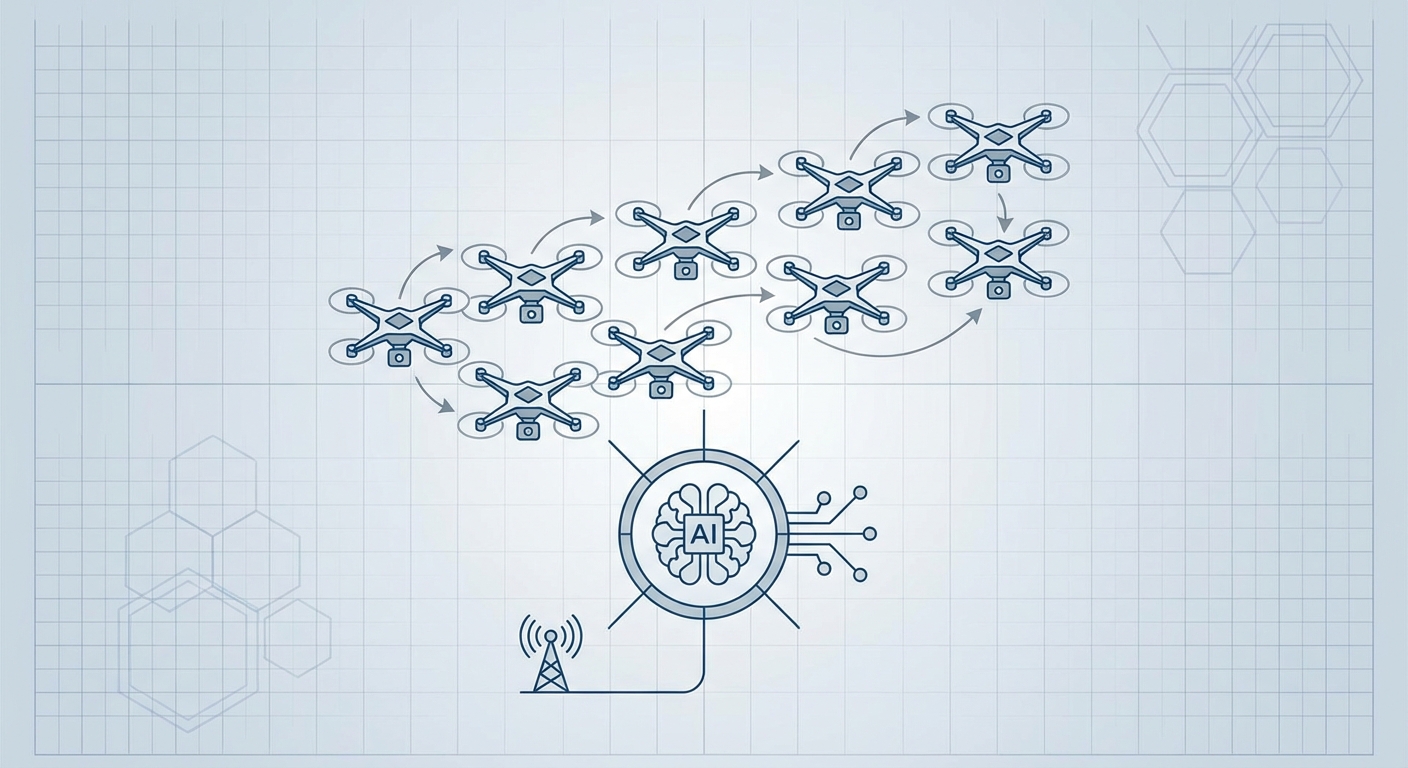
In September 2020, a conflict broke out between Azerbaijan and Armenia in Nagorno-Karabakh. Forty-four days later, Armenia suffered a crushing defeat and was forced to cede large swaths of territory. On paper, the strengths of both sides were close, but the battlefield witnessed a one-sided slaughter.
What changed the course of the war was not tanks or fighter jets, but a Turkish drone costing less than $5$ million: the TB2. Azerbaijan used the TB2 to methodically destroy Armenian tanks, artillery, and air defense systems, broadcasting attack videos in real-time, which shocked global military observers.
Two years later, on the battlefields of Ukraine, tens of thousands of cheap FPV (First-Person View) drones, costing only a few hundred dollars each, are rewriting the economics of war. A $500 quadcopter can destroy a tank worth millions of dollars. This extreme cost asymmetry may mark another revolutionary turning point in military history.
From the V-1 Missile to the Bekaa Valley
From Dream to Reality
The 1918 American Kettering Bug was the world's first unmanned guided bomb, though it never saw combat before World War I ended. In World War II, Nazi Germany's V-1 missile could be considered a pioneer of suicide drones; approximately 30,000 V-1s were launched. Their unit price was only one-tenth that of a fighter jet, yet they caused massive resource consumption for the UK—a logic strikingly similar to today's drone warfare. During the Cold War, the AQM-34 "Firebee" flew over 3,400 sorties in the Vietnam War, with about 578 lost, proving the value of drones in high-threat environments: losing a machine is always better than losing a pilot.
Bekaa Valley: The First Decisive Practical Use of Drones
In the 1973 Yom Kippur War, the Israeli Air Force lost about 102 aircraft. This lesson prompted Israel to vigorously develop drones. The 1982 Battle of the Bekaa Valley became a milestone: a large number of drones lured Syrian radars to activate, electronic warfare aircraft pinpointed their locations, anti-radiation missiles destroyed the radars, and manned fighters seized air superiority. As a result, 19 Syrian SA-6 air defense battalions were destroyed and approximately 87 fighters were shot down, while Israel suffered zero air combat losses. This proved that drones do not replace manned aircraft but allow them to operate with much higher efficiency.
The War on Terror: The Maturity of Integrated Reconnaissance and Strike
The MQ-1 "Predator" changed the game. On October 7, 2001, a Predator launched the first Hellfire missile in Afghanistan, marking the beginning of the era of drone warfare. Over the next two decades, the United States conducted thousands of drone strikes in Pakistan, Yemen, and Somalia. The MQ-9 "Reaper" has an endurance of about 27 hours and can carry eight Hellfire missiles. In January 2020, an MQ-9 killed Qasem Soleimani, commander of Iran's Quds Force, demonstrating the strategic use of drones and their associated escalation risks.
Saudi Aramco Attack: The Vulnerability of Critical Infrastructure
On September 14, 2019, approximately 18 drones and seven cruise missiles attacked Saudi Aramco's Abqaiq oil processing facilities. This is the world's largest oil stabilization facility, processing about 7 million barrels of crude oil per day. Following the attack, Saudi oil production plummeted by about 50%, and global oil prices surged by about 15% in a single day. Drones with a unit price likely not exceeding tens of thousands of dollars caused billions of dollars in economic damage, while Saudi Arabia's deployed Patriot air defense systems, worth billions, failed to intercept this low-altitude, low-speed, small-radar-cross-section attack. This lesson is particularly relevant in a Taiwan Strait scenario: Taiwan's power plants, desalination facilities, and semiconductor factories could all become targets for drone attacks.
Red Sea Crisis: The Threat of Drones to Shipping
From late 2023 to 2024, Houthi forces launched large-scale drone and missile attacks in the Red Sea. Approximately 15% of global trade originally passed through the Red Sea and the Suez Canal; during the crisis, many ships were forced to detour around the Cape of Good Hope, incurring an additional fuel cost of about $1 million per vessel.
Operation "Prosperity Guardian" led by the US and UK exposed the brutal reality of cost asymmetry: an SM-6 missile costs about $4 million, while an incoming drone might be worth only a few thousand dollars. In some engagements, the value of the ammunition exceeded the value of the target by over a hundredfold. Even technologically primitive drones, if sufficient in number and operational duration, can cause systemic impacts on the global economy. The implication for the Taiwan Strait is that a large number of cheap drones and unmanned surface vessels (USVs) could be used to blockade the Taiwan Strait or attack merchant ships; even if they cannot sink warships, they could paralyze maritime trade.
TB2: The Protagonist of the Nagorno-Karabakh Conflict
In the 2020 Nagorno-Karabakh conflict, Azerbaijan changed the course of the war using only the TB2. This Turkish-made drone has a wingspan of 12 meters, an endurance of about 27 hours, and can carry four MAM-L/C precision-guided munitions, with a unit price of approximately $2 to $5 million. Results published by Azerbaijan showed that the TB2 destroyed about 200 tanks and armored vehicles, about 90 artillery pieces and air defense systems, and about 180 military trucks.
The TB2's tactical model is quite simple: it takes off from the rear and moves forward to scout and identify targets; if air defense systems are found, it guides loitering munitions or Harops to strike; after air defense suppression, the TB2 directly attacks ground targets; real-time video feedback verifies the results. The TB2 flies above 8,000 meters, beyond the range of most short-range air defenses; its 27-hour endurance allows for long-term battlefield surveillance; laser-guided munitions can accurately strike both fixed and moving targets.
The success of the TB2 must be understood within a larger strategic context. The conditions of the Nagorno-Karabakh conflict (obsolete air defenses, lack of electronic warfare, almost no opposing air force) hardly exist in great power conflicts. What truly deserves attention is that a $5 million drone destroyed armored units worth tens of millions. This type of cost asymmetry provides "good enough" aerial strike capabilities for countries unable to purchase high-end weapons, which is the root cause of the global procurement fever for the TB2.
Ukraine: The Cheap Revolution
Traditionally, military drones have been expensive, precision equipment—an MQ-9 "Reaper" costs about $30 million, and a Global Hawk exceeds $100 million. The war in Ukraine has subverted this logic. FPV drones cost about $300 to $1,000, carry a payload of about 1-3 kg of explosives, have a range of about 5-15 km, and operators can be trained in just a few weeks. A $500 FPV drone can destroy a multi-million dollar tank, representing the extreme of asymmetric warfare.
It is estimated that daily drone consumption by both sides in the Ukraine war grew from about 1,000 units in 2022 to about 10,000 units in 2024. This is no longer just "drone operations" but drone industrial warfare. Whoever can produce more, faster, and cheaper drones holds the advantage. The Ukraine war has spawned many tactical innovations: swarm attacks using dozens of cheap drones to saturate enemy air defenses; "kill chains" where large reconnaissance drones identify targets and pass coordinates to FPVs for strikes; and to counter Russian electronic jamming, Ukraine has developed fiber-optic guided drones that use thin fiber-optic cables to transmit control signals, significantly reducing the effectiveness of jamming.
The success of Ukrainian maritime USVs is even more remarkable. These vessels, about 5-6 meters long with speeds of about 45 knots, payloads of 200-400 kg of explosives, and costs of only $20,000-$50,000, have successfully attacked the Russian Black Sea Fleet multiple times. By early 2025, Ukrainian USVs had damaged or sunk several Russian warships, forcing the main strength of the Black Sea Fleet to withdraw from Sevastopol to Novorossiysk. USVs costing tens of thousands of dollars threaten warships worth hundreds of millions; this cost asymmetry has significantly altered the balance of power in the Black Sea.
Ukrainian USV tactics continue to evolve: from early reliance on Starlink remote control to later additions of autonomous navigation capabilities; from single-vessel attacks to "swarm" tactics, with several attacks in 2024 involving dozens of USVs simultaneously, making it difficult for Russian close-in weapon systems to handle them all. Unmanned Underwater Vehicles (UUVs) are the next frontier, with Ukraine already demonstrating prototypes like the "Sea Dragon," whose stealth advantages make them potential "game changers" in anti-ship operations.
The most profound lesson of the Ukraine war regarding drone warfare lies in industrial logic: when both sides consume thousands of drones daily, victory depends on whose factories can produce them faster and cheaper. The United States can manufacture the world's most advanced drones, but if China can produce ten times the quantity at one-tenth the cost, it is not hard to judge who holds the advantage in a war of attrition.
Comparison of China-US Drone Power
China: A Complete System from Civilian to Military
In the global consumer drone market, Chinese companies hold an absolute dominant position
10Defense industrial chain
Defense Industry Supply Chain
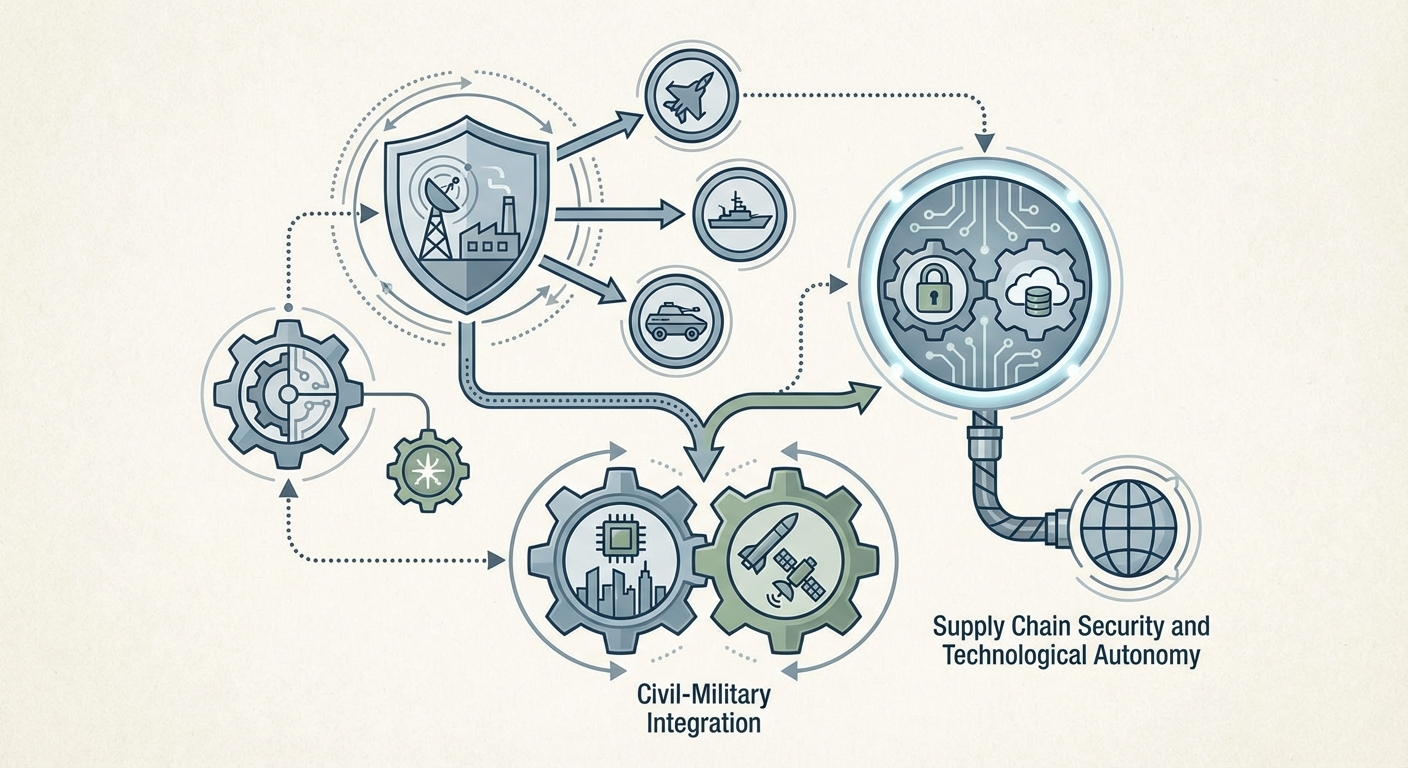
In February 1943, as the gunfire in Stalingrad had just subsided, a shocking figure reached Berlin: the Soviet Union had produced approximately 24,700 tanks in 1942, nearly three times that of Germany. This seemed inconceivable, as the German army had already occupied about 60% of the Soviet Union's coal-producing regions, 68% of its steel production capacity, and vast industrial areas. Yet, east of the Ural Mountains, more than 1,500 factories were reassembled in the freezing cold of -30 degrees Celsius, and workers began production in workshops without roofs.
In the same year, across the ocean, the United States created another miracle: the Willow Run factory was rolling out one B-24 bomber every hour, whereas three years prior, the site had been farmland. Ford Motor Company's assembly line technology was used to produce four-engine heavy bombers, with approximately 42,000 workers operating in three shifts, day and night. By the end of the war, the United States had produced about 300,000 military aircraft, more than the combined total of Germany, Japan, and Italy.
This is the logic of industrial warfare: the key factor that ultimately determines victory or defeat often transcends the tactics of generals or the courage of soldiers, coming down to whose factories can produce more aircraft, tanks, and artillery shells.
Eighty years later, the military competition between China and the United States is similarly an industrial competition. China's annual shipbuilding capacity is approximately 80 times that of the United States, and the speed at which its warships are launched keeps Pentagon officials awake at night. Meanwhile, the U.S. nuclear submarine program has been repeatedly delayed due to welder shortages and aging shipyard equipment. Such capacity gaps may be more strategically significant than the technical comparison of any single weapon system.
From the Shell Crisis to the Great Ural Transfer
The Shell Crisis of WWI
WWI was humanity's first all-domain industrialized war. Germany had stockpiled approximately 10 million artillery shells, expected to last three months, but they were exhausted within three weeks. In the spring of 1915, the British Army could only fire an average of 4 shells per gun per day, while the German army could fire dozens. This "Shell Scandal" led to a government reorganization and the large-scale entry of women into factories. Between 1914 and 1918, British monthly shell production jumped from about 500,000 to about 20 million, a 40-fold increase. The lesson was clear: whoever can expand capacity faster can endure longer.
WWII: The American Military-Industrial Miracle
During WWII, the United States created the most astonishing military-industrial mobilization miracle in human history. In 1940, the U.S. Army had only 280,000 personnel and fewer than 400 tanks. Three years later, military production value jumped from about $2 billion to about $60 billion. In 1944, the U.S. produced approximately 96,000 aircraft, 29,500 tanks, and 2,200 merchant ships of the 10,000-ton class.
The construction time for Liberty ships was shortened from about 244 days in 1941 to about 42 days in 1943. The Willow Run factory covered approximately 3.3 million square feet, and at its peak, it rolled out one B-24 bomber every hour, producing a total of about 8,600 aircraft. Key factors included: the conversion of Detroit auto factories to military production, standardized assembly lines, the large-scale entry of women into the workforce, the unified allocation of resources by the War Production Board, and the geographical advantage of the homeland being free from bombing.
The Soviet Union's Great Ural Transfer
The Soviet story was even more tragic. After the German invasion in 1941, the Soviet Union lost about 63% of its coal production, 68% of its steel production, 60% of its aluminum production, and 38% of its grain-producing regions. Facing catastrophic territorial losses, the Soviet Union carried out the largest industrial transfer in human history, moving approximately 1,500 factories, 1.5 million railcars of equipment, and 10 million workers 1,500 to 2,000 kilometers to the east.
The story of the Kharkiv Tank Factory is most typical. When German troops approached in September 1941, Moscow ordered the transfer. Workers dismantled all equipment within 25 days, and trains traveled east to Chelyabinsk under German bombing. In December, in an open-air environment at -30 degrees Celsius, the factory began production; by March 1942, output had exceeded pre-war levels. In 1942, despite losing most of its industrial zones, the Soviet Union's tank production reached about 24,700 units, nearly three times Germany's approximately 9,200 units.
Germany's Industrial Paradox
Germany possessed the most advanced engineering technology of the time, such as the V-2 rocket, the Me 262 jet fighter, and the Tiger tank, yet it ultimately failed in the industrial war of attrition. The "quality myth" was a primary reason; the labor hours required for one Tiger tank were about six times those of a T-34. On the battlefield, four T-34s would swarm one Tiger, and ultimately, the T-34s would prevail. Resource fragmentation was another factor, with the V-1, V-2, jet aircraft, and missile submarines all being developed simultaneously; each consumed precious resources, but none could turn the tide of the war. Mobilizing too late was the fatal blow, as Germany did not enter a state of total war until 1943.
Germany's lesson shows that technical advancement does not equate to victory in war. Mass production of "good enough" weapons is more effective than limited production of "perfect" weapons, and over-fragmenting resources to pursue multiple cutting-edge projects can lead to total failure. This lesson echoes certain characteristics of the modern U.S. military-industrial complex.
China's Defense Industry: The Power of State Capitalism
China's defense industry is state-led, centered around ten major defense industry groups: Aviation Industry Corporation of China (AVIC, aircraft, helicopters), China Aerospace Science and Technology Corporation (CASC, aerospace, missiles), China Aerospace Science and Industry Corporation (CASIC, missiles, aerospace), China State Shipbuilding Corporation (CSSC, warships, submarines), China North Industries Group Corporation (NORINCO, army equipment), China South Industries Group Corporation (CSGC, vehicles), China Electronics Technology Group Corporation (CETC, radar, electronics), China Electronics Corporation (CEC, electronic components), China National Nuclear Corporation (CNNC, nuclear weapons, nuclear energy), and Aero Engine Corporation of China (AECC, aircraft engines). These ten groups employ over 2 million people, with total annual revenues of approximately 4 trillion RMB.
These state-owned enterprises report directly to the state and the military, free from the profit pressures of private shareholders and the constraints of quarterly financial reports, allowing for long-term investment and strategic planning. Compared to publicly traded U.S. defense companies, the advantage of the Chinese system lies in the government's ability to directly allocate resources, coordinate between groups, and endure short-term losses in exchange for long-term capability building.
Shipbuilding: An Overwhelming Advantage
The rise of China's shipbuilding industry is one of the most astonishing industrial stories of the 21st century. In the global shipbuilding market, China holds about a 50% share, South Korea about 30%, Japan about 10%, and the United States less than 1%. In terms of annual capacity, China has about 40 million deadweight tons (DWT), South Korea about 20 million DWT, Japan about 6 million DWT, and the United States only about 500,000 DWT. China's shipbuilding capacity is approximately 80 times that of the United States.
This gap is equally evident in warship construction. China possesses multiple large shipyards, including Jiangnan Shipyard (Shanghai, building destroyers and amphibious ships), Dalian Shipbuilding Industry (Liaoning, building aircraft carriers and destroyers), Hudong-Zhonghua Shipbuilding (Shanghai, building amphibious ships and supply ships), Huangpu Wenchong Shipbuilding (Guangdong, building frigates), Wuchang Shipbuilding Industry (Hubei, building submarines and frigates), and Bohai Shipbuilding Heavy Industry (Liaoning, building nuclear submarines). In contrast, the United States has only seven military shipyards, of which only Newport News can build aircraft carriers, and only two can build nuclear submarines.
The competitiveness of China's shipbuilding industry stems from multiple factors: economies of scale (building over half of the world's total tonnage annually), government subsidies and low-interest loans, a complete domestic supply chain (steel, engines, and electronic equipment are almost entirely domestically produced), and labor cost advantages (approximately one-fifth to one-tenth of U.S. costs). Warship construction benefits from the spillover effects of the commercial shipbuilding industry: welders and electricians are trained in the commercial sector, and specialty steel relies on commercial demand to drive mass production. This "military-civilian dual-use" industrial base is the fundamental reason why Chinese warships can be built quickly and at low cost.
The comparison between the Type 055 10,000-ton class large destroyer and the Arleigh Burke Flight III destroyer is most telling. The Type 055 has a displacement of about 12,500 tons and 112 VLS cells. The lead ship was launched in 2017 and commissioned in 2020. As of 2025, eight are in service, with an estimated unit price of about $900 million. The Arleigh Burke Flight III has a displacement of about 9,700 tons and 96 VLS cells. The lead ship was launched in 2022 and commissioned in 2024. As of 2025, only one is in service, with a unit price of about $2.2 billion. It took only about 11 years from the start of construction of the lead Type 055 to the commissioning of the eighth ship, averaging about 1.4 years per ship; for the Arleigh Burke Flight III, it took over 10 years from project approval to the commissioning of the lead ship.
While the Type 055 is China's first 10,000-ton destroyer and its design is relatively conservative, whereas the Arleigh Burke Flight III faces additional challenges in integrating new radar onto a mature platform, and U.S.
11Logistics and War Sustainability
Logistics and War Sustainability
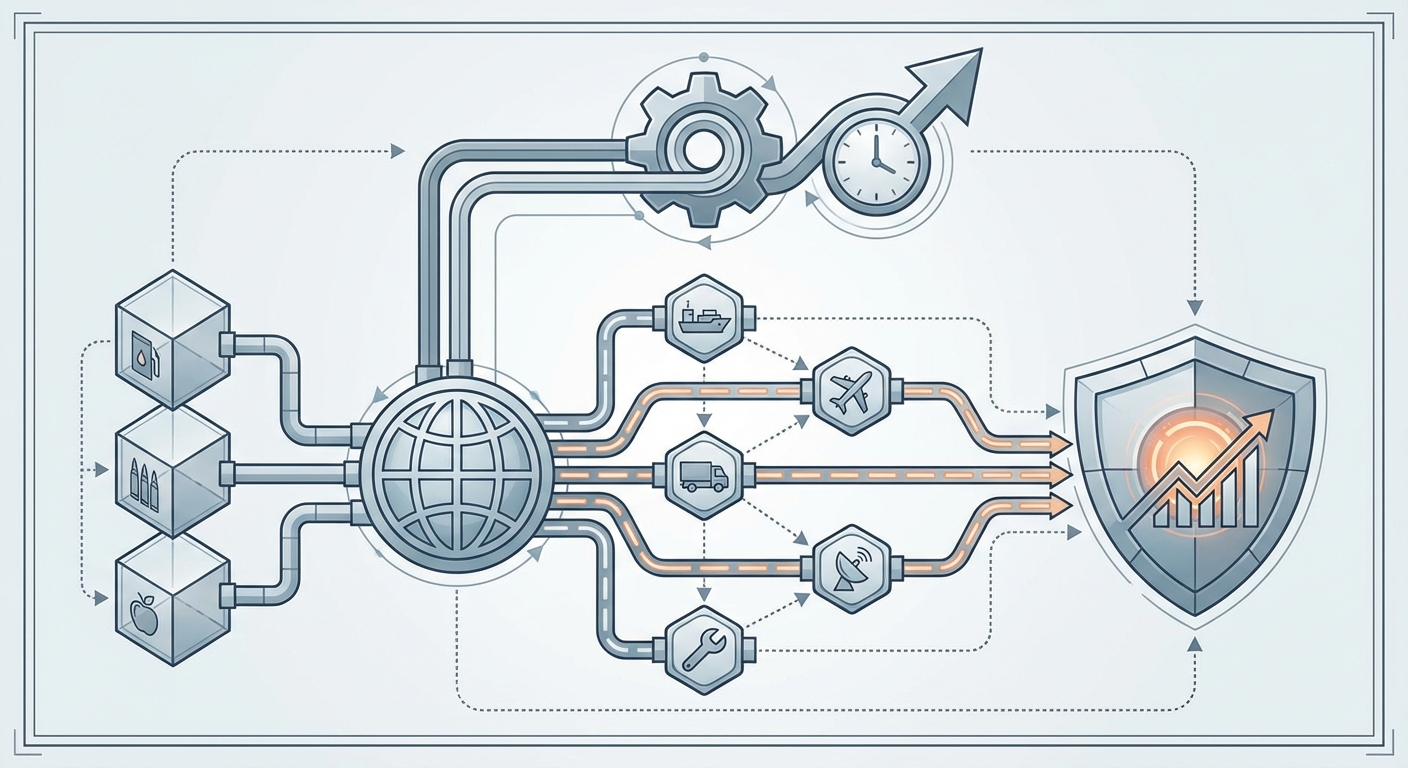
In November 1942, the U.S. Marines on Guadalcanal were in a critical situation. Ammunition was nearly exhausted, rations were limited to two meals per person per day, and malaria and dysentery were spreading through the camps. The Japanese forces held a numerical advantage, and every night the "Tokyo Express"—formations of high-speed destroyers—delivered reinforcements. However, there was one thing they could never deliver in large quantities: supplies. A destroyer could carry hundreds of soldiers but could not fit the ammunition, food, and medicine those troops required.
Six months later, when the remnants of the Japanese forces evacuated, they left behind more than 10,000 bodies on the island. More than half of them died from starvation and disease rather than American bullets. A surviving Japanese officer wrote in his post-war memoirs: "We were not defeated by the Americans; we were defeated by the transport ships."
The brutal logic of logistics in warfare is that the ultimate victor is often determined not by the bravery of soldiers or the advancement of weapons, but by who can continuously provide the front lines with what they need: ammunition, fuel, food, medicine, and spare parts. Napoleon said "an army marches on its stomach," and the appetite of modern warfare far exceeds that of two hundred years ago.
From Guadalcanal Starvation to Barbarossa Permafrost
Guadalcanal: A Classic of Logistical Warfare
The Guadalcanal Campaign from August 1942 to February 1943 became the turning point of the Pacific War, and the outcome depended largely on logistics. The U.S. forces landed with 60 days of supplies, but after the Battle of Savo Island on August 8, the transport fleet was forced to evacuate early, leaving a large amount of materiel unloaded. For the next few months, the U.S. forces were nearly out of food and ammunition, with two meals a day and strict ammunition rationing.
The Japanese predicament was even more severe. After the U.S. gained control of Henderson Field, Japanese transport ships were attacked during the day and could only deliver supplies at night using high-speed destroyers, known as the "Tokyo Express." A destroyer could carry hundreds of soldiers but only enough supplies for about 200 people. In contrast, the capacity of a single transport ship was dozens of times that of a destroyer. The transport efficiency gap was as high as 20:1, and it would only widen over time.
By the end of 1942, the Japanese supply system had collapsed. Daily caloric intake per person dropped from about 3,000 calories to less than 800, and ammunition rationing fell to about 80 rounds per person. U.S. supplies gradually became sufficient, and field hospitals were established. Ultimately, of the approximately 36,000 Japanese troops on the island, only about 13,000 evacuated. About 9,000 died in battle, while more than 14,000 died of starvation and disease. Non-combat losses far exceeded combat casualties.
The lesson of Guadalcanal is not just that "logistics determines victory." The Japanese "Tokyo Express" demonstrated tactical flexibility, using destroyers instead of transport ships to sacrifice efficiency for survival. However, this "clever response" could not reverse the strategic dilemma: a 20:1 transport efficiency gap simply could not be bridged. When discussing Taiwan Strait logistics today, a similar logic applies: the U.S. trans-Pacific supply line indeed possesses powerful delivery capabilities, but the supply line is 11,000 kilometers long. Its turnaround efficiency is dozens of times lower than China's 130-kilometer cross-strait supply line. This disadvantage will not be reversed by any "clever tactics."
The German Eastern Front: Overextended Supply Lines
On June 22, 1941, 3.3 million German troops launched Operation "Barbarossa." Logistics planning assumed the campaign would end in 6 to 8 weeks, but the reality was the exact opposite.
The distance of the supply line became a fatal problem: in July, the front line was about 300 kilometers from the starting point, with a supply cycle of 3 to 5 days; by November, the distance outside Moscow increased to about 900 kilometers, and the supply cycle grew to 14 to 21 days. The speed of railway conversion was about 50 kilometers per day, far slower than the speed of the offensive. The German army required about 120 trains of capacity daily but could only achieve about 60.
Logistics collapsed in the winter of 1941: 3.3 million sets of winter clothing were needed, but only about 500,000 were available. The daily fuel requirement was about 25,000 tons, but the actual supply was only about 8,000 tons. This resulted in approximately 100,000 German soldiers suffering from frostbite and about 25% of vehicles being scrapped due to mechanical failure.
The distance from the U.S. mainland to the Western Pacific is about 10,000 kilometers, while the distance from Germany to Moscow was only about 1,000 kilometers. More importantly, the U.S. military must also face the threat of Chinese missiles, which pose a far greater threat to supply lines than guerrillas ever did.
The Falkland Islands: The Limits of Long-Range Projection
The 1982 Falklands War between Britain and Argentina is a classic case of modern long-range logistics. Facing a distance of about 13,000 kilometers, Britain dispatched about 100 ships. Logistics support personnel accounted for half of the approximately 28,000 people involved. The "Atlantic Conveyor" was sunk by an Exocet missile, resulting in the loss of three helicopters and a large amount of materiel; by the end of the war, anti-aircraft missiles were nearly exhausted.
Argentina was only about 500 kilometers from its mainland and should have had a decisive logistical advantage, but it failed to utilize it effectively: the air force did not continuously attack British supply ships, Exocet missiles were used improperly, and the troops stationed on the islands lacked training and morale.
The revelation for the Taiwan Strait situation is that Britain barely won across 13,000 kilometers; the U.S. would need to cross 11,000 kilometers against an opponent with anti-ship capabilities far stronger than Argentina's, while the opponent's logistical advantage is even more pronounced (China to Taiwan is 130 km, while Argentina to the Falklands was 500 km).
Normandy: The Largest Logistical Operation in History
The Normandy landings in 1944 were the most complex logistical operation in human history. The Allies assembled about 3 million people, 7,000 ships, and 500,000 tons of ammunition in Britain. On D-Day, about 150,000 people went ashore, requiring about 10,000 tons of supplies daily.
The Allies built two artificial harbors, one of which was destroyed in a storm. To solve inland supply issues, the "Red Ball Express," consisting of about 6,000 trucks and 23,000 people, covered a route of about 600 kilometers with a daily transport volume of about 12,000 tons. This system itself consumed 30% of the fuel it transported, making the transport a logistical burden and causing Patton's Third Army to stop its advance in the autumn of 1944 due to fuel shortages. This illustrates that offensive speed must match logistical capacity.
Stalingrad: The Supply Lifeline in a Besieged City
During the Battle of Stalingrad in the winter of 1942, after the Soviet army completed the encirclement in "Operation Uranus," about 300,000 troops of the German 6th Army were trapped in the city at -30 degrees Celsius. Goering promised the Luftwaffe would airlift 500 tons of supplies daily, but the actual average was only about 100 tons, dropping below 50 tons at its lowest. The minimum daily requirement for the besieged German forces was about 300 tons (ammunition, fuel, food, medical supplies).
The airlift gap exceeded 67%. Daily rations for soldiers dropped to 200 grams of bread, horses were slaughtered for food, and frostbite and typhus spread. By the time of surrender in February 1943, about 91,000 of the 300,000 troops became prisoners of war, and ultimately only about 5,000 lived to return to Germany. The huge gap between the promise and reality of aerial resupply has become a classic case of logistical illusion in modern warfare.
America's Global Logistics System
The United States possesses the world's most powerful military logistics system. The Air Mobility Command is equipped with approximately 52 C-5Ms, 220 C-17s, and 300 C-130 series transport aircraft. In terms of sea transport, the Military Sealift Command has about 125 ships, which, combined with the prepositioned fleet and civilian reserves, totals about 14 million tons of capacity. Large quantities of materiel are prepositioned in places like Guam, Japan, and South Korea.
However, in the Western Pacific, this system faces its greatest challenge due to distance. From San Diego to Guam is about 9,500 kilometers, taking about 12 days by sea and 18 hours by air; to Taiwan is about 11,000 kilometers, taking about 14 days by sea and 20 hours by air. In contrast, the distance from China to Taiwan is only about 130 kilometers, with a transit time of 4 to 6 hours. Supplies can be cycled multiple times a day, creating an 85:1 asymmetry.
Base vulnerability is also a major pressure. The U.S. has a limited number of bases in the Western Pacific; Kadena in Okinawa and Andersen in Guam are both within range of Chinese missiles. Guam, as the most important strategic pivot for the U.S. military in the Western Pacific, stores large amounts of ammunition and fuel, but its area is only about 540 square kilometers with only two main runways. Targets are concentrated and difficult to repair.
The vulnerability of supply ships is equally prominent. Modern supply ships are massive, slow, and unarmed. For example, a Henry J. Kaiser-class oiler has a displacement of about 41,000 tons, a speed of only 20 knots, and zero self-defense capability. A carrier strike group requires replenishment at sea every 3 to 5 days. If China can threaten supply routes, the sustained combat capability of the U.S. fleet will drop significantly.
Ammunition: The Dilemma of Consumption and Production
The war in Ukraine has provided real-world data on ammunition consumption in modern high-intensity conflicts. At its peak, Ukraine consumed about 150,000 to 180,000 155mm artillery shells per month, while Western monthly supply capacity was only about 60,000 to 90,000 rounds, a gap of over 50%. Although this is far below the scale of World War I or II (in 1918, the Western Front consumed about 5 million shells per month), it is already a huge challenge for the Western defense industry, whose capacity has shrunk significantly during peacetime.
The consumption of precision-guided munitions is equally staggering. Ukraine has consumed about 8,000 Javelin anti-tank missiles (reducing U.S. stockpiles by about 1/3), about 3,000 Stinger anti-aircraft missiles (reducing stockpiles by about 1/5), and about 2 million 155mm artillery shells. The production bottleneck for Javelin missiles has exposed deep-seated problems in the U.S. defense industrial system: pre-war annual capacity was about 2,100 missiles, with a unit price of about $178,000 and a production cycle of about 24 months, involving about 250 suppliers.
Challenges to expanding production include some component suppliers having exited the market, long training cycles for specialized engineers, and lead times of 2-3 years for precision manufacturing equipment orders. Even with a tripling of production (from 2,100 to 6,000 missiles/year), it would take 4-5 years to replenish the stocks consumed by aid to Ukraine.
Ammunition requirements for a Taiwan Strait scenario could be even more extreme. Assuming 30 days of high-intensity conflict, the U.S. military might consume large numbers of Tomahawk, LRASM, and SM-6 missiles daily. Current estimates suggest that LRASM and SM-6 stockpiles are severely insufficient. The annual capacity for LRASM, the core anti-ship weapon, is about 100 missiles, while wargame simulations estimate that a few weeks of conflict could consume about 500 to 1,000 missiles. Capacity and consumption differ by an order of magnitude. The inventory of the U.S. military's most relied-upon anti-ship missiles is only enough to sustain two days of high-intensity naval warfare, after which the anti-ship capability of carrier strike groups will depend entirely on Lockheed Martin's production schedule.
China's Logistical Advantages and Limitations
Within the First Island Chain, China possesses a natural logistical advantage. The distance advantage is extremely obvious: China to Taiwan is about 130 km, to the Nansha Islands about 1,000 km, and to the Diaoyu Islands about 330 km. This brings a huge difference in time and cost. A Chinese fighter jet takes about 15 minutes one-way to Taiwan, while U.S. jets require aerial refueling. Chinese ships take about 4-6 hours for transit, while U.S. ships from Guam take about 3 days. Chinese supplies can be cycled multiple times a day, while U.S. supplies arrive about once a week.
China's southeastern coast has the world's densest network of ports and airports: about 40 large military airports can deploy over 1,000 fighter jets, about 100 civilian airports can be converted for military use within 72 hours, and about 20 large ports have an annual throughput of hundreds of millions of tons. The potential for mobilizing civilian resources is enormous: about 6,000 merchant ships and 300 ferries could theoretically transport about 150,000 people at once. While the efficiency of wartime mobilization on such a scale has not been tested in actual combat, the potential certainly exists.
However, once the scope of operations extends beyond the First Island Chain, China's logistical advantage fades rapidly. The number of ocean-going supply ships is limited: there are only two Type 901 large supply ships (about 45,000 tons, dedicated to carrier groups) and about 10 Type 903/903A ships (about 23,000 tons, general-purpose supply). Overseas bases are an even greater weakness: the U.S. has about 750 overseas military bases across five continents, while China has only one military base in Djibouti, plus about 10 ports like Gwadar in Pakistan and Hambantota in Sri Lanka where ships can dock for supplies, though their reliability varies. Experience in ocean-going logistics is also limited; the Gulf of Aden escorts since 2008 have been limited peacetime operations involving 2-3 ships, which is completely different from wartime logistics.
Geographic reality is hard to change: within the First Island Chain, China has the logistical advantage; beyond the First Island Chain, the advantage shifts to the United States.
Prepositioned Materiel and Combat Readiness Reserves
Prepositioning materiel is an important way to alleviate wartime logistical pressure. U.S. prepositioning in the Western Pacific includes: approximately 700 million pounds of ammunition and 50 million gallons of fuel stored in Guam, about 3 naval prepositioning ships in Misawa, Japan, and a maritime prepositioning fleet of about 13 ships that can arrive within 7-10 days. Concentrated storage means concentrated vulnerability; if the ammunition depots in Guam are struck, the losses will be catastrophic. The U.S. military is attempting "distributed prepositioning," spreading materiel to places like the Philippines and Palau.
China's concept of "prepositioning" is entirely different: fighting on its own doorstep, the entire southeastern coast is a prepositioning zone, and railways and highways are the supply lines. Such distributed and redundant logistical infrastructure is far more resilient than the concentrated prepositioning of the United States. The root of the gap lies in geography, not technology.
Fuel: The Blood of Modern Warfare
Modern military forces are extremely dependent on petroleum fuel. A carrier strike group consumes an average of about 500,000 gallons of fuel per day, and an armored division consumes about 600,000 gallons per day. An F-15 consumes about 1,600 gallons per flight hour, and an M1A2 tank consumes about 10 gallons per kilometer traveled. The Gulf War consumed about 600 million gallons of fuel in 43 days, with a peak daily consumption of about 20 million gallons—and that was under ideal conditions where Saudi oil facilities were available, there was no enemy interference, and supply lines were only about 300 kilometers long. The Taiwan Strait situation is completely different: preparation time might be only a few weeks, island reserves are limited, supply lines face missile threats, and distances are as long as 10,000 kilometers.
China is the world's largest oil importer, with about 70% dependency on imports. About 80% of these imports must pass through the Strait of Malacca, with an average of about 25 tankers and 15 million barrels of crude oil passing daily through this strait, which is only about 2.8 kilometers wide at its narrowest point.
The Malacca Dilemma is indeed a strategic vulnerability, but a distinction must be made regarding time scales. China possesses about 90 days of strategic petroleum reserves, and pipelines from Russia and Myanmar account for about 15% of imports. Coal-to-liquid capacity is about 12 million tons per year and can be urgently expanded. In a short-term conflict of a few weeks, China can rely on its reserves; only a long-term conflict would have a decisive impact.
Medical Logistics: The Overlooked Bottleneck
Medical requirements for war casualties are often underestimated. In modern high-intensity combat, the daily casualty rate for frontline units is about 0.5% to 1%. The U.S. has two hospital ships with 1,000 beds each and about 30 deployable field hospitals; China has only one hospital ship with 300 beds, but its potential for civilian medical mobilization is greater.
Blood supply is a critical bottleneck: the shelf life of platelets is only 5 days, and a combat injury requires an average of about 6 units of blood. Assuming 1,000 casualties per day in a Taiwan Strait scenario, the daily requirement would be about 6,000 units of blood. The logistical difficulty of airlifting blood across the Pacific is extremely high.
The vulnerability of the pharmaceutical supply chain is also worth noting: about 80-90% of antibiotic raw materials and about 80% of heparin come from China and India. The Pentagon spends hundreds of billions of dollars annually on stealth fighters and nuclear submarines but overlooks the fact that the raw materials for antibiotics used by frontline soldiers come from the opponent's factories. In a Taiwan Strait conflict lasting several months, frontline soldiers might die from infections due to a break in the raw material supply chain.
Allied Logistical Support
Japan is the most critical logistical node. U.S. base clusters in Japan (Yokosuka, the home port of the Seventh Fleet; Kadena, the largest air base in the Western Pacific) store enough ammunition and fuel to support several weeks of high-intensity operations. After the 2015 revision of security laws, Japan can support U.S. logistics under a "Survival Threat Situation." Kadena is only about 700 kilometers from mainland China, within missile range. Whether Japan is willing to bear the risk of its homeland being attacked to support U.S. intervention in the Taiwan Strait is a key political variable.
South Korea's role is more nuanced; U.S. bases in South Korea are primarily oriented toward the Korean Peninsula. If resources are diverted to the Taiwan Strait, North Korea might seize the opportunity to create a crisis. Australia is further away; while it can provide strategic depth, its military resources are limited.
The actual value of allied logistical support is often overestimated. Wartime coordination is extremely difficult: equipment standards differ between countries, political decision-making processes vary, and domestic public opinion may oppose involvement. A more fundamental problem is that allied logistical contributions cannot change geographic reality. No matter how many allies participate, the distance from Japan to Taiwan remains 600 kilometers, and from China to Taiwan remains 130 kilometers. Allies can increase U.S. sustainability, but they cannot reverse the logistical asymmetry.
Sustainability Comparison: Who Can Last Longer?
| Factor | China's Advantage | U.S. Advantage | Key Variable |
|---|---|---|---|
| Distance | 130 km vs 11,000 km (85:1) | - | Geography is unchangeable |
| Base Density | Hundreds of airports and ports | ~750 overseas bases | Only a few available in West Pac |
| Supply Turnaround | Multiple times daily | Once weekly | Determines sustained attrition war |
| Ammo Capacity | Massive industrial base | Technological lead, shrinking capacity | Key for long-term war |
| Prepositioned Materiel | Homeland is the prepositioning zone | Limited reserves in Guam, etc. | Key for initial conflict |
| Allied Support | Limited | Theoretically strong | Practical coordination is difficult |
Logistical sustainability depends on the type of conflict. In a short-term conflict (weeks), both sides' inventories can sustain them, though U.S. precision-guided munitions might run out first. In a medium-term conflict (months), replenishment capability becomes key; China's industrial capacity advantage begins to show, and pressure on U.S. ammunition and supply lines increases. In a long-term conflict (years), industrial capacity determines everything; China's capacity advantage could be decisive, but the U.S. can mobilize allied industrial support.
Logistics is the direct operational manifestation of "endurance." The U.S. global logistics network is an unrivaled advantage in peacetime, but in a Western Pacific conflict, it could become a source of vulnerability: an 11,000-kilometer supply line exposed to Chinese missiles, where every supply ship is an unarmed, high-value target. China's near-shore advantage means shorter supply lines and higher turnaround efficiency, but it also means that once the conflict expands to the open ocean, logistical capability will decay rapidly. Neither side can maintain long-term operations in the other's logistical advantage zone; China cannot strike Hawaii, and the U.S. cannot sustain the Taiwan Strait. Such symmetrical impotence is the material basis for "neither side can win." What determines the course of the war is not who can deliver the most violent first strike, but who still has ammunition to fire and fuel to burn in the third month.
Scenario Analysis: Logistical Pressure Across Different Time Scales
Week 1: Both sides fight using prepositioned stocks. U.S. carriers carry about a week's worth of ammunition, and Guam's reserves can support high-intensity actions. The key variable is whether forward bases suffer effective strikes; repairing a bombed runway at Kadena takes 24-72 hours.
Weeks 2 to 4: Supply issues emerge. Carriers must retreat for replenishment (3-5 days round trip to Guam), and SM-6 and LRASM stockpiles may be depleted by over 50%. Chinese ballistic missiles face similar consumption pressures, but cruise missiles and aviation munitions can be continuously replenished.
Months 1 to 3: The U.S. enters a "strategic supply" phase, with sea transport from the mainland to the Western Pacific taking about 14 days. The gap in turnaround efficiency becomes fully apparent. If no decisive progress is made, the war of attrition will favor China.
Beyond 3 Months: Industrial capacity becomes the decisive factor, and the war evolves into an attrition model similar to World War I or II.
Key Uncertainties:
- Can U.S. forward bases remain operational under missile strikes? Guam and Okinawa are within range of Chinese missiles. Actual missile accuracy, U.S. rapid runway repair capabilities, and the effectiveness of distributed deployment remain untested. If bases recover within 48 hours of the first strike, the U.S. can maintain its sortie rate; if the repair cycle exceeds a week, a fatal vacuum in Western Pacific air power will emerge.
- How large is the gap between the consumption rate and replenishment capacity of key missiles? With an LRASM inventory of about 200 and an annual capacity of about 100, wargames estimate a few weeks of conflict could consume 500-1,000. If the U.S. cannot triple its inventory before the war, anti-ship capabilities will decay sharply after the first week, forcing carrier strike groups to withdraw from strike range.
- On what time scale does a Malacca blockade have a decisive impact? China's 90-day strategic oil reserve plus pipelines from Russia and Myanmar can sustain a short-term conflict. Beyond six months, industrial capacity will drop significantly due to energy shortages. If the U.S. chooses a blockade, it elevates the conflict from a military dimension to full-scale economic warfare, with both sides bearing enormous costs.
- How much allied logistical support will be realized in wartime? Japanese bases are the backbone of U.S. logistics in the Western Pacific, but the political consequences of a missile attack on the Japanese mainland are unpredictable. If Japan fully opens its bases and ports, U.S. supply turnaround efficiency will increase several times; if Japan restricts use due to domestic political pressure, the U.S. will be forced to rely on the single, vulnerable node of Guam.
Summary
Logistics is the most inconspicuous yet most decisive factor in war. The Japanese army at Guadalcanal was crushed by hunger, and Germany failed on the Eastern Front due to the collapse of supply lines.
The Taiwan Strait situation reveals a profound logistical asymmetry: China possesses a 130-kilometer short-range supply line, a dense infrastructure network, and enormous potential for mobilizing civilian resources. While the U.S. has the world's strongest logistics system, it faces an 11,000-kilometer supply line in the Western Pacific, vulnerable forward bases, and limited ammunition stockpiles.
Such asymmetry cannot be compensated for by technology or tactics. Even if the U.S. builds more tankers, stockpiles more missiles, and develops more allied relationships, it cannot change the fundamental fact of geography: China is fighting on its doorstep, while the U.S. is ten thousand miles away.
Ultimately, logistics determines how long a war can last. If the conflict ends within weeks, both sides' inventories can sustain them; if it lasts for months, replenishment capability becomes key; if it lasts for years, industrial capacity will decide everything. For decision-makers, the most important question is not "can we win this battle," but "how long can we sustain the war."
References
- U.S. Army Logistics University. Logistics in the 21st Century. 2023.
- RAND Corporation. Sustaining the Resistance: Logistics Challenges in the Western Pacific. 2024.
- Congressional Research Service (CRS). Defense Logistics: An Overview. 2025.
- Center for Strategic and International Studies (CSIS). Logistics Assessment of a Taiwan Strait Conflict. 2024.
- Royal United Services Institute (RUSI). Ukraine War Ammunition Analysis Series.
- Frank, Richard. Guadalcanal. 1990.
- van Creveld, Martin. Supplying War: Logistics from Wallenstein to Patton. 1977.
- Hastings, Max. The Falklands War. 1983.
- International Energy Agency (IEA). Global Oil Transport Data.
- U.S. Food and Drug Administration (FDA). Drug Supply Chain Report.
- U.S. Department of Defense. National Defense Strategy Logistics Support Assessment. 2024.
- Center for Strategic and Budgetary Assessments (CSBA). Distributed Logistics in the Western Pacific. 2023.
- U.S. Naval Institute. The Future of Sea Replenishment. 2024.
- Japan Ministry of Defense. Japan-U.S. Alliance Logistics Cooperation. 2024.
- Australian Strategic Policy Institute (ASPI). AUKUS and Indo-Pacific Logistics. 2024.
12Talent, Military Manpower, and Institutional Systems
Personnel, Manpower, and Military Systems
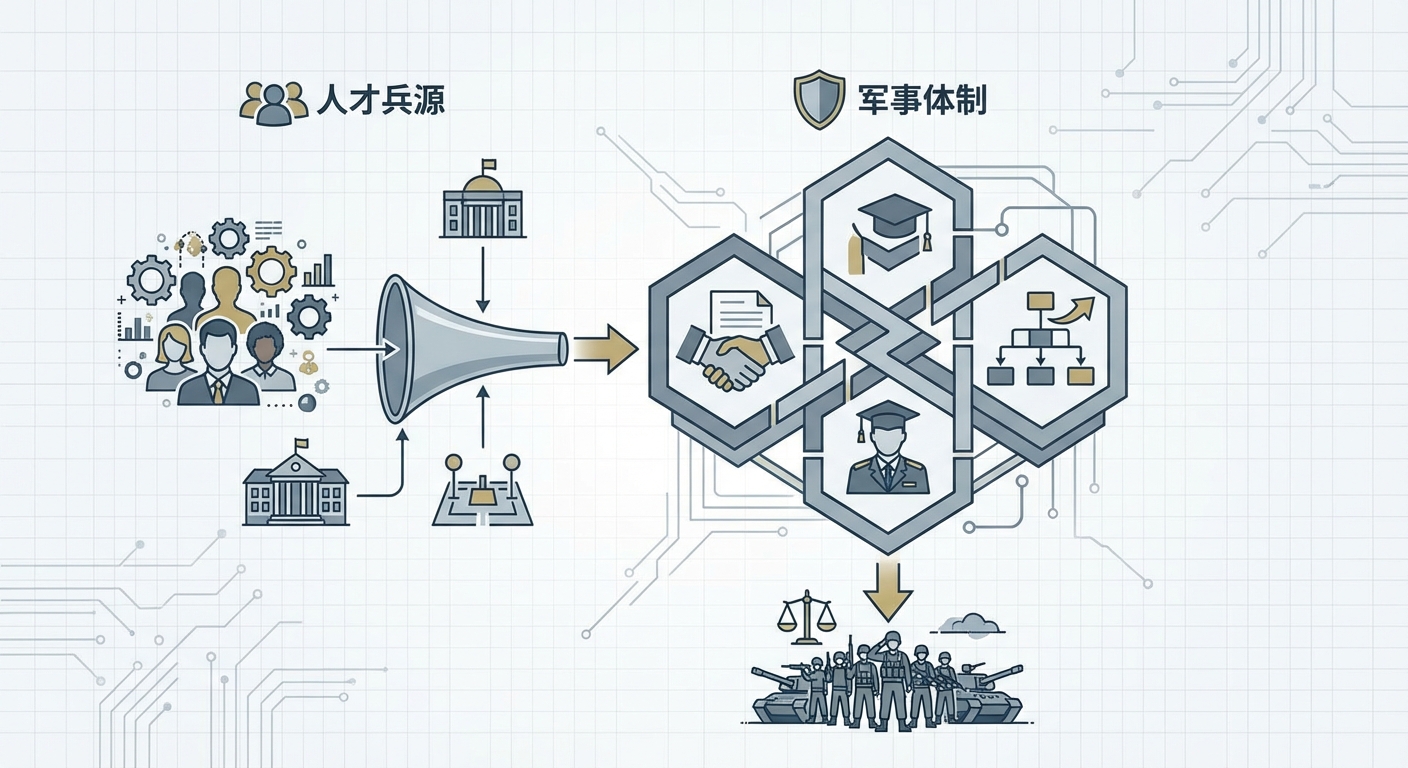
February 26, 1991, Iraqi desert. Visibility was less than 200 meters in a sandstorm. Nine M1A1 tanks from Eagle Troop, 2nd Armored Cavalry Regiment of the US Army, encountered a brigade-level position of the "Tawakalna" Division of the Iraqi Republican Guard. Twenty-three minutes later, Eagle Troop had destroyed approximately 30 Iraqi tanks and about 20 infantry fighting vehicles, with zero losses of their own.
Post-war analysis revealed that technological superiority (thermal imagers could still lock onto targets in the sandstorm) was only one reason for the victory. More critical was the on-the-spot judgment of Captain McMaster, the commander of Eagle Troop, who decided to continue the offensive without orders from superiors rather than stopping to wait for the flanks. The initiative shown by junior officers is a product of the US military's "Mission Command" culture.
For over seventy years, from Korea to the Gulf to Ukraine, every war has repeated the same lesson: the performance parameters of weapons are written in manuals, but battlefield performance depends on the people operating them. The contemporary Chinese military possesses modernized equipment, highly educated soldiers, and informationized command, but how will this military, which has never been tested in actual combat, perform in the face of real fire?
No one knows the answer. Beyond weapons, what ultimately decides the outcome of war is always the people who use them.
From El Alamein to the Six-Day War
The Human Factor Decides Wars
The Korean War simultaneously demonstrated the advantages and limitations of two military cultures: the Volunteers achieved part of their strategic goals with rudimentary equipment and astonishing will, but paid a price in casualties far exceeding their opponents; the US military held an absolute advantage in firepower and logistics, and the initiative and organizational capabilities of their junior officers were equally impressive.
The 1942 Battle of El Alamein provides another perspective. The British Eighth Army, with about 195,000 men, faced the German-Italian Africa Corps, with about 104,000 men. Previously, this same British force had been defeated multiple times by Rommel. The turning point was not reinforcements, but Montgomery's rebuilding of morale and training: he abolished the fragmented brigade-level combat group structure, restored division-level concentrated operations, strictly demanded no retreat, and personally went to the front lines to inspire morale. The same soldiers, with different leadership and training methods, performed completely differently.
The 1967 Six-Day War provides an even more classic case. Israel, with about 260,000 men, faced an Arab coalition of about 500,000; about 800 tanks against about 2,500; and about 300 aircraft against about 950. Ultimately, Israel achieved a decisive victory in six days. The key factor was people: 85% of officers had university degrees, a "Follow Me" leadership culture, reserves reaching combat readiness within 48 hours, and junior commanders possessing high levels of decision-making authority.
Human factors (training, leadership, morale, organizational culture) can offset or even reverse material disparities.
Military Scale and Structure
Overall Scale
China possesses the world's largest armed forces, with approximately 2 million active-duty personnel, including about 970,000 in the Army, 250,000 in the Navy, 400,000 in the Air Force, 120,000 in the Rocket Force, and 145,000 in the Strategic Support Force. Additionally, there are about 1.5 million in the People's Armed Police and about 500,000 in the reserves. In comparison, the US has about 1.35 million active-duty personnel, Russia about 900,000, and India about 1.45 million.
Scale is not everything; modern warfare emphasizes quality over quantity. Per capita military spending is an important indicator: the US military budget for 2024 is about 886 billion USD for 1.35 million active-duty personnel, roughly 656,000 USD per person; China's official military budget is about 296 billion USD (Western estimates are around 400 billion USD) for 2 million active-duty personnel, roughly 148,000 to 200,000 USD per person. This indicates that each US soldier receives 3 to 4 times the training resources, equipment, and welfare benefits of their Chinese counterpart: more live-fire exercise opportunities, more advanced personal equipment, and more comprehensive logistical support.
Recruitment Systems
China implements a system combining compulsory service (conscripts) and voluntary service, with a service term of 2 years, after which one can transition to a non-commissioned officer (for up to 30 years). Due to an abundance of volunteers, forced conscription is rare. Motivations for enlistment vary by region: enthusiasm is lower in eastern coastal areas (where job opportunities are plentiful) and higher in western and rural areas (where economic benefits and social status improvement are primary motives).
The US has implemented an all-volunteer force since the end of the Vietnam War in 1973, attracting volunteers with high enlistment bonuses (exceeding 75,000 USD for certain roles) and GI Bill education benefits (full tuition for about 4 years plus a living allowance after discharge, with a total value of about 150,000 to 200,000 USD). An all-volunteer military is more professional, though costs are higher and its connection to society has weakened.
China's potential manpower pool is several times that of the US: about 110 million eligible service-age population compared to about 32 million. Furthermore, the proportion of US youth meeting enlistment standards is extremely low: about 32% are disqualified due to obesity, about 10% due to drug issues, and the comprehensive disqualification rate is as high as 77%. In recent years, the US Army's recruitment completion rate once dropped to 75% to 80%, the most severe recruitment crisis since the inception of the all-volunteer force.
Deep-seated reasons include: low unemployment rates making civilian employment more attractive; social war-weariness after 20 years of the War on Terror; and the proportion of youth from military family backgrounds dropping from about 40% in 1995 to about 12% in 2019, indicating a widening civil-military divide. The Army launched the "Future Soldier Preparatory Course" to address this: providing a 90-day course for applicants who narrowly missed qualification standards, with a pass rate of about 95%.
Officer Training
The Prussian Legacy
The origins of the modern officer training system can be traced back to the Prussian military reforms after 1806. That year, Prussia was completely defeated by Napoleon at the Battles of Jena and Auerstedt, losing about 25,000 killed or wounded and 140,000 captured out of a force of 170,000; the nation almost perished. The subsequent reforms led by Scharnhorst included: abolishing the aristocratic monopoly on officer positions and selecting based on merit; establishing a formal military academy system emphasizing the combination of theory and practice; creating the General Staff; and emphasizing independent judgment and initiative.
These reforms gave birth to the concept of "Mission Command" (Auftragstaktik): superiors provide the mission objective, and subordinates independently decide the method of execution. The prerequisites are a shared combat philosophy, high levels of trust, and excellent training. The advantage lies in flexibility, speed, and the ability to handle a chaotic battlefield, while requiring officers to understand the superior's intent and exercise independent judgment. This concept remains the core of Western military education today and is one of the most profound divides between Chinese and Western military cultures.
China's Military Education System
China has a comprehensive military education system: the National Defense University (Beijing) trains general-level strategic talent; various service command colleges train division and brigade-level commanders; and service academies provide 4-year programs for junior officers. The National University of Defense Technology (NUDT) is the top military science and technology institution, with disciplines covering computers, aerospace, electronics, communications, and weaponry. Its research achievements include the Tianhe supercomputer and the Beidou satellite navigation system, and its admission scores are close to those of Tsinghua and Peking University.
Characteristics of Chinese officer training: political education holds a central position (estimated to account for about 30%), which may crowd out professional training time; a culture of obedience can easily suppress initiative and innovation; the promotion mechanism historically suffered from severe seniority-based bias (undergoing reform since 2015); and the greatest weakness is a near-total lack of actual combat experience.
America's Diverse Training Paths
US officer sources are diversified: about 40% come from ROTC (Reserve Officers' Training Corps), about 25% from OCS/OTS (Officer Candidate School/Officer Training School for active-duty soldiers), about 20% from military academies (West Point, etc.), and about 15% from direct commissions (professionals such as doctors and lawyers). West Point (founded in 1802, acceptance rate about 10%), the Naval Academy at Annapolis (acceptance rate about 8%), and the Air Force Academy (acceptance rate about 12%) are elite training paths.
In senior military education, joint service assignments are a prerequisite for promotion to general, requiring experience in a Unified Combatant Command or the Department of Defense to ensure a deep understanding of joint operations.
Characteristics of US officer training: diverse sources avoid institutional inbreeding; emphasis on officers as "professionals"; rich combat experience accumulated through extensive rotations over the past 20 years; and encouragement of critical thinking and "constructive dissent."
The Israeli Reference
The Israel Defense Forces (IDF) provide another reference point. Their core philosophy is "Acharai" (Hebrew for "Follow Me"), meaning officers must lead from the front. Israeli officers make up about 10% of total forces but account for about 25% to 30% of casualties, far higher than the US military's roughly 10% to 12% or the roughly 12% during World War II. This leadership style (leading from the front rather than commanding from the rear) profoundly impacts unit morale and combat effectiveness. The cost is an extremely high
13Intelligence, Surveillance, and Early Warning
Intelligence, Reconnaissance, and Early Warning
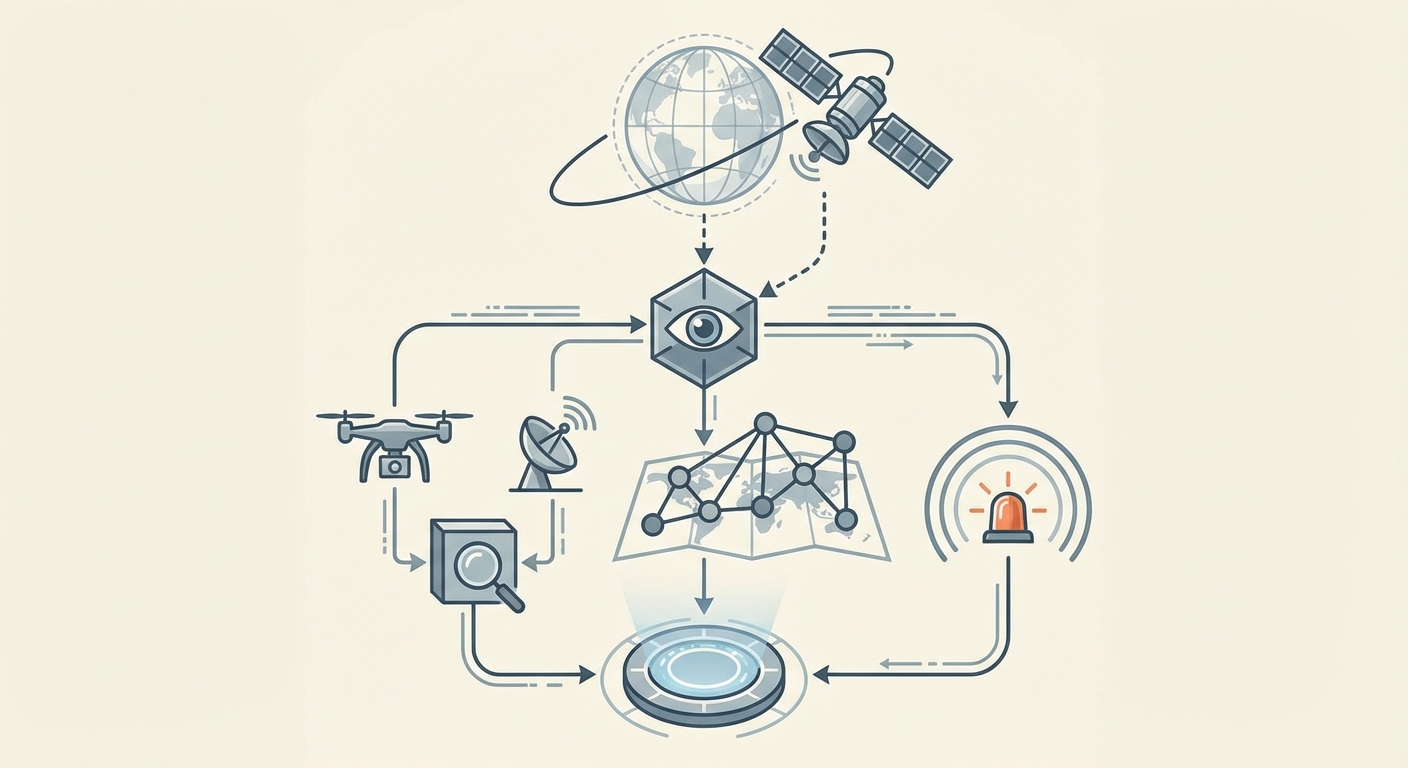
In the early hours of June 4, 1942, in the waters northeast of Midway Atoll, four aircraft carriers of the Japanese Combined Fleet (Akagi, Kaga, Soryu, and Hiryu) advanced toward Midway, preparing to launch a decisive strike. Vice Admiral Chuichi Nagumo was confident: the Americans knew nothing of the Japanese plan of attack.
But Nagumo was wrong.
In an inconspicuous building at Pearl Harbor, a team led by U.S. Navy intelligence officer Commander Joseph Rochefort had spent months deciphering the Japanese Navy's JN-25 code. Rochefort's team grasped Japan's intent to attack "AF" (Midway), while also identifying the timing, force strength, and route of the offensive. To confirm that "AF" was indeed Midway, Rochefort designed a brilliant verification: he had Midway send a message in plain text claiming that its freshwater equipment had failed. Two days later, a report of "AF short of water" appeared in an intercepted Japanese encrypted telegram.
U.S. aircraft carriers lay in ambush along the Japanese fleet's inevitable path. As Japanese pilots were busy swapping munitions on deck for a second wave of attacks, American dive bombers emerged from the clouds. In four critical minutes, from 10:22 to 10:26, three Japanese carriers were hit and set ablaze. By evening, all four carriers had sunk, and the elite pilots of the Japanese Navy were nearly wiped out. This battle profoundly reversed the tide of the Pacific War.
Intelligence determined the outcome of the Battle of Midway. More than eighty years later, in the strategic competition between China and the United States, whoever can better penetrate the "fog of war" will gain the initiative.
Eyes in the Fog of War
Clausewitz called it the "fog of war": uncertainty, chaos, and miscalculation permeate the battlefield. Whoever can penetrate the fog can detect the enemy first, decide first, and strike first. Intelligence, Reconnaissance, and Surveillance (ISR) capabilities are the foundation of modern warfare; without accurate situational awareness, even the most powerful weapons are aimless.
History has repeatedly proven the decisive value of intelligence. In the Battle of Midway, Japan held the advantage in force strength (four carriers against three) but suffered a crushing defeat due to an intelligence disadvantage.
The 1973 Yom Kippur War provides a contrary case. Israeli intelligence received multiple warnings before the war: the Soviet Union urgently evacuated advisors and families from Egypt, a high-level Mossad informant issued a war alert, and King Hussein of Jordan personally gave a warning. However, analysts insisted that Egypt would not dare to attack without sufficient air power; this "concept" framework led to all warnings being ignored. When war broke out on October 6, Israel was caught off guard, with approximately 2,700 killed and about 400 tanks lost in the early stages of the war.
Intelligence failure often stems from the inability to correctly interpret existing information rather than a lack of information. Preconceived judgments, confirmation bias, and insufficient organizational coordination can all lead to disaster.
The 1941 attack on Pearl Harbor is another classic case. U.S. intelligence possessed several warnings: the deciphered "Purple" code showed the timing of Japan's diplomatic ultimatum, and a radar station detected the incoming flight group about 50 minutes before the attack. However, the information was scattered across different agencies—the Army, Navy, and State Department—and no one synthesized it. The lesson of Pearl Harbor prompted the post-war integration of the U.S. intelligence system, yet the 9/11 attacks 73 years later showed that the problem of "information silos" had never been truly resolved.
Overview of Intelligence Systems
The United States possesses the world's largest intelligence system. The "Intelligence Community" includes 18 agencies: the Central Intelligence Agency (CIA, human intelligence and covert action, approx. $15 billion), the National Security Agency (NSA, signals intelligence and cybersecurity, approx. $20 billion, with about 100,000 employees and contractors), the National Reconnaissance Office (NRO, design and operation of reconnaissance satellites, approx. $18 billion), the National Geospatial-Intelligence Agency (NGA, satellite imagery analysis), the Defense Intelligence Agency (DIA, military intelligence), as well as intelligence departments of various military branches and the Treasury Department's intelligence office. In fiscal year 2024, the National Intelligence Program was approximately $72 billion, and the Military Intelligence Program was approximately $29 billion, totaling over $100 billion.
The U.S. intelligence system has undergone two major reforms: the establishment of the CIA and the National Security Council after Pearl Harbor in 1947, and the creation of the Director of National Intelligence (DNI) after 9/11 in 2001 to unify and coordinate the 18 agencies.
China's intelligence system primarily includes: the Ministry of State Security (MSS, foreign intelligence and counter-espionage), the Intelligence Bureau of the Joint Staff Department of the Central Military Commission (military intelligence), and the Network Systems Department of the Strategic Support Force (cyber intelligence, signals intelligence, and electronic warfare, which integrated the functions of the former Third Department of the General Staff and is likely the largest military intelligence agency). Its characteristics include absolute control by the Party, potentially tighter civil-military intelligence coordination, and an emphasis on the "Overall National Security Concept."
The effectiveness of intelligence work is not proportional to investment. In 2003, U.S. intelligence agencies invested massive resources into researching Iraqi weapons of mass destruction, only to reach the wrong conclusion due to confirmation bias. The scale of China's intelligence system may be only one-tenth that of the United States, but if its judgments on key issues are more accurate, the resource gap becomes secondary. The true victory in intelligence competition depends on who can better "understand the adversary"; the amount of money spent is not the deciding factor.
Space-Based Reconnaissance Capabilities
The United States possesses the world's most powerful space reconnaissance capabilities, dating back to the early Cold War. In 1960, the "Corona" program successfully recovered space film for the first time, proving that the number of Soviet intercontinental missiles was far lower than feared and ending the "missile gap" panic.
Today, the KH-11 "Keyhole" series has an optical resolution of approximately 5-10 cm (this capability was accidentally confirmed in 2019 when Donald Trump tweeted a high-resolution satellite image of a failed Iranian rocket launch). The U.S. has about 4-6 KH-11 satellites in orbit, along with about 3-4 synthetic aperture radar (SAR) satellites (capable of penetrating clouds and imaging at night) and about 7-9 signals intelligence satellites.
China's space reconnaissance capabilities are developing rapidly. In the "Gaofen" series, the GF-11 is believed to have a resolution of 10-20 cm, approaching KH-11 levels. In the "Yaogan" series, the YG-31 three-satellite constellation is specifically used for maritime surveillance, locating surface ships through signal time-difference-of-arrival, serving as the "eyes" for the "carrier killer" DF-21D/26 missiles. In the commercial satellite sector, the "Jilin-1" constellation has exceeded 100 satellites, providing 0.5-meter resolution. Combined with shore-based over-the-horizon radar and drones, China is building a "full-coverage" surveillance network over the Western Pacific.
The commercial satellite revolution is simultaneously changing the landscape. Planet Labs' approximately 200 small satellites achieve daily global coverage, and in the Ukraine war, Russian military deployments were tracked in real-time. Civil investigation organizations like Bellingcat use commercial imagery to track military activities; this "democratization of intelligence" means that military deployments can almost never remain hidden.
Comparing U.S. and Chinese space reconnaissance: the U.S. has about 10-15 military imaging satellites with strong data fusion and analysis capabilities and global coverage; China has about 30-50 (higher quantity, lower individual capability), focused on the Western Pacific. The key gap lies in the sensor fusion and data processing integration capabilities accumulated by the U.S. over decades, while the gap in regional capabilities in the Western Pacific is narrowing rapidly.
Signals Intelligence
The National Security Agency (NSA) is the world's most powerful signals intelligence agency, with approximately 30,000-40,000 employees plus about 60,000 contractors and an annual budget of about $200 billion. Its capabilities include global communications interception, cryptanalysis, network intrusion (through the Office of Tailored Access Operations, TAO), and intelligence sharing with the "Five Eyes" alliance.
The 2013 Snowden leaks exposed just the tip of the iceberg of NSA capabilities: the PRISM project obtained data from tech companies like Google and Apple; XKeyscore could search internet traffic in real-time; Tempora worked with the UK's GCHQ to intercept undersea fiber optic cables; and TAO possessed a sophisticated toolkit for network intrusion. The leaks prompted tech companies to strengthen end-to-end encryption and allowed adversaries to understand U.S. intelligence capabilities.
The "Five Eyes" alliance originated from British-American cryptographic cooperation during WWII. The geographical distribution of the five countries allows them to monitor the globe: the UK's GCHQ specializes in Europe and fiber optic interception, Canada focuses on the Arctic and Russia, Australia targets the Asia-Pacific, and New Zealand is responsible for the South Pacific. This type of alliance, based on shared values and historical trust, is something China cannot replicate, as it lacks intelligence partners it can fully trust.
China's signals intelligence is primarily handled by the Network Systems Department of the Strategic Support Force. Capabilities include large fixed listening facilities along the coast, about seven Type 815 reconnaissance ships, Y-9 electronic reconnaissance aircraft, and the Yaogan-30 series satellites. China is particularly active in cyber intelligence, with multiple APT groups tracked by the West (APT1, APT10, APT41, etc.). China's areas of advantage include intensive monitoring of neighboring countries and the controversy surrounding Huawei's 5G infrastructure. In the field of quantum communications, the "Micius" satellite achieved space-based quantum key distribution in 2016, and a 2,000 km quantum communication backbone between Beijing and Shanghai has been completed. However, the key distribution rate is only about 1 bit per second, and it will not change the battlefield intelligence landscape before 2030.
The popularization of end-to-end encryption is changing the signals intelligence landscape. After the Snowden leaks, applications like WhatsApp and Signal adopted strong encryption, giving rise to "front-end collection" strategies—that is,
14Alliance Systems and the Geopolitical Landscape
Alliance Systems and Geopolitical Landscape
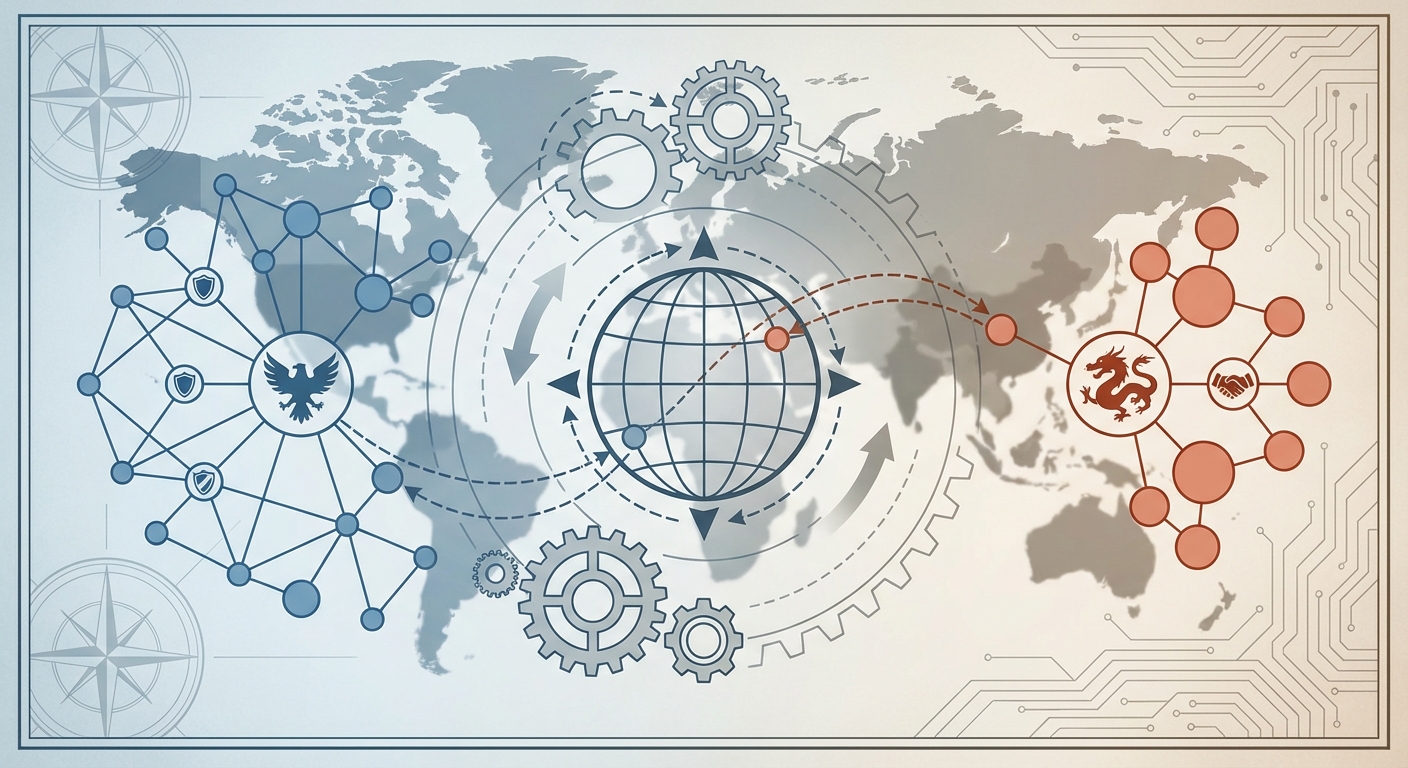
On December 7, 1941, hours after the attack on Pearl Harbor, Hitler made one of the most fatal strategic decisions of World War II: declaring war on the United States. This decision was not based on treaty obligations (the Tripartite Pact did not require Germany to join if Japan initiated the war) but on a flawed understanding of alliance "solidarity." Hitler believed that fighting alongside Japan would pin down American forces. However, he failed to foresee that once American industrial potential was fully mobilized, it would create an overwhelming advantage against the Axis powers.
In 1945, Nazi Germany lay in ruins, and the Empire of Japan surrendered unconditionally. The victory of the Allied powers was not just a military triumph but a victory of alliance cooperation. The United States, Great Britain, the Soviet Union, and China—despite vastly different ideologies and frequent conflicts of interest—formed the most powerful military alliance in human history when faced with a common threat. The disparity in power was stark: the Axis powers had a population of about 380 million, 100 units of industrial output, an army of about 20 million, and an annual aircraft production of about 45,000; the Allied powers had a population of about 1.5 billion, approximately 300 units of industrial output, an army of about 45 million, and an annual aircraft production of about 150,000. The ratios ranged from 1:4 to 1:3.3, making the outcome almost certain from the start.
Eighty years later, a core difference in the US-China competition is that the United States has inherited and developed the alliance system since WWII, while China remains strategically isolated. This gap has profound implications for the future geopolitical landscape.
The Strategic Value of Alliances
Wars are never fought alone. Historically, almost all large-scale conflicts have involved alliances, such as the Triple Entente and the Central Powers in WWI, the Allies and the Axis in WWII, and NATO and the Warsaw Pact during the Cold War. The strategic value of an alliance is reflected at multiple levels: force multiplication (allies' military strength increases available combat power), geographical advantage (forward bases and transit rights), resource sharing (intelligence, logistics, technology), political legitimacy (collective action is more justifiable), deterrence effects (the collective strength of an alliance better deters opponents), risk sharing (war costs are borne by multiple parties), and professional division of labor (countries leverage their respective strengths).
Alliances also come with costs and risks. The risk of entrapment lies in being dragged into a conflict one does not wish to participate in by an ally, with the chain reaction of WWI being a classic example. The risk of abandonment refers to an ally backing down at a critical moment, such as when the US vetoed the UK and France during the 1956 Suez Crisis. Coordination costs are reflected in the need to harmonize different interests and positions, as seen in the disagreements within NATO during the Libyan operations. The free-rider problem arises when some allies contribute insufficiently, a long-standing complaint regarding most NATO countries failing to meet military spending targets. Sovereignty concession requires compromises on certain decision-making powers, exemplified by the issue of wartime operational control in South Korea.
The 1991 Gulf War demonstrated the essence of alliance economics. The United States provided approximately 500,000 ground troops, about 1,800 fighter jets, and about 100 warships, bearing the brunt of the military operations; the allies bore most of the costs. The financial contributions of the 34-nation coalition were distributed as follows: Kuwait approximately $16 billion, Saudi Arabia approximately $16 billion, Japan approximately $11 billion, Germany approximately $6.5 billion, and several other countries, totaling about $115 billion. The actual US expenditure was only about $7 billion, accounting for approximately 7% of the total cost. This "security-for-finance" exchange relationship became a cornerstone of US global strategy, where the US provides security guarantees and allies provide economic support.
This model also brought side effects, leading to domestic dissatisfaction in the US regarding "allies free-riding." The Trump administration's pressure on allies was an expression of this tension. For China, this is more of a warning than an opportunity, because while quarrels within the US alliance system appear intense, its degree of institutionalization and historical inertia give it a resilience far exceeding what surface cracks might suggest. A strategy betting on the collapse of the US alliance system is likely to fail.
The alliance system of WWI provides the opposite lesson. After the assassination of Archduke Franz Ferdinand on June 28, 1914, the alliance chain reaction caused a local conflict to escalate into a world war within six weeks: Germany gave Austria-Hungary a "blank check" guarantee of support; Austria-Hungary issued an ultimatum to Serbia and declared war; Russia mobilized to support Serbia; Germany declared war on Russia and France; and Britain declared war on Germany due to the invasion of Belgium. The automation of alliances, vague commitments, and the rigidity of military plans caused great powers to be dragged into disaster by the adventurous behavior of their allies. The warning for today is: if Japan enters a conflict with China over the Senkaku/Diaoyu Islands dispute, how would Article 5 of the US-Japan treaty apply? Could a small-scale standoff trigger an alliance chain reaction?
The US Alliance System
The United States possesses the world's most extensive network of military alliances. The 32 NATO countries have established a collective defense mechanism through Article 5, and in the Asia-Pacific, the US has bilateral defense treaties with Japan, South Korea, the Philippines, Australia, and Thailand. Additionally, there are informal security partners: Taiwan (the Taiwan Relations Act provides vague but substantive commitments), Israel, Singapore (a quasi-alliance), and India (a strategic partner with deepening ties). This network covers approximately 60 countries and regions globally.
As the most important US ally in Asia, Japan hosts approximately 54,000 US troops, distributed across Yokosuka (home port of the Seventh Fleet), Kadena (the largest air base in the Pacific, about 630 km from Taiwan), Marine Corps facilities in Okinawa, and the Sasebo amphibious operations base.
The 2022 revision of Japan's National Security Strategy marks a major shift in defense policy since WWII: the defense budget will increase from about 1% to 2% of GDP (approximately $73 billion) within five years; the development of "counterstrike capabilities" includes acquiring about 400 Tomahawk cruise missiles; and the Izumo-class ships are being modified to carry F-35Bs. The drivers are China's military rise and concerns over the reliability of US security commitments. Constraints are equally profound: constitutional revision requires a two-thirds majority in the Diet and a national referendum, and the Self-Defense Forces face recruitment difficulties exacerbated by a declining birthrate.
In a Taiwan Strait conflict, Japan is the most likely to support the United States. If a conflict threatens US bases in Japan or spills over into Okinawa, Japan would almost certainly be involved, and following the 2015 security legislation reforms, it can now exercise the right of collective self-defense. However, its ammunition reserves have long been insufficient (reportedly only enough for a few weeks of high-intensity combat), and its logistics system is primarily designed for home defense rather than expeditionary warfare. If it involves defensive base protection, Japan will participate fully; if it requires proactive attacks on targets in mainland China, legal and political obstacles are significant.
South Korea's strategic positioning is more complex, with approximately 28,500 US troops stationed at bases like Pyeongtaek. South Korea itself has about 500,000 active-duty personnel and about 3.1 million reservists. The North Korean threat is its primary security concern, taking priority over considerations regarding China, while trade with China accounts for about 25% of its total trade.
The THAAD crisis of 2016-2017 served as a warning, as China implemented economic retaliation including the "Korean Wave" ban, tourism restrictions, and pressure on the Lotte Group. South Korea lost approximately $7.5 to $15 billion during this period and eventually made the "Three Nos" commitment.
In a Taiwan Strait conflict, South Korea would try its best to avoid involvement. Seoul is only about 50 kilometers from the North Korean border, and thousands of artillery pieces could turn this metropolitan area of 25 million people into ruins within hours. If South Korea participates in a Taiwan Strait conflict, North Korea might take the opportunity to move south. Therefore, the most likely scenario is that South Korea would only provide verbal support to the US along with logistical and intelligence assistance, thereby avoiding direct military intervention.
The 2023 Camp David Summit marked a historic breakthrough in US-Japan-South Korea trilateral cooperation, establishing a real-time missile warning data-sharing system. The fragility of this cooperation is equally apparent: there is strong domestic opposition in South Korea to the reconciliation policy with Japan, and it remains uncertain whether the next administration will continue it.
Australia is deeply tied to the US through AUKUS, the core of which is helping Australia acquire nuclear-powered attack submarines, with plans to buy 3 to 5 Virginia-class submarines in the mid-2030s and build AUKUS-class submarines in the 2040s. The total cost of the project is approximately AUD 268 to 368 billion over 30 years, with the second pillar covering cooperation in hypersonic weapons, AI, and quantum technology. This is a clear choice of sides, marking Australia's abandonment of neutrality in favor of the US.
In a Taiwan Strait conflict, there is a high probability of Australian participation upon a formal US request. It is about 4,500 kilometers from Darwin to Taiwan, and the navy has only 6 major surface combatants and 6 submarines. A 2024 poll showed about 45% support for supporting US military action in a Taiwan Strait conflict, with about 40% opposed.
The Philippines, under the Marcos administration, continues to strengthen ties with the US, with EDCA bases expanding from 5 to 9. Key bases are only about 250 to 400 kilometers from Taiwan, facing the Bashi Channel, making them a potential frontline in a Taiwan Strait conflict. As the 2023-2024 China-Philippines South China Sea standoff escalated, public trust in China was only 11%, while trust in the US was as high as 78%. In a Taiwan Strait conflict, the Philippines might provide base access, but its willingness for direct participation is limited. The core logic of its "limited participation" is to reduce the risk of becoming a target for Chinese retaliation.
The Quadrilateral Security Dialogue (QUAD), consisting of the US, Japan, Australia, and India, is not an alliance. India refuses any formal defense commitments, and there is no secretariat or treaty. India's tradition of strategic autonomy makes the QUAD more of a dialogue platform than a military alliance. The future of the QUAD likely lies in cooperation on "soft" issues like supply chain security and climate change, while remaining vague on hard security issues.
The US alliance system faces challenges: almost all Asian allies have close economic ties with China (Australia ~30%, South Korea ~24%, Japan ~23%, Taiwan ~24%). China has repeatedly demonstrated its willingness to use economic leverage to punish "unfriendly" behavior: restricting rare earth exports to Japan in 2010, cracking down on South Korean companies during the 2016 THAAD crisis, and imposing barriers on Australian products in 2020. From a practical standpoint, the net effect of economic coercion is negative: while it may cause individual countries to back down in the short term, in the medium to long term, it accelerates the "decoupling" process and heightens defensive awareness toward China throughout the region, ultimately consolidating the cohesion of the US alliance.
China's Partnerships
China has traditionally pursued a policy of "non-alignment." The Sino-Soviet alliance of the Mao era (1950 treaty) ended in a split, and since then, China has remained wary of formal alliances. Official discourse emphasizes "partnerships rather than alliances," opposes "bloc politics" and "Cold War thinking," and advocates for a "new type of international relations." China's partnerships are divided into several levels: the highest, "Comprehensive Strategic Partnership of Coordination," is granted only to Russia; Pakistan enjoys an "All-Weather Strategic Cooperative Partnership"; followed by the "Comprehensive Strategic Partnership" with the UK, France, Germany, and Vietnam; and then the "Strategic Partnership" with Indonesia and Malaysia, in descending order.
The China-Russia relationship is China's closest equivalent to an alliance. Military cooperation between the two includes high-frequency and expanded joint exercises, arms deals for S-400s and Su-35s, and joint bomber patrols in the Asia-Pacific.
This relationship lacks a collective defense clause and military command integration; explicit wartime obligations remain vague, and deep intelligence sharing is very limited. China and Russia are essentially "partners of convenience" rather than true allies, as neither side is willing to pay a significant price for the other's conflicts.
The Russia-Ukraine war is a litmus test for this relationship. China does not condemn Russia diplomatically and has significantly increased imports ( trade volume grew from $146.9 billion in 2021 to about $260 billion in 2024), yet it has not provided lethal weapons, and its large banks comply with sanctions. Limitations on the bilateral relationship include historical memories of unequal treaties and the Sino-Soviet split, the power asymmetry of a rising China and a declining Russia, and conflicting interests in the competition for influence in Central Asia. By 2028, if a conflict breaks out in the Taiwan Strait, Russia's most likely response would not be to send troops to help, but to take the opportunity to expand its sphere of influence in Central Asia and the Arctic.
The value of China's other partnerships is even more limited. Pakistan, as an "All-Weather Strategic Cooperative Partner," has attracted about $62 billion in investment for the China-Pakistan Economic Corridor (CPEC). Military cooperation is deep (including about 150 JF-17 Thunder fighter jets, 4 Type 054A/P frigates, 8 Type 039/041 submarines, and about 100 VT-4 tanks). Its strategic value lies in balancing India and providing access to the Indian Ocean. However, Pakistan suffers from internal instability, severe debt problems, and an inability to support blue-water operations.
North Korea has an automatic military assistance clause in the 1961 "Sino-North Korean Treaty of Friendship, Cooperation, and Mutual Assistance" (China's only such treaty), but the reality is more complex. China has limited control over North Korea, and North Korea's nuclear weapons have caused concern in Beijing. Following the war in Ukraine, North Korea-Russia relations have warmed rapidly (with North Korea providing large amounts of ammunition to Russia and reportedly sending troops), and Russia may provide advanced military technology to North Korea, diluting China's influence over Pyongyang. If a military conflict occurs between the US and North Korea, it remains doubtful whether China would fulfill its treaty obligations; although the treaty stipulates "automatic assistance," China has never explicitly stated it would back North Korea's provocative actions.
Iran can provide energy and a foothold in the Middle East (a 2021 25-year agreement with about $400 billion in investment commitments), but US sanctions limit the participation of Chinese companies, and China also has important relationships with Saudi Arabia and Israel.
The key issue is that in a potential conflict with the United States, no country has explicitly committed to fighting for China. The combined GDP of China's main partners (Russia, Pakistan, North Korea, Iran) is about $3 trillion, while the combined GDP of the US and its main allies exceeds $50 trillion—a gap of about 17:1. These partners are geographically dispersed and cannot provide direct support in key theaters like the Taiwan Strait, illustrating the real upper limit of the "no-limits partnership."
Key Geopolitical Blocs
The First Island Chain is the core area of US-China geopolitical competition, forming an arc from the Japanese archipelago and the Ryukyu Islands through Taiwan to the Philippines and northern Borneo. Its strategic significance has a dual interpretation: for the US, it is a "wall" to contain the Chinese navy's access to the Pacific, a forward defense position, the location of allies and partners, and a starting point for power projection; for China, it is an encircling "cage," a first-stage operational objective that must be breached, a necessary path for the recovery of Taiwan, and the frontline of offshore defense.
Key straits and waterways include: the Tsushima Strait (about 200 km wide, the entrance to the Sea of Japan), the Miyako Strait (about 250 km wide, the main passage for the Chinese navy), the Bashi Channel (about 250 km wide, the South China Sea-Pacific passage), the Taiwan Strait (about 130 km wide, the most sensitive waters), and the Strait of Malacca (narrowest point about 2.8 km, China's oil lifeline, through which about 1/3 of global trade and about 80% of China's oil imports pass).
Taiwan's geopolitical value is irreplaceable. It has an area of about 36,000 square kilometers, is about 130 km from mainland China at its closest point, about 630 km from Okinawa, Japan, and about 350 km from the Philippines. MacArthur called it an "unsinkable aircraft carrier" in 1950.
If China controls Taiwan: the First Island Chain is broken, the Chinese navy gains free access to the Pacific, Japan's southern flank is exposed, and US influence in the Western Pacific is greatly diminished. If Taiwan maintains the status quo: the First Island Chain remains intact, and the strategic balance is maintained.
Taiwan's strategic value in semiconductors further strengthens its position: it holds about 90% of the global market share for advanced processes (<7nm), and TSMC accounts for about 90% of AI chip foundry. The Taiwan issue is not only a territorial issue but also the core of the global technology landscape and a litmus test for the credibility of US security commitments in the Asia-Pacific. If the US cannot protect Taiwan, Japan, South Korea, and the Philippines will re-evaluate the reliability of US security guarantees.
The South China Sea is another key bloc. After the 2016 South China Sea arbitration ruled that the Nine-Dash Line has "no legal basis," China has insisted on "non-participation, non-recognition, and non-acceptance." China has built about 12 square kilometers of artificial islands on Fiery Cross Reef, Subi Reef, and Mischief Reef, deploying 3,000-meter runways, radar, HQ-9 air defense missiles, and YJ-12B anti-ship missiles, effectively turning them into forward operating bases. The South China Sea carries about 1/3 of global trade and about 80% of China's oil imports, with estimated reserves of about 11 billion barrels of oil and about 190 trillion cubic feet of natural gas. The US responds with "Freedom of Navigation Operations" (about 10 times in 2023), but these symbolic challenges cannot change the fait accompli of island militarization.
The Indian Ocean is becoming a new frontier of competition. China's "String of Pearls" layout (including the Djibouti naval base, its first overseas military base with an investment of about $1 billion; the Port of Gwadar in Pakistan; the Port of Hambantota in Sri Lanka with a 99-year lease; and the Port of Kyaukpyu in Myanmar) has sparked Indian concerns about being "encircled." About 80% of the global maritime oil trade passes through the Indian Ocean, and about 80% of China's oil imports also need to pass through this route. The Indian Navy views the Indian Ocean as its "backyard" and is accelerating aircraft carrier construction and nuclear submarine projects; the US maintains dominance through the Diego Garcia base and the Fifth Fleet.
Strategic Choices of Key Nations
India is the most important "swing state" in the US-China competition. It has a population of about 1.43 billion (world's largest), a GDP of about $3.5 trillion (world's 5th), military spending of about $83.5 billion (world's 4th), and about 170 nuclear warheads.
The 2020 Galwan Valley conflict became a turning point in bilateral relations. On June 15, Chinese and Indian troops had their most serious border clash since 1962 (India reported 20 deaths, China announced 4 deaths). Since then, India's attitude toward China has turned markedly tough. US-India defense cooperation has accelerated accordingly, with the signing of agreements such as LEMOA (logistics), COMCASA (communications security), BECA (geospatial intelligence), and iCET (critical technology). Joint military exercises have increased from about 5 per year to about 20, and cumulative arms sales have reached about $22 billion.
However, India will not become a US "ally." Its tradition of strategic autonomy is deeply rooted; it not only continues to procure weapons from Russia (S-400) but also remains neutral on the Ukraine issue. India's strategy is to maintain strategic flexibility while remaining vigilant toward China, leveraging the US-China competition to gain benefits from both sides.
The 10 ASEAN nations are a key area of US-China competition, with about 670 million people and a GDP of about $3.6 trillion. The spectrum of alignment: the Philippines and Singapore lean toward the US; Vietnam, Indonesia, Malaysia, and Thailand are balancing/neutral; and Cambodia and Laos lean toward China.
Vietnam's balanced diplomacy is a classic case. Although it has historical enmity with China over South China Sea disputes and the 1979 war, China remains its largest trade partner. In 2023, Vietnam upgraded its relationship with the US to a "Comprehensive Strategic Partnership," meaning the US is now at the same partnership level as China, Russia, India, and Japan. Its "Four Nos" principle fully reflects the survival wisdom of a small nation in the cracks between great powers.
Europe's military presence in the Indo-Pacific is limited. Although the UK is a member of AUKUS and France has territories in the Pacific, and Germany and the Netherlands have conducted ship visits, their actual intervention capability is insufficient due to geographical distance, Russia becoming the primary security concern, and capacity constraints resulting from post-Cold War disarmament. The war in Ukraine shattered the illusion of "change through trade," and in 2023, the EU positioned China as a "partner, competitor, and systemic rival." In a Taiwan Strait conflict, Europe's most likely position would be diplomatic support for the US and participation in economic sanctions against China, while avoiding direct military intervention, similar to the "provide aid but no troops" model in the Ukraine war.
Pacific Island nations are becoming a new frontier in the US-China competition. These small nations have a total population of only about 14 million, but they span the sea lanes from Guam to Australia and control exclusive economic zones of about 30 million square kilometers. The 2022 security agreement between China and the Solomon Islands sparked widespread concern, as China is deeply cultivating this region through the "Belt and Road Initiative." The US has refocused on this long-neglected region, reopening embassies in the Solomon Islands and Tonga in 2023.
The strategic significance of the "Global South" lies in international public opinion and UN voting. During the Ukraine war, many "Global South" countries refused to condemn Russia, and a similar pattern might emerge in a Taiwan Strait conflict. After its 2024 expansion, BRICS covers about 45% of the global population and about 35% of global GDP. While far from a military alliance, it provides China with an important strategic buffer, ensuring it would not face global isolation in a great power conflict.
The Test of Alliances in a Taiwan Strait Conflict
In a Taiwan Strait conflict scenario, the actual willingness of US allies to participate is one of the greatest uncertainties.
Most ASEAN countries would try their best to remain neutral. Singapore, as the most reliable US security partner in Southeast Asia (Changi Naval Base can host aircraft carriers) and also an important trade partner for China, is expected to continue allowing the US military to use its facilities while avoiding taking an open stand. Vietnam would be wary of China but would not pull chestnuts out of the fire for the US, and ASEAN as a whole would not form a unified position.
India would not directly participate in the war but might increase military pressure on the Sino-Indian border to distract China and strengthen intelligence sharing with the US. The Indian Navy's presence in the Indian Ocean could indirectly affect the situation in the Taiwan Strait: if it strengthens monitoring of the western end of the Strait of Malacca, China's energy transportation will face additional pressure.
Europe could only provide diplomatic support and economic sanctions. As an AUKUS member, the UK might send naval forces for symbolic participation, while Germany, France, and Italy are unlikely to intervene militarily.
[Editor's Note] The actual performance of alliances in wartime often shows a huge gap compared to peacetime commitments. Differences in risk assessment (the Japanese public might ask "why risk nuclear war for Taiwan"), time pressure (a Taiwan Strait conflict could be decided within days, while ally decision-making processes might take weeks), and information asymmetry (allies might doubt whether US judgment is reliable) are all reasons for this gap. For the US, the biggest challenge is not whether allies will participate, but whether decisions can be made and actions effectively coordinated within the critical "72-hour window."
A Taiwan Strait conflict will be the most severe test for the US alliance system: there is no clear "act of aggression" (Beijing would define it as an "internal affair"), no UN mandate (China is a permanent member), vague objectives ("defend Taiwan" or "defeat China"?), and no victory in sight. Under these conditions, maintaining alliance unity will be much more difficult than in the Gulf War.
The alliance system is both a multiplier of "endurance" and a constraint. The US alliance network means war costs can be shared, bases can be dispersed, and supply lines can be diversified. The weakness of China's alliance system means almost all war costs are borne by itself; a partnership with a combined GDP of $3 trillion facing an alliance of $50 trillion represents a 17:1 gap. But the strength of an alliance lies not in peacetime declarations but in wartime actions. Is Japan willing to let Kadena become a target for Chinese missiles? Is South Korea willing to divert troops to support the Taiwan Strait under the North Korean threat? Can Australian public opinion bear the cost of losing 35% of its export market? Every ally's decision to participate is a test of political will, and the answer will only be revealed the moment the missiles fly. For China, fighting alone is a disadvantage, but it also saves the friction costs of coordinating allies. For the US, alliances are force multipliers, provided the allies are truly willing to multiply.
The evolution of the future geopolitical landscape faces four key uncertainties.
The primary variable is the actual willingness of US allies to participate in a Taiwan Strait conflict. Although Japan's 2022 strategic revision showed a more proactive stance, constitutional restrictions and domestic politics remain variables. If key allies cannot make a decision to participate within the "72-hour window," the US might have to face the PLA alone in the initial stage, which is precisely the critical phase that determines the course of the war.
Secondly, there is India's final strategic choice. After the Galwan conflict, India accelerated its tilt toward the US, but its tradition of strategic autonomy is deeply rooted. If India chooses to exert pressure on the Sino-Indian border during a Taiwan Strait conflict to pin down China, it will force the PLA to split its forces between two fronts; if India remains neutral, China can move troops from the Western Theater Command to the east, and the battlefield situation will be completely different.
The third uncertainty lies in whether US domestic support for alliances can be sustained. The "America First" ideology has a market in both parties. If an administration that questions the value of alliances emerges again, and the confidence of allies in US commitments is shaken, Japan and South Korea might move toward independent nuclear armament, and the entire Asia-Pacific security architecture will face restructuring.
Finally, there is the question of whether economic interdependence can deter allies from choosing sides. China is the largest trade partner for almost all US Asian allies. If China implements comprehensive economic sanctions against participating allies in the early stages of a conflict, causing Australia to lose 35% of its export market and South Korea to lose 24% of its trade volume, domestic political pressure might force these countries to seek a ceasefire within weeks rather than persisting in the fight.
References
- International Institute for Strategic Studies (IISS). Asia-Pacific Regional Security Assessment. 2025.
- RAND Corporation. The Future of U.S. Alliances in Asia. 2024.
- Brookings Institution. China’s Partnership Strategy. 2023.
- Center for Strategic and International Studies (CSIS). Modernizing the U.S.-Japan Alliance. 2025.
- Ministry of Defense, Japan. National Security Strategy. 2022.
- Department of Defence, Australia. Defence Strategic Review Update. 2024.
- ASEAN Secretariat. ASEAN Outlook series reports.
- Carnegie Endowment for International Peace. India’s Strategic Choices. 2024.
- Clark, Christopher. The Sleepwalkers: How Europe Went to War in 1914. 2012.
- Kyle, John. Suez: Doomsday. 1991.
- U.S. Department of Defense. Indo-Pacific Strategy Report. 2024.
- Center for a New American Security (CNAS). AUKUS and Indo-Pacific Security. 2024.
- Center for Naval Analyses (CNA). Assessment of China-Russia Military Cooperation. 2024.
- Ministry of National Defense, Republic of Korea. Defense White Paper. 2024.
- Lowy Institute. Pacific Island Nations and Great Power Competition. 2024.
- European External Action Service. EU Strategy for Cooperation in the Indo-Pacific. 2023.
- Hoover Institution, Stanford University. China’s Alliance Dilemma. 2023.
- Congressional Research Service (CRS). U.S.-South Korea Alliance. 2025.
- Center for Strategic and Budgetary Assessments (CSBA). Alliance Operations in the Western Pacific. 2024.
- Foreign Affairs. Various analytical articles on Indo-Pacific alliances. 2023-2025.
15History and Strategic Culture
History and Strategic Culture
On the night of October 19, 1950, the first batch of the Chinese People's Volunteers crossed the Yalu River and entered Korea. In Washington, both Truman and MacArthur judged that China would not truly intervene. How could an agrarian country that had just ended a civil war and possessed weak national strength dare to confront the world's most powerful military?
Both men misjudged.
At the time, US intelligence agencies did notice signs of Chinese troop concentrations in the Northeast. In early October, Zhou Enlai issued a warning through the Indian Ambassador K.M. Panikkar: if US forces crossed the 38th parallel, China would not sit idly by. But Washington dismissed this as "bluffing." China had no air force, no navy, scarce artillery, and primitive logistical capabilities—how could it seriously consider fighting the UN forces? MacArthur assured Truman at Wake Island that even if China intervened, the US Air Force could "slaughter" the Chinese troops along the banks of the Yalu River.
Four years earlier, the US Joint Chiefs of Staff had submitted an assessment to Truman, concluding that the Soviet Union would not start a war in the foreseeable future. Stalin indeed did not start a war in Europe, but he supported Kim Il-sung's plan to invade the South, which also exceeded US expectations. These two misjudgments shared a common root: projecting one's own logic onto the behavior of the other. The Americans assumed China would act like a "rational" weak state and avoid confrontation with a great power. But Mao Zedong's calculations were entirely different. For Mao, allowing US troops to reach the Yalu River was unacceptable, regardless of the cost. Memories of a century of humiliation, the experience of revolutionary war, and the political mobilization of "Resist US Aggression and Aid Korea, Defend the Homeland" were factors almost entirely excluded from Washington's analysis.
The first campaign after the Volunteers entered Korea began at Unsan, where the 8th Regiment of the US 1st Cavalry Division was nearly annihilated. This was the most severe defeat suffered by the US military since the Civil War. MacArthur still refused to believe China would intervene on a large scale until hundreds of thousands of Volunteers poured out from all directions during the second campaign, pushing the UN forces all the way from the Yalu River back south of the 38th parallel. This was the longest retreat in US military history.
The Battle of Chosin Reservoir was particularly brutal. 120,000 men of the Volunteers' 9th Army Corps ambushed the US 1st Marine Division in extreme cold of minus 40 degrees. Due to the hasty entry into Korea, many soldiers were still wearing thin winter uniforms from East China. Entire companies froze into "ice sculptures" at their ambush positions; when their bodies were discovered still in combat poses, their muzzles were still pointed at the enemy. Approximately 30,000 died or were injured by the cold, with about 20,000 combat casualties, yet the Volunteers still achieved their operational objectives, forcing the US military to retreat from the eastern front. The tolerance for human cost is almost unimaginable in American military culture, but it cannot be ignored when understanding China's strategic calculations. Any simulation assuming China will abandon action due to expected casualties risks repeating MacArthur's mistake.
More than seventy years later, similar risks of misjudgment remain. China and the United States have vastly different historical memories, strategic traditions, and decision-making cultures. If these differences are ignored, it is easy to project one's own logic onto the other's behavior, leading to catastrophic errors. The purpose of understanding the other's strategic culture is for prediction, not endorsement; this may be the key to avoiding war.
History Shapes Strategy
Military strategy does not emerge from a vacuum. The strategic thinking of both China and the US is deeply rooted in their respective unique historical experiences. Understanding these differences is the foundation for avoiding misjudgment.
China possesses the historical memory of thousands of years of continuous civilization. When Americans talk about the "long term," they think of decades; when Chinese talk about the "long term," they think of generations or even centuries. The "Century of Humiliation" (1839-1949) is merely a low point in the long river of Chinese history. "National Rejuvenation" is viewed as a return to the historical norm, rather than a new ambition.
The trauma of this period is extremely specific. In the Opium War, Britain defeated 800,000 Qing troops with about 16,000 men; in the First Sino-Japanese War, Japan seized Taiwan and demanded an indemnity of 200 million taels of silver (equivalent to three years of the Qing government's fiscal revenue). Over 100 unequal treaties ceded approximately 1.5 million square kilometers of territory; the full-scale invasion of China in 1937 caused the deaths of approximately 14 to 20 million Chinese, with about 300,000 killed in the Nanjing Massacre. These traumas shaped a security outlook of "never allowing history to repeat itself" and gave rise to a unification complex. The sensitivity of issues regarding Taiwan, Hong Kong, Tibet, and Xinjiang can all be traced back to this. "Being backward leaves one vulnerable to attack" became the most deeply ingrained lesson. Every technological breakthrough—from "Two Bombs, One Satellite" to aircraft carriers and the BeiDou Navigation Satellite System—is endowed with the symbolic meaning of "washing away humiliation." Behind this is a genuine expression of collective psychology, not mere propaganda.
The United States has only about 250 years of history as a nation, but this history has been almost entirely on an upward trajectory. Protected by two oceans, the mainland has almost never suffered a foreign invasion. World War I, World War II, and the Cold War all ended in American victory. Such experiences have shaped optimism and exceptionalism. The maritime tradition and experience of global expansion (controlling the seas, projecting power, intervening in distant lands) stand in stark contrast to China's continental power tradition.
These differences have brought about vastly different identities and attitudes toward war. China has experienced brutal wars (millions dead in the Civil War, over ten million in the War of Resistance against Japanese Aggression, and hundreds of thousands sacrificed in the Korean War), forming a cautious attitude that emphasizes strategy and "subduing the enemy without fighting," along with a long-term perception of time. The American experience of war consists of overwhelming victories (World War II, the Gulf War), forming a preference for the decisive use of force, the pursuit of total victory, and rapid solutions.
Geographical environments have further deepened the divide. China has 14 land neighbors. In modern times, maritime threats replaced land threats; the Opium War came from the sea, and the defeat in the First Sino-Japanese War began with a naval battle. The humiliation of "having a sea but no defense" explains why China began pursuing aircraft carriers even before its economy took off better than any geopolitical analysis. The United States, meanwhile, enjoys a unique geographical sense of security and finds it difficult to truly empathize with other countries' fear of being "encircled." When Chinese see US bases extending from Japan and South Korea to the Philippines and Guam, they see an encirclement; when Americans look at the same map, they see a defensive system. One map, two interpretations—this is one of the roots of strategic misunderstanding.
The "Century of Humiliation" is not just a historical narrative; it is the code for understanding China's security policy. For a nation that has experienced being carved up and invaded, territorial integrity is not a tradable interest but a bottom line for survival. When US officials say, "We do not support Taiwan independence," the Chinese hear, "We do not support Taiwan independence yet." When US warships transit the Taiwan Strait, the Chinese see the shadow of the Japanese fleet from the First Sino-Japanese War. Whether it is rational or not is another matter; this psychology is real, and ignoring it is extremely dangerous.
Traditional Strategic Thought: Contemporary Echoes of Sun Tzu's Art of War
The Art of War by Sun Tzu, written around the 5th century BC, is one of the oldest and most influential military works in the world. This book is not just a manual of war but a philosophy of strategy. Unlike Western military traditions that emphasize "decisive battles" and "annihilation," Sun Tzu's core idea is to achieve strategic goals at the minimum cost. If one can win without fighting, why use force?
Sun Tzu's core principles profoundly influence contemporary Chinese military strategy. "To subdue the enemy without fighting is the acme of skill." The essence of the A2/AD (Anti-Access/Area Denial) strategy is to make the US military feel that the cost of intervention is too high and thus give up—this is the modern version of subduing the enemy without fighting. "Know yourself and know your enemy, and you will never be defeated in a hundred battles." The principle of intelligence-first has driven large-scale cyber intelligence activities and long-term studies of the US military system. "All warfare is based on deception." Deception is the essence of war, reflected in strategic ambiguity, concealed military development, and information warfare. "The highest form of generalship is to balk the enemy's plans; the next best is to prevent the junction of the enemy's forces; the next in order is to attack the enemy's army in the field." Strategy is superior to diplomacy, which is superior to force—this is reflected in economic coercion, diplomatic pressure, and "gray zone" actions. "Avoid the strong and attack the weak" (attacking vulnerabilities rather than frontal confrontation) is reflected in the development of asymmetric capabilities. Why build a fleet equal to the US Navy? Isn't it smarter to develop missiles to sink US aircraft carriers?
The construction of islands and reefs in the South China Sea is a model of the modern application of Sun Tzu's thought. From 2013 to 2014, China quietly launched land reclamation in the Nansha Islands, "appearing weak when strong," causing opponents to underestimate its intentions. In 2015, the project suddenly accelerated, completing major construction within a single year ("Speed is the essence of war"). In 2016, defensive facilities began to be deployed, "first making oneself invincible to await the moment when the enemy is vulnerable"—first placing oneself in an unbeatable position. This was followed by gradual militarization, from simple facilities to radar, air defense missiles, and fighter jets. The entire process embodied the strategic patience of "boiling a frog in lukewarm water." No single step was enough to trigger a military response, but the cumulative effect significantly altered the strategic landscape of the South China Sea. By the time the US and ASEAN countries realized the severity of the problem, it was too late to change the status quo.
The 1962 Sino-Indian Border War is a typical manifestation of Chinese strategic culture. Faced with India's "Forward Policy" (gradually encroaching by establishing outposts in disputed areas), China launched a sudden strike after long-term patience. The war lasted about a month. After achieving military victory, the People's Liberation Army (PLA) took the initiative to withdraw to the Line of Actual Control, even retreating 20 kilometers north of the pre-war control line, and returned captured Indian weapons and equipment. This practice of "knowing when to stop" is difficult to understand in Western military tradition—if you won, why not consolidate the fruits of victory? In Chinese strategic thinking, the goal was to "teach a lesson" rather than to conquer; it was to restore deterrence rather than to acquire territory. The war achieved its political goal: the border remained relatively quiet for decades until serious conflicts broke out again in 2020.
From "Hiding One's Capabilities" to "Striving for Achievement"
After the political turmoil of 1989, China faced Western sanctions and isolation. The collapse of the Soviet Union two years later added a sense of urgency: would the Communist Party of China be the next domino to fall? It was against this backdrop that Deng Xiaoping proposed the strategic guideline of "hiding one's capabilities and biding one's time while achieving something" (Tao Guang Yang Hui, You Suo Zuo Wei). This strategy guided Chinese diplomacy for nearly 30 years.
Deng Xiaoping's complete expression was the "28-character policy": Observe calmly (not being affected by external turmoil, maintaining strategic focus); secure our position (consolidating the domestic foundation, development is the absolute principle); cope with affairs with composure (not taking the initiative to provoke conflict, avoiding making enemies); hide our capabilities and bide our time (concealing abilities, avoiding taking the lead, "not taking the lead, not carrying the banner"); be good at maintaining a low profile (admitting backwardness, learning with an open mind); never claim leadership (not leading an anti-Western camp, not exporting ideology); and achieve something (playing a role within the scope of one's ability).
The background of this strategy was realistic pressure: international isolation and Western sanctions after 1989 necessitated a stable external environment; the collapse of the Soviet Union proved the consequences of "challenging hegemony," and China needed to avoid becoming the next target; economic backwardness—in 1990, China's GDP per capita was only about $300, roughly 1/80th of that of the US (a peaceful environment was needed for development, and the power gap made China unable to challenge the US); in 1990, China's military spending was only about $20 billion, about 1/15th of that of the US. The core logic was clear: time was on China's side, and focusing on development was wiser than confrontation.
After 2012, there was a clear shift in Xi Jinping's policies. The diplomatic posture changed from low-profile and cautious to confident and assertive, with "Wolf Warrior Diplomacy" becoming a label. Territorial claims shifted from maintaining the status quo to actively changing it, as seen in the South China Sea island construction and the Sino-Indian border standoff. Military construction shifted from steady progress to accelerated modernization, with military spending growing at an average annual rate of about 7%, and the rapid rollout of aircraft carriers, stealth fighters, and hypersonic missiles. Relations with the US shifted from avoiding confrontation to preparing for competition; the judgment that "the East is rising and the West is declining" meant that hiding one's capabilities was no longer necessary.
Landmark events included: the 2013 proposal of the "Belt and Road Initiative" and the establishment of the East China Sea Air Defense Identification Zone; the large-scale construction of South China Sea islands from 2014 to 2016, creating about 12 square kilometers of artificial islands; the 19th National Congress report in 2017 emphasizing that China is "moving toward the center of the world stage"; the rise of "Wolf Warrior Diplomacy" in 2020, with a dramatic change in the style of Foreign Ministry spokespersons; and the 2022 military exercises around Taiwan, which reached a historic scale. These changes indicate that China is no longer satisfied with "hiding its capabilities," or rather, the era of hiding is over.
Whether "hiding one's capabilities and biding one's time" has ended is a matter of debate. Evidence supporting that it has "already ended" includes: the South China Sea island construction is a clear act of changing the status quo; Wolf Warrior Diplomacy is the exact opposite of the low-profile tradition; rapid growth in military spending shows military priority; continuous escalation of pressure on Taiwan; and Xi Jinping's public declaration of the "National Rejuvenation" goal. Evidence supporting that it is "still continuing" includes: the nuclear arsenal is still much smaller than those of the US and Russia (about 500 warheads vs. about 5,000); there is only one overseas base in Djibouti, with limited global projection capabilities; there are no military alliances and no "anti-US camp" is being established; the policy of no-first-use of nuclear weapons remains unchanged; and direct military confrontation with the US is still avoided.
The most reasonable judgment is: the core spirit is evolving, but the manifestation has undergone a fundamental change. The essence of "hiding one's capabilities" was to acknowledge weakness, accumulate strength, and wait for the right moment. But when China's GDP rose from tenth in the world to second, and its military power narrowed the gap from decades behind to leading in certain areas, continuing to "hide" became neither realistic nor necessary. By 2027, China will have to make a final choice between the diplomatic legacy of "hiding capabilities" and the political commitment to "National Rejuvenation"; the two cannot be had at the same time. Whether this is a "fundamental transformation" or a "natural adjustment" depends on the observer's perspective—for China, it is a natural progression; for the US, it is a strategic threat.
This shift has multiple driving factors. Changes in objective strength are the primary driver: in 2010, China surpassed Japan to become the world's second-largest economy; in 2013, it became the world's largest trading nation; and substantial progress was made in military modernization. Continuing to "hide" might be seen as hypocritical. The international environment changed simultaneously: after the 2008 financial crisis, the West fell into difficulties, China's confidence in the "Western model" was shaken, and confidence in the "China model" rose. Leadership change is also a key variable: Xi Jinping's personal style is more confident and assertive, contrasting with the low profile of Jiang Zemin and Hu Jintao. Domestic political needs provided an internal drive: as economic growth slowed, nationalism became an important tool for social cohesion, and the discourse of "hiding capabilities" could no longer inspire the public.
Some scholars also believe this shift has been over-interpreted. China still hasn't established military alliances, still avoids direct military confrontation with the US, and still emphasizes "peaceful development"—all of which are continuations of "hiding capabilities." The core of the controversy lies in: is China pursuing the restoration of its "historical norm" (dominance in East Asia) or a larger global ambition? The answer to this question will determine the fundamental direction of US-China relations.
American Strategic Culture
Americans firmly believe their nation is "exceptional," different from other great powers in history. The root of this belief is the geographical sense of security provided by two oceans, having never been invaded. Combined with the historical experience of three consecutive victories in World War I, World War II, and the Cold War, and 250 years of continuous national ascent, it is difficult for Americans to imagine what decline feels like.
The strategic implications of exceptionalism are far-reaching. The US believes it represents justice and that its actions possess moral superiority. This makes it easier for the US to launch wars ("liberation" rather than "aggression") and harder to accept compromise (compromising with evil is immoral). The US must lead the world; this is both a responsibility and a right. Global presence, alliance networks, and military interventions all stem from this. The US should spread its values; promoting democracy is a national mission. From Wilson's Fourteen Points to George W. Bush's "Freedom Agenda," idealism and realistic interests are intertwined.
American strategic culture prefers decisive wars and pursues rapid, overwhelming victory. From the Mexican-American War to the Spanish-American War, World War II, and the Gulf War, the US has been accustomed to achieving total victory through overwhelming force. Characteristics of the "American Way of War" include: the pursuit of wars of annihilation, not being satisfied with limited objectives—MacArthur's desire in Korea to "fight all the way to the Yalu" is exactly this kind of thinking; technological superiority, relying on advanced weapons, from the ironclads of the Civil War to the precision-guided munitions of the Gulf War; firepower supremacy, crushing the enemy with material strength—in World War II, the US produced nearly 300,000 aircraft and 88,000 tanks; rapid decisive battles, a loathing for long-term attrition—after the Vietnam War, "never again a Vietnam-style war" became the core of American military thinking; and sensitivity to casualties, pursuing low casualties—about 300 deaths in the Gulf War was seen as a huge success.
The 1991 Gulf War was a peak demonstration of the "American Way of War." The 38-day air campaign involved about 110,000 sorties and dropped about 88,000 tons of bombs, destroying Iraq's communication, command, and air defense systems. The 100-hour ground campaign routed Iraq's army, then claimed to be the fourth largest in the world, at the cost of about 300 deaths, taking over 80,000 prisoners. This war had a profound impact on China. Liu Huaqing, then Vice Chairman of the Central Military Commission, later recalled that the Gulf War made the Chinese military realize that modern warfare was completely different from the human-wave tactics of the past. The power of precision strikes, the decisiveness of air power, and the form of informationized warfare all pushed China to accelerate its military modernization and develop anti-access capabilities.
This victory also sowed the seeds of future failure. The "perfect victory" of the Gulf War reinforced American belief in technological superiority and rapid decisive warfare, forming the military doctrine of "Shock and Awe." This doctrine was applied again in the 2003 Iraq War. Baghdad indeed fell within three weeks, and Saddam Hussein's regime indeed collapsed. But the US found it had won the war but lost the peace: no weapons of mass destruction, no welcomed liberators, only an 8-year counter-insurgency war and about 4,500 US deaths. The strategic culture of rapid decisive victory is completely inapplicable to political reconstruction that requires long-term patience.
American strategic culture also has fatal weaknesses: technological optimism and short-term thinking. In the Vietnam War (1965-1975), the US believed firepower superiority could defeat guerrilla warfare. Even though the volume of bombing exceeded the total of World War II, it could not cut off the Ho Chi Minh Trail. After about 58,000 deaths and spending about $1.5 trillion (in today's dollars), the US retreated in gloom. In the Afghanistan War (2001-2021), the US believed precision strikes and democracy-building could establish a stable regime. As a result, 20 years later, after about 2,400 deaths and spending about $2.3 trillion, the US retreated, and the Taliban regained power within weeks of the US military's departure.
These failures exposed the contradiction between strategic culture and reality. A culture pursuing decisive victory cannot adapt to counter-insurgency wars that have no traditional definition of victory—the enemy does not wear uniforms, there is no capital to occupy, and no government to sign a surrender. Technological optimism fails on battlefields where hearts and minds are more important than technology; the most advanced sensors cannot distinguish between a guerrilla and a civilian. Short-term thinking cannot support a long-term presence that requires decades; the election cycle every four years makes it difficult for policies to be sustained.
American strategic culture is optimized for large-scale conventional warfare (rapid, decisive, technology-led). Counter-insurgency warfare requires completely different qualities: patience, cultural understanding, long-term presence, and acceptance of ambiguous results. This does not mean the US military is incompetent, but rather that any military's strategic culture has its scope of applicability. The same logic applies to China: the Sun Tzu-style tradition of strategy performs excellently in gray zone actions but may become a drag in scenarios requiring rapid, decisive action. Strategic culture is both an advantage and a limitation; understanding the blind spots of one's own culture may be more important than leveraging its strengths.
The military system itself also reflects strategic culture. The US tradition of "Mission Command" emphasizes that superiors give objectives while subordinates independently decide the method of execution. This reflects an emphasis on individual initiative and trust in the judgment of the grassroots. Patton in World War II and Schwarzkopf in the Gulf War were both known for daring to make independent decisions within a large framework. In contrast, the PLA has traditionally emphasized "strict enforcement of orders and prohibitions," executing strictly according to superior orders and reducing grassroots discretion. This difference has practical effects on the battlefield: US small units may adjust faster when encountering surprises, but they may also face coordination issues from acting independently; the PLA has strong execution and consistent coordination but may react slowly to situations outside of pre-arranged plans.
Both military cultures are learning from each other. In recent years, the PLA has emphasized "realistic combat training" and "commanders' initiative in combat," attempting to increase flexibility. After the lessons of Afghanistan and Iraq, the US military has begun to place more emphasis on "strategic patience" and "long-term competition." Culture can evolve, but evolution takes time, and deep cultural assumptions are often harder to change than surface-level institutional reforms.
Strategic culture determines the persistence and fragility of "political will." US war history shows a clear pattern: the public has extremely high enthusiasm for short-term decisive victories but extremely limited patience for long-term wars of attrition. Vietnam lasted ten years, Afghanistan lasted twenty, and both ended in retreat. China's strategic culture emphasizes "protracted war" and "trading time for space," but this tradition has never been tested in modern high-tech warfare. The brutal casualties of the Korean War were endured under the social conditions of a closed information environment. Whether today's Chinese society still has the same endurance is a question with no answer. The final outcome of a conflict in the Taiwan Strait may not depend on who sinks more warships in the first week, but on which society, after enduring casualties and economic costs by the end of the first year, still believes that continuing the war is worth it. Weapon parameters can be quantified; this question cannot, and yet it is the decisive one.
Historical Analogies and Lessons for Conflict
Decision-makers often use historical analogies to understand the current situation. Wrong analogies can lead to catastrophic policies. The "Munich Analogy" is the most frequently abused historical lesson: in the Korean War, Truman feared that not intervening would repeat the same mistake; in the Vietnam War, Johnson said, "We will not be the Chamberlains of Munich"; before the Iraq War, the Bush administration compared Saddam Hussein to Hitler. Three analogies, three heavy prices. The problem is that the contexts were fundamentally different: China is not Nazi Germany, Xi Jinping does not have a Mein Kampf-style blueprint for conquest, Taiwan is not "foreign territory" to China but an "internal affair," and the 2020s have nuclear weapons and economic interdependence. The mindset of "never appease" may prevent necessary diplomatic compromises. If every diplomat advocating for dialogue is labeled a "Chamberlain," eventually only those advocating for war will be left standing at the microphone.
The "Thucydides Trap" is another popular but dangerous analogy. Graham Allison's statistics show that out of 16 cases of a rising power challenging an established power, 12 ended in war (75%). But this statistic has a serious selection bias; there are many power transitions in history that did not lead to war, with the peaceful transfer of hegemony from Britain to the US being the most important counter-example. Even more dangerous is the self-fulfilling prophecy: if both sides believe war is inevitable, they will act according to the logic that war is inevitable—strengthening armaments, establishing exclusionary alliances, seeking first-mover advantage, and interpreting every move of the other in the worst possible way. Belief creates reality; this is the most dangerous part of historical analogies.
Lessons from the Korean War
The Korean War is the only direct military conflict between China and the US. Multiple misjudgments in 1950 (as described in the HOOK, where Washington projected its own logic onto Beijing's behavior) led to an outcome no one wanted: a three-year war of attrition, 180,000 Chinese soldiers dead, and a stalemate that has lasted over 70 years. The parallels to the Taiwan Strait are obvious: China may "have to" unify Taiwan just as it "had to" defend the buffer zone back then; the US may underestimate China's resolve just as it did then; and limited war objectives may drift—MacArthur was originally only supposed to restore the status quo of the 38th parallel, but he decided to "fight all the way to the Yalu."
Lessons from the Cuban Missile Crisis
The Cuban Missile Crisis (1962) provided valuable lessons in crisis management. Successful risk avoidance depended on: leadership restraint (Kennedy rejected the military's advice for an airstrike), secret channels (Robert Kennedy's private contact with Dobrynin), time (the 13-day standoff gave both sides space for calm reflection), and a face-saving way out (the US privately promised to withdraw missiles from Turkey).
"Black Saturday" exposed the fragility of crisis management. A U-2 was shot down, a reconnaissance plane strayed into Soviet airspace, and the captain of the Soviet submarine B-59 ordered the preparation to launch a nuclear torpedo. Only because the second captain, Arkhipov, opposed it did nuclear war not break out that day. One person's judgment can be the dividing line between the survival and destruction of human civilization.
The key differences between the Taiwan Strait and the Cuban Crisis are worrying: China views Taiwan as a core interest (it is impossible for it to abandon it like the Soviet Union withdrew missiles from Cuba); a crisis in the Taiwan Strait could escalate faster (hypersonic missile flight times are measured in minutes, not 13 days); and the effectiveness of US-China crisis communication mechanisms is untested. Misinterpretation of signals in a crisis is almost inevitable: are China's military exercises a "show of resolve" or "preparation for war"? Is the US aircraft carrier deployment "deterrence" or "provocation"? Each side will interpret the other's behavior according to its own framework.
Warnings from World War I
World War I provided the most severe warning: a war that no one wants can still happen. In July 1914, no leader of a major country truly wanted a total war. But alliance commitments, the fear that "the first to mobilize wins," and the automation of war plans pushed events out of control. Within six weeks, a political assassination in the Balkans evolved into a four-year world war, resulting in approximately 20 million deaths.
The implications for the Taiwan Strait: the US-Japan Security Treaty could drag Japan into the conflict; the "first-mover advantage" in the era of precision strikes could induce preventive attacks; domestic nationalist sentiment makes it difficult for either side to back down; and crisis decision-making time has been compressed from several days in 1914 to potentially a few hours today. The solution is not to believe that "rationality will prevail" but to establish mechanisms to prevent events from spiraling out of control.
Leaders and Decision-making Biases
Strategic culture provides the background, but final decisions are still made by people. History shows that even with perfect intelligence, decision-makers can still make disastrous judgments because information is always interpreted through a psychological filter.
Xi Jinping is a key variable in understanding contemporary China's strategic behavior. The 2015 military reform was the largest military restructuring since 1949, and the 2018 removal of presidential term limits resulted in a degree of centralized power exceeding that of his predecessors. Key questions include: is his risk tolerance higher than that of his predecessors (South China Sea island construction, Sino-Indian border standoff, and escalation of pressure on Taiwan all show higher risk tolerance)? What is his perception of time: if Xi Jinping believes the US is accelerating "containment," might he be more inclined to act early? What is the information environment: the price of centralization is often information distortion—how many people around him dare to speak the truth?
The US leadership faces multiple pressures: a rare consensus has formed between both parties in Congress on being tough on China, and the label of "weakness" could ruin a political career; assessments of the China threat by the military and intelligence community continue to escalate; and the media is filled with narratives of the "Thucydides Trap" and a "New Cold War." In this environment, any effort to seek de-escalation could be attacked as "appeasement."
Cognitive biases are magnified in times of crisis: confirmation bias, wishful thinking, groupthink, and overconfidence. These biases left disastrous marks on the US intelligence community before Pearl Harbor, the Kennedy administration during the Bay of Pigs invasion, and the decision-making for the 2003 Iraq War. They are equally dangerous for today's decision-makers: US analysts may underestimate China's resolve (as in 1950), Chinese analysts may overestimate the vulnerability of the US military, and both sides may overestimate their own military capabilities while underestimating the cost of war. The most dangerous bias is believing that one has no bias.
Key Uncertainties:
Information distortion under a centralized system. Stalin ignored warnings of an impending German invasion in 1941 precisely because no one dared to bring bad news to him. How many people around Xi Jinping dare to tell the truth? The answer to this question may determine the direction of the Taiwan Strait more than the parameters of any weapon system.
Self-fulfilling prophecy. If decision-makers on both sides accept the fatalistic narrative of the "Thucydides Trap," they will mutually validate each other's fears, forming a vicious cycle. In the domestic politics of both countries, "toughness on China/the US" has become an irreversible consensus, and any gesture of de-escalation could be attacked as "appeasement."
Reliability of crisis communication mechanisms. After the EP-3 collision in 2001, China refused to answer the hotline, and high-level dialogues have been interrupted multiple times since 2020. Hypersonic missiles compress crisis decision-making time from 13 days in 1962 to potentially a few hours, and the window for leaders to think calmly is disappearing.
Strategic culture is a pair of tinted glasses: it helps a country quickly interpret the world, but it also filters out information that does not fit pre-existing assumptions. The peaceful end of the Cold War proved that even the deepest ideological oppositions can be resolved through rational management rather than war. What determines war and peace is not the differences themselves, but whether both sides can take off their respective tinted glasses in a moment of crisis, even if only for a few hours. History provides lessons, but history also shows that humanity has the capacity to transcend historical limitations.
References
- Allison, Graham. Destined for War: Can America and China Escape Thucydides's Trap? Houghton Mifflin Harcourt, 2017. Proposed the "Thucydides Trap" concept, analyzing historical cases of conflict between rising and established powers; widely cited but also subject to methodological criticism.
- Pillsbury, Michael. The Hundred-Year Marathon: China's Secret Strategy to Replace America as the Global Superpower. Henry Holt and Co., 2015. Analyzes China's long-term strategy from the perspective of an American "China hand," arguing that China has a systematic "deception strategy"; views are controversial.
- Kissinger, Henry. On China. Penguin Press, 2011. Analyzes China's diplomatic traditions and decision-making culture from a strategist's perspective; a classic work for understanding Chinese strategic thinking.
- Johnston, Alastair Iain. Cultural Realism: Strategic Culture and Grand Strategy in Chinese History. Princeton University Press, 1995. An academic analysis of the traditions and myths of Chinese strategic culture, challenging some popular stereotypes.
- Clark, Christopher. The Sleepwalkers: How Europe Went to War in 1914. Harper, 2012. Analyzes the multiple factors leading to the outbreak of WWI, emphasizing the lesson that "a war no one wants can still happen."
- Jervis, Robert. Perception and Misperception in International Politics. Princeton University Press, 1976. A classic work in international relations psychology, analyzing decision-makers' cognitive biases and misjudgment mechanisms.
- Sun Tzu. The Art of War. Circa 5th century BC. China's oldest and most influential military work; ideas such as "subduing the enemy without fighting" still influence Chinese strategic thinking today.
- Mao Zedong. On Protracted War. 1938. Analyzes the strategic framework of the Sino-Japanese War and proposes the theory of "protracted war," embodying core elements of Chinese strategic thought.
- Mahan, Alfred Thayer. The Influence of Sea Power upon History, 1660–1783. 1890. A classic work that shaped the American sea power tradition and influenced US naval strategy for over a century.
- Clausewitz, Carl von. On War. 1832. A foundational work of Western military theory; views such as "war is the continuation of politics" shaped Western strategic thinking.
- Tuchman, Barbara. The Guns of August. Macmillan, 1962. A classic narrative of the outbreak of WWI; Kennedy reportedly read this book during the Cuban Missile Crisis to avoid repeating the same mistakes.
- Hastings, Max. The Korean War. Simon & Schuster, 1987. Analyzes the Korean War from multiple perspectives, detailing the misjudgments and battlefield experiences of both China and the US.
- Chang, Jung and Jon Halliday. Mao: The Unknown Story. Jonathan Cape, 2005. A critical biography of Mao Zedong, providing an internal perspective on Chinese decision-making; requires critical reading.
- Shen Zhihua. A History of Sino-Soviet Relations. Social Sciences Academic Press, 2011. Analyzes the evolution of Sino-Soviet relations based on numerous declassified archives, providing historical depth for understanding China's diplomatic strategy.
- Vogel, Ezra. Deng Xiaoping and the Transformation of China. Harvard University Press, 2011. Analyzes Deng Xiaoping's reform and opening-up strategy, including the background of the "hiding capabilities" policy.
16Taiwan Strait Wargaming
Taiwan Strait Wargame: Conflict Scenario Analysis
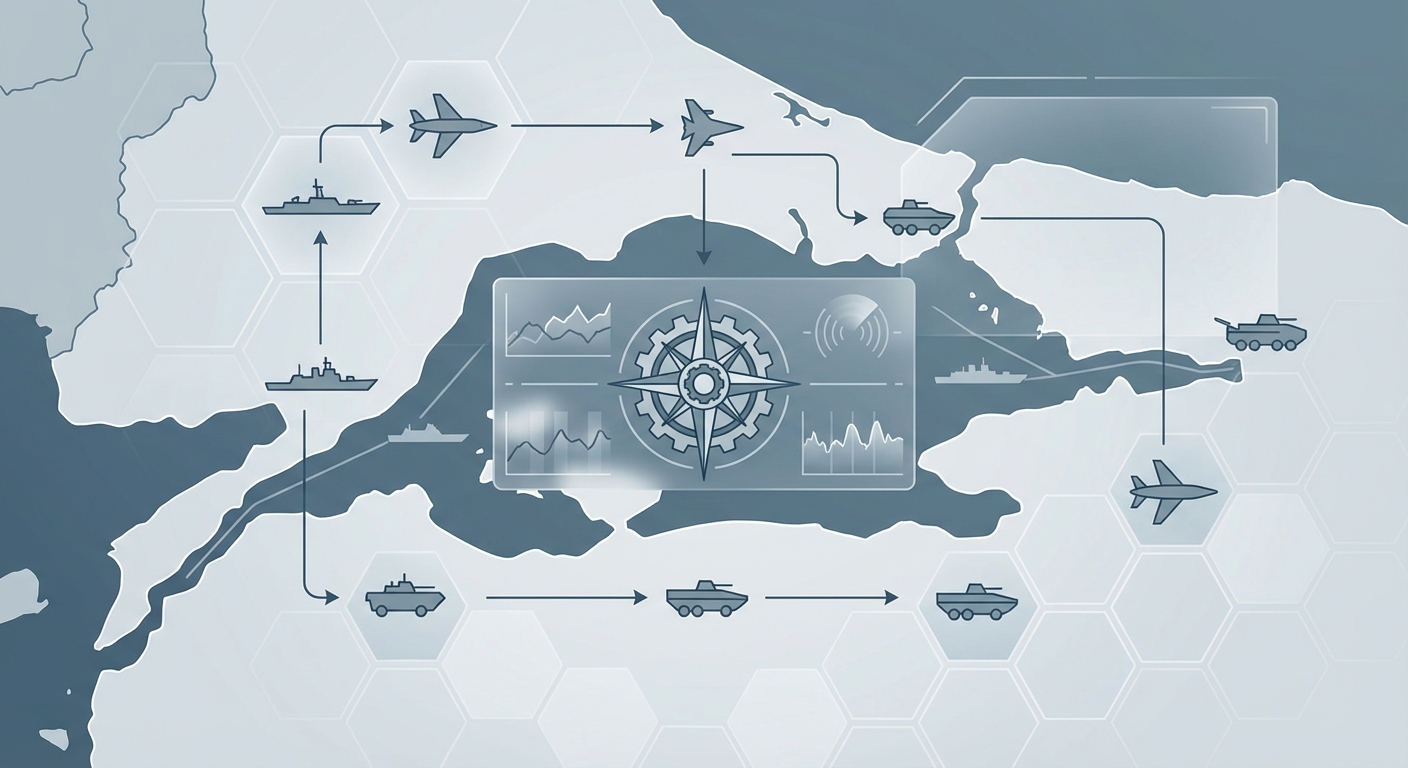
In the early hours of March 8, 1996, the US Pacific Command received urgent intelligence: the Chinese People's Liberation Army (PLA) had launched three DF-15 ballistic missiles into the waters near Taiwan. Two landed about 30 nautical miles off Kaohsiung Port, and one landed about 20 nautical miles off Keelung Port. This was the first time since World War II that foreign missiles had landed in waters so close to the territory of a US ally. The Taiwan stock market plummeted 6.7% after opening, citizens rushed to banks for withdrawals, long lines formed at gas stations, and panic buying occurred in some supermarkets.
The Pentagon's response was decisive and swift. President Clinton ordered the USS Nimitz carrier strike group to sail from the Persian Gulf toward the Taiwan Strait, and the USS Independence carrier strike group to head south from Japan. This was the largest naval mobilization by the US military in Asia since the Vietnam War. When the two carrier strike groups arrived in the waters east of Taiwan, the situation reversed abruptly. China's military exercises ended hastily, Taiwan's presidential election proceeded as scheduled, and Lee Teng-hui was elected with 54% of the vote, completing the first democratic transfer of power for a leader in Chinese history.
Looking back thirty years later, the outcome of the 1996 Taiwan Strait Crisis seemed to prove the effectiveness of US intervention. However, that crisis also sowed the seeds of the arms race that followed for the next three decades. The lesson Beijing learned from that "humiliation" was not to "abandon the use of force for unification," but that it "must possess the capability to prevent US intervention." The development of the DF-21D "carrier killer," the DF-26 intermediate-range ballistic missile, the J-20 stealth fighter, and a modernized navy can all be traced back to the humiliation of 1996.
Today, if a crisis breaks out in the Taiwan Strait again, can a US aircraft carrier still freely enter the Taiwan Strait as it did in 1996? The answer to this question is the core of what we need to explore.
I. The Weight of History
The outcome of the Chinese Civil War in 1949 split China in two. In the seventy-five years since, the two sides have experienced three Taiwan Strait crises (1954, 1958, 1995-1996), the establishment of US-China diplomatic relations, the strategic ambiguity framework of the Taiwan Relations Act, and Taiwan's transition from authoritarianism to democracy. The profound impact of the third crisis in 1996 has been narrated in the HOOK: Beijing concluded it "must possess the capability to prevent US intervention," while Washington may have developed a dangerous overconfidence.
Changing in tandem with the military posture is Taiwan's sense of identity. In 1992, the proportion of people identifying as "Taiwanese" was about 17.6%; by 2023, it rose to over 60%. Those identifying as "Chinese" dropped from 25.5% to less than 3%. Among the younger generation, over 80% identify as "Taiwanese." Such shifts have turned "unification" from a political choice into an identity issue. Beijing's "One Country, Two Systems" proposal has less than 10% support in Taiwan.
Since 2020, China has declared that the "median line of the strait does not exist." After Nancy Pelosi's visit to Taiwan in 2022, military exercises surrounding Taiwan saw missiles fly over the island for the first time. After Lai Ching-te was elected in 2024, Beijing characterized him as a "stubborn Taiwan independence worker," and military pressure has been ramped up for a long period. Grey zone actions (coast guard, drones, cyberattacks) are gradually changing the status quo. Today, the Taiwan Strait is closer to bloodshed than at any time since the end of the Cold War.
II. Geographical Constraints
The geographical conditions of the Taiwan Strait impose unavoidable constraints on any military plan.
The Taiwan Strait: A Natural Barrier
The narrowest part of the Taiwan Strait is about 130 kilometers (from Hsinchu to Pingtan, Fujian), the widest is about 380 kilometers, and the average water depth is about 60 meters. Ocean currents are complex, with the Kuroshio branch and coastal currents converging, reaching speeds of 2 to 3 knots.
130 kilometers means landing craft need about 6 to 10 hours to reach Taiwan's beaches, remaining exposed to strikes from missiles, air forces, and submarines throughout the journey. The shallow depth of 60 meters limits the activity of large submarines but makes mine-laying and anti-submarine warfare more complex. Currents make the timing of landings extremely difficult; the wrong tide could drift landing craft kilometers away from their targets.
Meteorological conditions further limit the operational window. For about 5 to 7 months each year (October to the following April), winds and waves are relatively calm, suitable for amphibious operations. From May to September, the typhoon season, the risk of large-scale sea crossings rises sharply. The failure of the Battle of Guningtou in 1949 was partly due to bad weather.
Taiwan's Terrain: A Defender's Paradise
The main island of Taiwan has an area of about 36,000 square kilometers. The Central Mountain Range runs through the island with an average elevation of about 3,000 meters; the highest peak, Yushan, reaches 3,952 meters. To the east of the mountains are steep cliffs, almost entirely unsuitable for landing. The western coast is relatively flat but has many rivers and is highly urbanized.
About 70% of the area consists of mountains and hills, and the vast majority of the 23.5 million people live in the western urban belt. Any attacker must capture these cities to "control" Taiwan, and the cost of urban guerrilla warfare is the highest among all military operations. The Central Mountain Range provides depth for defenders; even if the western plains fall, resistance forces can retreat into the mountains.
13 Beaches: An Attacker's Nightmare
Not all coastlines are suitable for amphibious landings. According to assessments by the US Department of Defense and various think tanks, there are about 13 potential landing sites on Taiwan's west coast, each with severe limitations.
The Tamsui River mouth and the Taoyuan coast in the north are closest to Taipei and are politically attractive, but their defensive fortifications are the densest. Taichung Port and the Changhua coast in the center are relatively open but far from the political center. Kaohsiung and the Pingtung coast in the south have good port facilities but require crossing a longer distance across the strait.
All these beaches face common problems: limited beach width, drastic tidal changes, near-shore shallow waters that make it difficult for large landing ships to approach, and urbanized areas behind them that make deep advancement difficult. Omaha Beach during the Normandy landings was about 6 kilometers wide with relatively open countryside behind it; Taiwan's landing points are often backed by dense urban buildings and populations.
More critically, the defenders know where those 13 beaches are and have had decades to reinforce those positions. A key factor in the success of Normandy was the German misjudgment of the landing site; in Taiwan, the defenders know exactly where the attack must originate.
Weather and Tides: Nature's Veto Power
The tidal range in the Taiwan Strait is about 4 to 5 meters in the north and 1 to 2 meters in the south. An ideal landing window needs to simultaneously satisfy: appropriate tides, calm sea conditions (wave height below 1.5 meters), good visibility, and no typhoon threat. The window that meets all conditions may only last a few weeks in a year. The attacker must either take risks within a limited window or wait for "perfect" conditions, which gives the defender more time to prepare. Regardless of the choice, nature stands on the side of the defender.
III. Evolution of PLA Capabilities
In the Battle of Guningtou in 1949, the PLA used 200 wooden sailboats to cross the sea and attack Kinmen. Without sea or air cover, it ended in a disastrous defeat. In the seventy-five years since, filling this capability gap has been the core goal of PLA development.
From Wooden Sailboats to a Modern Amphibious Fleet
In the 1990s, the PLA's amphibious capability was still limited, with about 30 Type 072 tank landing ships capable of transporting fewer than 10,000 people at once, lacking escort and air cover. In 1996, US aircraft carriers could approach without hesitation precisely because the PLA had no countermeasures.
Large-scale shipbuilding began in the 2000s. The Type 071 amphibious transport dock (about 25,000 tons, 8 ships) can carry 4 air-cushioned landing craft and about 800 marines. The Type 075 amphibious assault ship (about 40,000 tons, 3 in service) is the PLA's first "quasi-carrier" amphibious ship, capable of carrying about 30 helicopters and 1,500 marines. Additionally, there are numerous Type 072A and Type 073 medium landing ships.
According to 2024 estimates, the PLA currently possesses about 100 amphibious vessels of various types, theoretically capable of transporting about 20,000 to 30,000 people in the first wave. These numbers must be interpreted cautiously: amphibious operations are not just about "getting people on shore"; they also require long-term supply, reinforcement, and fire support, capabilities limited by ship turnaround times, port capacity, and enemy strikes.
The Rise of Missile Power
If the amphibious fleet is the "spear," then missile power is the "shield," whose core task is not to strike Taiwan itself but to prevent US intervention.
After the 1996 crisis, the PLA Second Artillery Corps (now the Rocket Force) made the construction of missile forces against Taiwan its highest priority. DF-11 and DF-15 short-range ballistic missiles increased from dozens to hundreds. The DF-21D anti-ship ballistic missile (the world's first ballistic missile capable of attacking moving ships) was deployed around 2010. The DF-26 intermediate-range ballistic missile can cover Guam. The DF-17 hypersonic missile is claimed to be able to penetrate any existing anti-missile system.
According to a 2024 US Department of Defense report, there are about 1,000 to 1,200 short-range ballistic missiles, over 300 intermediate-range ballistic missiles, and over 500 cruise missiles deployed opposite Taiwan. These missiles can cover Taiwan's airports, ports, air defense positions, command centers, and US military bases in the Western Pacific within the first few hours of a conflict.
The strategic significance of missile power lies in changing the calculation of "intervention costs." In 1996, the risk of a US carrier entering the Taiwan Strait was almost zero; today, any US vessel approaching within 1,500 kilometers of the Chinese coast faces a real risk of being hit by anti-ship missiles. This does not mean the US will not intervene, but it means the cost of intervention could be the sinking of an aircraft carrier—a loss the US has not sustained since 1945. A Nimitz-class carrier costs about $13 billion and carries about 5,000 crew members. Whether the US Congress and public are prepared to lose the equivalent of the population of two small towns in one afternoon will determine the real probability of "defending Taiwan" moving from a slogan to action.
Building Joint Operational Capabilities
Hardware modernization is only part of the story. The military reforms of 2015-2016 changed the seven military regions into five theater commands, with the core goal of improving joint operational capabilities. Since then, multiple joint exercises targeting Taiwan have taken place. After Pelosi's visit in 2022, a complete "encirclement" posture around Taiwan was formed for the first time, and complexity and scale were further increased in 2024.
The true level of joint operational capability can only be tested in actual combat. The PLA has not participated in a large-scale war since 1979. The war in Ukraine exposed many weaknesses in the Russian military (communication chaos, logistics collapse, lack of coordination between branches), problems that are difficult to detect in peacetime exercises. Does the PLA have similar shortcomings? No one knows, including the PLA itself.
Capability Assessment: 2026, 2030, 2035
Assessments of PLA combat capabilities against Taiwan by the US Department of Defense and various think tanks are usually laid out along a timeline:
2026: This is the time point assumed by CSIS wargames and many analyses. At the current rate of construction, the PLA will then have about 3 Type 075 amphibious assault ships, about 8 Type 071 amphibious transport docks, and about 100 medium and small landing ships, with a first-wave transport capacity of about 25,000 to 30,000 people. The navy will have about 3 aircraft carriers (with the Fujian just gaining combat capability), about 50 major destroyers/frigates, and about 70 submarines. This force is sufficient to launch an operation against Taiwan, but if the US and Japan intervene with full force, the landing troops could be cut off from supplies.
2030: The amphibious fleet could double, with a first-wave transport capacity of about 50,000 to 60,000 people. The Fujian will have full combat capability, and hypersonic weapons will be deployed in batches. Many analysts see this as a "window of risk": PLA capabilities will be strong enough, while Taiwan's defense reforms and US force reconstruction may not yet be complete.
2035: This is the time node proposed by Xi Jinping to "basically achieve the modernization of national defense and the armed forces." If pushed forward as planned, the PLA will then possess world-class naval and air forces, with amphibious transport capacity potentially reaching over 100,000 people, possessing the capability to implement cross-strait landings under high-intensity confrontation conditions. But "being able to do it" does not mean "it will be done"; the cost remains a key variable.
IV. Taiwan's Defense
Taiwan's defense strategy has undergone a profound transformation: from "counter-attacking the mainland" to traditional "denial" defense, and now to today's "asymmetric" strategy.
From "Counter-attacking the Mainland" to "Effective Deterrence"
After the severance of US-Taiwan diplomatic relations in 1979, Taiwan turned to "effective deterrence and resolute defense," purchasing large quantities of traditional equipment such as F-16s, Mirage 2000s, Indigenous Defense Fighters (IDF), and Patriot air defense missiles. The problem is that Taiwan can never match the mainland in conventional warfare; the current number of PLA fighters is about five times that of Taiwan, and the quality gap is also widening.
Overall Defense Concept and the "Porcupine Strategy"
Around 2017, then-Chief of the General Staff Lee Hsi-min proposed the "Overall Defense Concept" (ODC), marking a profound shift in strategic thinking. The core idea of the ODC is: abandon competition with the PLA in traditional fields and concentrate resources on developing "asymmetric" capabilities—large numbers of cheap, mobile, dispersed, and lethal weapon systems.
The "Porcupine Strategy" is a popular expression of this idea: Taiwan does not need to be able to defeat the PLA; it only needs to make the cost of a military invasion unacceptably high. Specific measures include:
Anti-ship Missiles: Widely deploying Hsiung Feng series shore-based anti-ship missiles, so that any vessel approaching Taiwan faces the risk of being hit. These missiles cost about $1 million each, while their targets (destroyers or landing ships) cost hundreds of millions. Even if the hit rate is only 10%, the exchange ratio is still favorable to the defender.
Sea Mines: Deploying large numbers of sea mines in key waters to delay the landing fleet and force it into preset kill zones. Sea mines are the cheapest naval weapons, but mine clearance is the most dangerous and time-consuming operation.
Miniature Missile Boats: Taiwan's "Tuo Chiang-class" stealth missile corvettes under construction have a displacement of about 600 tons and are equipped with 8 Hsiung Feng anti-ship missiles. These small vessels can be dispersed in fishing ports, making them difficult to destroy all at once, yet they can pose a serious threat to the landing fleet.
Man-portable Air Defense Missiles: Widely distributed to army units, so that even if air superiority is lost, the landing force's helicopters and low-altitude support aircraft will face lethal threats.
Urban Defense: Ultimately, if the landing is successful, the battle will move to the cities. Taiwan's cities are densely populated with complex buildings; any attacker will face an urban warfare nightmare.
Reserve Mobilization and Civil Defense
Taiwan's active-duty military is about 170,000, with about 2.3 million reservists, though the combat readiness of reserve units has long been insufficient. In 2022, the mandatory service period was extended from 4 months to 1 year, and the reserve mobilization system is also undergoing reform. Polls show about 70% of the Taiwan public says they are "willing to fight to defend Taiwan," but there is a huge gap between polls and actual war. A deeper issue is that Taiwan society does not have a completely unified answer to "what are we fighting for," and the lack of a clear national identity could weaken the will to resist in a long war of attrition.
The logic of the asymmetric strategy holds, but its effectiveness depends on two assumptions: that external aid will arrive and that social resilience is sufficient to bear the cost of war. Ukraine satisfies both conditions. Can Taiwan replicate this? Both involve significant uncertainty.
V. Conflict Scenario Analysis
A Taiwan Strait conflict is unlikely to break out of thin air. A more common pattern is: a triggering event causes a crisis (failure of crisis management), and both sides push each other up the escalation ladder until a certain one-way threshold is crossed. Understanding this escalation logic is the basis for analyzing conflict scenarios.
Grey Zone: Between Peace and War
Before a formal war breaks out, "grey zone" actions could last for months or even years, staying below the threshold of war but repeatedly eroding the status quo; this leaves the defender in a dilemma: overreacting might be labeled as "provocation," while not reacting is seen as "acquiescence."
The 2022 Kinmen drone incident is a typical case. After Pelosi's visit, multiple civilian drones flew over Kinmen, and footage of Taiwan soldiers throwing stones at the drones spread widely on social media. Taiwan's dilemma was real: shooting down the drones could be characterized by Beijing as "attacking Chinese citizens," while not shooting them down appeared weak.
The goal of grey zone actions is not military victory but psychological attrition and political preparation, making the Taiwan public accustomed to the PLA's presence and desensitizing the international community to "tensions," creating a public opinion basis for "fait accompli" in eventual military action.
Scenario A: Blockade
A blockade is a "suffocation" strategy that does not directly attack Taiwan but cuts off its connection with the outside world, forcing it to yield under the pressure of depleted supplies and social collapse.
Implementation methods for a blockade might include: Maritime Blockade, declaring the waters around Taiwan as "controlled zones" and conducting "inspections" of incoming and outgoing merchant ships, characterizing it as "maritime law enforcement" to make it difficult for the international community to respond clearly; Air Blockade, declaring a no-fly zone, which might cause airlines to stop flights on their own due to insurance and safety risks; Energy Blockade, as Taiwan relies on imports for about 98% of its energy, cutting off supplies would cause the power system to fall into crisis within weeks; Submarine Cable Severance, as about 90% of Taiwan's international internet traffic goes through submarine fiber optic cables, cutting them would paralyze the financial system, supply chain management, and international communications.
The dilemma of a blockade lies in time. Taiwan's oil reserves last about 90 to 150 days, natural gas about 7 to 14 days, and food about 6 months. If rationed properly, Taiwan can hold out for a considerable time, and time gives the US the opportunity to organize anti-blockade actions. Historically, blockades have rarely been able to force a determined government to surrender on their own.
Scenario B: Limited Strikes
Limited strikes attempt to destroy Taiwan's key capabilities through precision strikes to force it to negotiate. This is an option between a blockade and a full-scale landing operation.
Strike targets might include:
Air Defense System: Patriot missile sites, air defense radar stations, command centers. Paralyzing Taiwan's air defense capabilities to create conditions for subsequent actions (whether landings or sustained airstrikes).
Air Force Bases: Taiwan has about 5 main air force bases with limited runway repair capabilities. If airports are struck for a long period, the Taiwan Air Force will lose takeoff and landing capabilities; even if the planes are not destroyed, they cannot operate.
Naval Facilities: Fuel storage facilities, ammunition depots, and docks at major ports. Paralyzing the Taiwan Navy's supply and maintenance capabilities.
Command and Communication: Presidential Office, Ministry of National Defense, command posts, communication hubs. Disrupting the chain of command and creating chaos.
Critical Infrastructure: Power grids, oil refineries, water supply facilities. Leaving Taiwan society in a state of functional disorder.
The paradox of "limited" is that a strike seen as "limited" by the initiator is the start of a total war for the recipient. Taiwan will counterattack with full force rather than wait for the next step. The risk of limited strikes lies in the accidental nature of escalation; once started, no one can guarantee that things will not spiral out of control.
Scenario C: Amphibious Landing
A full-scale landing operation is the most extreme and decisive option. If successful, Taiwan will be unified by force; if it fails, it could be the most serious political crisis in the history of the People's Republic of China.
The sequence of operations might be as follows:
D-14 to D-7 (Preparation Phase): Missiles and long-range firepower implement long-term strikes on Taiwan's air defense, air force, navy, and command systems. The goal is to weaken Taiwan's resistance as much as possible before the landing. This phase is difficult to hide completely (satellites will detect large-scale troop movements, and signals intelligence will capture increased communication). Beijing could use "exercises" to cover its true intentions.
D-Day (Landing Day): The amphibious fleet heads toward the west coast of Taiwan under air and sea fire cover. The voyage takes about 6 to 10 hours, during which the fleet will be exposed to strikes from Taiwan's missiles, submarines, and air force. The first wave of the landing might involve about 20,000 to 30,000 people, with the goal of establishing footholds on multiple beaches. Simultaneously, paratroopers and special forces might attack key targets like airports, bridges, and command centers.
D+1 to D+7 (Beachhead Consolidation): This is the most critical and vulnerable phase. Landing troops must expand the beachhead and open passages to ports (to allow for the unloading of heavy equipment) while repelling counterattacks from Taiwan's forces. Subsequent echelons must repeatedly cross the sea to reinforce, with each crossing conducted under the threat of enemy fire. If Taiwan's military can bottle up the landing troops on the beachhead and cut off supply lines, the landing operation could fail.
After D+7 (Deep Advancement or War of Attrition): If the landing is successful, the battle will move into Taiwan's interior, involving urban warfare, mountain guerrilla warfare, and persistent resistance and mopping-up operations. Even if the PLA controls major cities, scattered resistance could last for months or even years.
Key variables determine the outcome of these scenarios, which will be discussed in detail in the next section.
Based on the analysis of PLA capabilities, geographical constraints, and historical precedents in this report, the probability ranking of the three scenarios is roughly: Blockade/Grey Zone Pressure > Limited Strikes > Full-scale Amphibious Landing. The reasons are as follows: A full-scale amphibious landing is the highest-risk, highest-cost, and most one-way option. The PLA's current amphibious transport capability (about 20,000 to 30,000 in the first wave) is far from enough to guarantee success, and the political consequences of failure could be catastrophic for Beijing. In contrast, blockades and grey zone pressure allow for incremental escalation and the ability to pull back at any time, which is more consistent with the consistent risk preference of China's decision-makers. In the three Taiwan Strait crises of 1954, 1958, and 1995, Beijing chose limited pressure over a full-scale offensive. A blockade also has a strategic advantage: it shifts the time pressure to Taiwan and the US, forcing the other side to make the difficult decision of whether to "fire the first shot." Limited strikes fall in between; the risk of escalation is higher than a blockade but lower than a landing, and they might appear as an escalation option after a failed blockade. Of course, this ranking is built on the assumption that "Beijing's decision-makers maintain rational calculations." If internal political pressure or misjudgment breaks this assumption, any scenario could occur.
VI. Findings from Wargames
Wargames are not crystal balls for predicting the future but thought experiments for exploring the space of possibilities. Their value lies not in predicting "what will happen" but in revealing "what factors might determine the outcome."
CSIS 2023 Study
The Center for Strategic and International Studies (CSIS) released "The First Battle of the Next War" in 2023, which is the most comprehensive public report on a Taiwan Strait conflict wargame to date. The research team conducted 24 rounds of simulations, modeling various scenarios of a Chinese military invasion of Taiwan in 2026.
Core finding: In the vast majority of scenarios, China failed to successfully occupy Taiwan. Landing troops were able to establish beachheads in Taiwan but could not maintain sufficient logistical supplies to expand their gains. US submarines and long-range missiles dealt devastating blows to China's amphibious fleet and supply ships. By the third week of the war, China's amphibious transport capability was basically lost, and the troops on the beachhead faced a situation of running out of food and ammunition.
The losses on both sides were shocking. The US lost about 2 aircraft carriers, about 10 to 20 large surface vessels, about 270 aircraft, and about 3,200 killed in action. Japan lost over 100 aircraft and several vessels as US bases suffered severe strikes. China lost about 150 vessels (including most of the amphibious fleet), about 160 aircraft, and about 7,000 to 10,000 killed in action, with many more captured or stranded in Taiwan. Taiwan's military casualties were about 3,500, and the island's infrastructure suffered devastating damage.
Key variables affecting the outcome:
Japan's Role: If Japan allows the US military to use its bases and participates in the defense, China faces a two-front war, and the probability of landing failure rises significantly. If Japan remains neutral, the US's operational capability is severely restricted, and China's probability of success rises, though it is still not a certainty.
US Intervention Speed: If the US intervenes fully within 72 hours of the start of the war, China's "time window" is quite limited. If the US hesitates for more than a week due to political reasons, China might gain a foothold on the beachhead.
Warning Time: If China can achieve strategic surprise (with no warning for Taiwan or the US), the initial strike effect is maximized. Intelligence assessments suggest that large-scale amphibious operations require 1 to 2 weeks of assembly and preparation, making complete concealment almost impossible.
Taiwan's Will to Resist: If the Taiwan military and people resist tenaciously, even a successful landing will fall into a war of attrition. If Taiwan society collapses quickly (this is one of the most uncertain variables), the landing operation might succeed.
RAND and Other Wargames
Organizations like the RAND Corporation, the US Naval War College, the National Defense University, and the Center for a New American Security have conducted Taiwan Strait wargames with roughly similar conclusions: scenarios where a Chinese landing succeeds do exist but require multiple conditions to be met simultaneously (surprise works, US and Japan hesitate, Taiwan collapses); a more common outcome is a stalemate where both sides pay a heavy price; and the risk of nuclear escalation always exists.
A 2024 RAND report specifically pointed out that the "window" concept might be misleading for decision-making. Even under "favorable" conditions, a landing could still fail, and even if the "window closes," a war could still break out due to misjudgment. The most honest conclusion of wargames is not "who will win" but that "all participants will lose, the only difference is by how much." Such conclusions are unpopular in briefing rooms in Washington and Beijing, which is probably why they are closest to the truth.
Limitations of Wargames
Wargame results are highly dependent on initial assumptions. Different settings for weapon performance, decision-making logic, and battlefield friction coefficients can lead to completely different results. Wargames cannot simulate the true "unknowns": in the 1973 Yom Kippur War, Israeli intelligence accurately estimated the capabilities of the Arab armies but completely misjudged Sadat's willingness to take risks. Information incompleteness, communication interruptions, and command chaos in actual war far exceed what wargames can simulate.
VII. Choices for the US and Allies
Whether the US intervenes, how it intervenes, and whether allies follow are answers that could determine the direction of a Taiwan Strait conflict.
The US Strategic Dilemma
The US faces a deep dilemma: a clear commitment to defend Taiwan might strengthen deterrence but could also encourage Taiwan to take risks; maintaining ambiguity might avoid being dragged into an unwanted war but could also tempt China into misjudgment.
The original intent of the "strategic ambiguity" policy was to apply deterrence to both sides: Beijing is not sure if the US will intervene, so it does not dare to act rashly; Taipei is not sure the US will definitely intervene, so it does not dare to declare independence. For over forty years, this ambiguity has provided space for peace.
But the policy of ambiguity is being gradually hollowed out. President Biden has publicly stated four times that the US would "defend Taiwan," and each time the White House clarified that "policy has not changed." The President's words have more signal value than a press release. Legislation pushed by Congress, such as the Taiwan Policy Act, attempts to legalize and specify the commitment to Taiwan. The trend is sliding in one direction: "strategic ambiguity" is sliding toward "strategic clarity," and this slide itself is changing Beijing's risk calculation.
If war breaks out, the US President will face one of the toughest decisions in history. Intervention could mean: the loss of several aircraft carriers (each carrying about 5,000 people), hundreds of aircraft, thousands of casualties, severe economic damage, and the risk of nuclear war. Non-intervention could mean: the collapse of the entire Asian alliance system (if the US does not protect Taiwan, can Japan and South Korea still trust the US?), the end of US global leadership, and the betrayal of "liberal democratic" values.
There are no good choices in this dilemma, only bad choices of varying degrees.
Japan's Critical Role
Japan is a key variable determining the direction of a Taiwan Strait conflict. Okinawa is about 630 kilometers from Taiwan and is the most important US military base cluster in the Western Pacific. Without Japan's support, the US's operational capability will be severely restricted.
Japan's 2022 National Security Strategy clearly listed peace and stability in the Taiwan Strait as an "important concern." If something happens in Taiwan, Japan might take the following actions:
Allowing the US Military to Use Bases: This is the minimum level of support and the most likely option. Even if Japan does not directly participate in the war, simply allowing the US military to take off, resupply, and repair from Japanese bases would significantly enhance US operational capabilities.
Exercising the Right of Collective Self-Defense: After the 2015 security legislation reform, Japan can exercise the right of collective self-defense in a "survival-threatening situation." If US vessels are attacked near Taiwan, theoretically Japan could coordinate in defense. The definition of a "survival-threatening situation" is vague, and its actual application requires political decision-making.
Direct Participation: If Chinese missiles attack US bases within Japan, Japan will have no choice but to be dragged into the war. The question then will not be "whether to participate" but "how to participate."
The risks Japan faces are enormous: China has the capability to strike the Japanese mainland with missiles, and Japan's air defense capability is limited. Critical infrastructure (cities, nuclear power plants, ports) is highly vulnerable. Participating in a Taiwan Strait conflict could make Japan a direct battlefield, with casualties and destruction potentially exceeding those of any other ally.
Other Allies and International Reactions
A detailed analysis of the alliance system is in Chapter 14. In the Taiwan Strait scenario, the key variables are: Australia might provide submarine and intelligence support but is far away; South Korea is constrained by the threat from North Korea and will likely avoid direct involvement; the Philippines can provide EDCA bases but has limited military capability; Europe can mainly provide diplomatic support and economic sanctions.
Economic sanctions are the West's most powerful non-military tool. The consequences of implementing large-scale sanctions against China are two-way. China is at the core of many critical supply chains, and sanctions would lead to global inflation and supply shortages. The "Global South" might refuse to join sanctions, just as many developing countries refused to condemn Russia in the Ukraine war.
VIII. Escalation Dynamics and Nuclear Risk
The most terrifying prospect of a Taiwan Strait conflict is not the outcome of a conventional war but the possibility of nuclear escalation. Both China and the US are nuclear-armed states. Could a defeat in a conventional war trigger the use of nuclear weapons?
The Escalation Ladder
Conflict climbs step by step along a series of stairs: Grey zone actions → Limited blockade → Missile demonstrations → Limited conventional strikes → Large-scale conventional warfare → Attacks on the US mainland/bases → Use of tactical nuclear weapons → Strategic nuclear exchange.
The "Stability-Instability Paradox" is key to understanding nuclear risk. Precisely because both sides believe the other does not dare to use nuclear weapons, the threshold for low-level conflict may actually be lowered. The belief that "the other side won't use nuclear weapons" might make one side more daring on the conventional battlefield until one side faces defeat and the nuclear option suddenly becomes credible.
Where is the Nuclear Threshold?
What situations might trigger the use of nuclear weapons?
Conventional War Failure: If the PLA landing fails, the amphibious fleet is annihilated, and tens of thousands are killed or captured, the Xi Jinping regime will face a severe political crisis. In such an extreme case, would the use of tactical nuclear weapons to attack US carrier strike groups or the Guam base be possible? This sounds crazy, but in 1950, MacArthur did propose using nuclear weapons against China, and similar proposals appeared multiple times during the Cold War.
Attacks on the Chinese Mainland: If US missiles strike military targets on the Chinese mainland (airports, missile bases, command centers), would China see this as a "decapitation" attempt against its nuclear forces? China's early warning capability is weaker than that of the US, its decision-making time is shorter, and the risk of misjudgment is higher.
Accidents and Loss of Control: Communication interruptions, intelligence errors, and command chaos in war could all lead to catastrophic misjudgments. If a Chinese nuclear submarine loses contact, would Beijing assume the submarine has been destroyed and retaliate? If a US early warning satellite is attacked, would the Pentagon interpret this as a prelude to nuclear war?
Ambiguity of China's Nuclear Policy
China's official policy is "No First Use" (NFU), but whether this policy applies to the Taiwan issue has never been clear. In 2005, General Zhu Chenghu stated that if the US intervened in a Taiwan Strait conflict and attacked the Chinese mainland, China was prepared to "sacrifice all cities east of Xi'an" to wage nuclear war with the US. These words were later downplayed as a "personal view," but they reflect the existence of such thinking. This ambiguity might be intentional deterrence, but it also increases the risk of misjudgment.
Difficulty of De-escalation
Once a conflict escalates to a certain point, de-escalation will become extremely difficult. Issues of "face" make concessions appear as "surrender," and sunk costs create immense pressure that "those who have already sacrificed cannot have died in vain." A lack of trust makes a ceasefire as dangerous as restarting the war.
IX. Semiconductors: Taiwan's "Silicon Shield"
Taiwan's semiconductor industry makes the Taiwan Strait issue transcend the scope of traditional geopolitics. The operation of global digital civilization depends largely on a few wafer fabs on the island.
TSMC: An Irreplaceable Existence
Taiwan Semiconductor Manufacturing Company (TSMC) produces about 55% of the world's chip foundry capacity and about 90% of advanced process (7nm and below) chips. Apple, Nvidia, AMD, Qualcomm, Broadcom—almost all companies defining the frontier of contemporary technology—rely on TSMC's production capabilities.
TSMC's moat is not just technology but also decades of accumulated process knowledge, teams of specially trained engineers, and close collaboration with global equipment suppliers. These "soft assets" cannot be acquired through military occupation.
If war breaks out, TSMC founder Morris Chang has clearly stated that the wafer fabs will "become inoperable." Ultra-clean environments, stable power, and precise chemical supplies cannot be maintained under war conditions. More importantly, TSMC highly depends on EUV lithography machines from ASML in the Netherlands (each worth over $150 million); the maintenance and updating of these devices would stop immediately.
Strategic Logic of the "Silicon Shield"
Taiwan's semiconductor status has created a unique deterrence mechanism. The logic is: Taiwan is so important to the global economy that no rational actor is willing to destroy it.
For China, destroying or paralyzing Taiwan's semiconductor industry would severely hit China's own tech industry. China is one of TSMC's largest customers, and Chinese companies like Huawei heavily rely on Taiwan's chip supply (even after US sanctions, they obtain them through various channels).
For the US, the security of Taiwan's semiconductor industry is related to the US's own military and economic capabilities. Losing TSMC means losing the supply of the most advanced chips, affecting AI development, supercomputing, and military systems.
However, the "Silicon Shield" also has limitations. Deterrence only works on rational decision-makers. If Beijing judges that unification is a necessary condition for the survival of the regime, economic costs might be pushed to a secondary position. Deterrence could also be eroded by technological development. The US CHIPS and Science Act is promoting the construction of capacity on its own soil, and Japan is also building a TSMC wafer fab in Kumamoto. Dependence on Taiwan is slowly decreasing (though complete replacement will still take many years).
X. Economic Consequences: Global Shock
The economic consequences of a Taiwan Strait war could exceed most people's imaginations. This is not just a regional conflict but a profound shock to the global economic order.
Semiconductor Crisis
If TSMC's production is interrupted, the global electronics industry will fall into crisis within weeks:
- Smartphone production capacity could drop by over 70%
- Expansion of servers and data centers would stall
- The automotive industry (each modern car contains hundreds of chips) would face large-scale production stops
- AI development could be set back by several years
- The defense industry would face shortages of critical components
The Rhodium Group estimates that the interruption of semiconductor supply alone could cause global GDP to drop by about $1.6 trillion.
Shipping Interruptions
The Taiwan Strait is one of the busiest shipping lanes in the world. During a war, insurance companies will refuse to provide coverage for ships passing through the war zone, shipping costs will soar, and global supply chains will be forced to reconfigure.
More broadly, the South China Sea (the passage for about one-third of global trade and about 80% of China's oil imports) could also be affected. Even if the war is limited to the Taiwan Strait, the risk aversion of shipping companies could cause shipping costs throughout the Western Pacific to rise sharply.
Financial Markets
The moment news of the war breaks, global financial markets will vibrate violently:
- Safe-haven funds will pour into the US dollar, gold, and US Treasuries
- Asian stock markets could plummet by over 20%
- Chinese overseas assets face the risk of being frozen
- Valuations of corporate investments in China will be significantly adjusted downward
- Commodity prices will soar (especially oil and rare earths)
Bloomberg Economics estimates that if the war leads to a full economic decoupling, the global GDP loss could reach about 10% (equivalent to about $10 trillion). This would be the most serious economic disaster since World War II.
XI. How Does the War End?
The Paradox of "Victory"
For China: If the cost of occupying Taiwan is tens of thousands killed in action, severe economic damage, international isolation, and long-term hostility from 23 million people, is this still "unification"? For the US: If the cost of repelling a landing is several aircraft carriers sunk, thousands killed in action, and a permanent weakening of military superiority in Asia, is this still "success"? For Taiwan: Regardless of the war's outcome, Taiwan will become a battlefield. Even if it is "saved," it will only be saving a wasteland.
Possible Outcomes
Scenario 1: China's landing fails, and Taiwan is saved (the baseline result of the CSIS wargame), but the US and Japan also pay a heavy price, and both sides fall into a long-term confrontation more dangerous than before the war. Scenario 2: China successfully occupies Taiwan but faces long-term challenges in governance and economic sanctions. Scenario 3: Stalemate and ceasefire. China might control some outlying islands but fail to occupy the main island, forming a "frozen conflict" like the Korean Peninsula. Scenario 4: Nuclear escalation. Any use of nuclear weapons will change the world, and millions could die.
Even if both sides want to end the war, a ceasefire will still be quite difficult: Who will mediate? What conditions are acceptable? The armistice negotiations for the Korean War lasted two years, during which casualties continued to rise.
Key Uncertainties
Whether Japan Participates: This is the single variable with the most weight in the entire wargame. If Japan allows the US military to use Okinawa bases and provides logistical support, China will face multi-directional pressure from the East China Sea to the South China Sea, and the probability of landing failure will rise significantly. If Japan remains neutral, the US's operational radius shrinks to east of Guam, and China's time window in the Taiwan Strait could stretch from 72 hours to two weeks, enough to gain a foothold on the beachhead.
Actual Performance of Weapon Systems: The DF-21D has never hit a moving aircraft carrier, the Patriot has never intercepted a saturated ballistic missile attack, and cyber warfare has never been deployed in a confrontation between major powers. If the actual hit rate of anti-ship ballistic missiles is far lower than exercise data, US carriers can approach to within 200 nautical miles east of Taiwan, and the entire battle will return to the 1996 pattern. If the hit rate is close to the advertised value, carrier strike groups will be forced to retreat beyond the Second Island Chain, and Taiwan will face firepower strikes alone in the first 72 hours of the war.
Accidental Ignition: The most likely starting point for a war in the Taiwan Strait is not a carefully planned landing but an out-of-control friction—a mid-air collision, a misfire in a naval standoff, or a cyberattack misinterpreted as a preemptive strike. The use of crisis hotlines between China and the US is far lower than the levels between the US and USSR during the Cold War. Once an incident occurs at three in the morning, decision-makers on both sides might make one-way judgments based on incomplete information.
Conclusion: Thinking on the Edge of the Cliff
Various wargames of a Taiwan Strait conflict point to the same conclusion: this is a war with no winners. The core finding of the CSIS wargame is not "who will win," but that regardless of which side "wins," the cost will be catastrophic.
The European leaders of 1914 all thought the war would be over by Christmas. Decision-makers often believe they can control escalation when starting a war; history repeatedly proves this confidence is an illusion. Various wargames of a Taiwan Strait conflict cannot capture all the chaos and accidents of war. The only certainty is: once it starts, no one can guarantee how it will end.
True strategic wisdom is not preparing to win that war but creating conditions so that the war never happens. Avoiding such a war is a strategic task more important than any military preparation.
References
- Center for Strategic and International Studies (CSIS). The First Battle of the Next War. 2023. The most comprehensive public wargame study on a Taiwan Strait conflict to date.
- RAND Corporation. The U.S.-China Military Scorecard series. 2015-2024.
- RAND Corporation. Taiwan Strait Conflict Scenario Analysis. 2024.
- US Department of Defense. Military and Security Developments Involving the People's Republic of China (China Military Power Report). 2024, 2025.
- US Congressional Research Service (CRS). Taiwan: Key U.S. Policy Issues. 2025.
- International Institute for Strategic Studies (IISS). The Military Balance. 2025-2026 edition.
- Bloomberg Economics. The Economic Costs of a Taiwan Conflict. 2024.
- Rhodium Group. Analysis of Semiconductor Supply Chain Risks. 2024.
- Scobell, Andrew. China's Use of Military Force. RAND Corporation, 2003.
- Hastings, Max. Overlord: D-Day and the Battle for Normandy. 2004.
- Hastings, Max. The Battle for the Falklands. 1983.
- Appleman, Roy. United States Army in the Korean War. 1961.
- Lin Tsung-ta. The Great Victory of Guningtou. 2019.
- Garver, John. China's Decision Making in the 1954-55 Taiwan Strait Crisis. 2016.
- Christensen, Thomas. Worse Than a Monolith. 2011. Analysis of US-China crises during the Cold War.
- Bush, Richard. Untying the Knot. 2005. Classic analysis of US-Taiwan relations.
- Bush, Richard. Uncharted Strait. 2013.
- Easton, Ian. The Chinese Invasion Threat. 2017. Analysis of PLA operational plans against Taiwan.
- Christensen, Thomas. The China Challenge. 2015.
- Tucker, Nancy. Strait Talk. 2009. History of US-China-Taiwan trilateral relations.
- US Naval War College. China Maritime Studies series.
- Foreign Affairs magazine articles on Taiwan Strait issues. 2020-2025.
- The Economist special series on Taiwan. 2024.
- Japan Ministry of Defense. Defense of Japan (White Paper). 2024.
- Taiwan Ministry of National Defense. National Defense Report. 2023.
17A War with No Winners
A War with No Winners
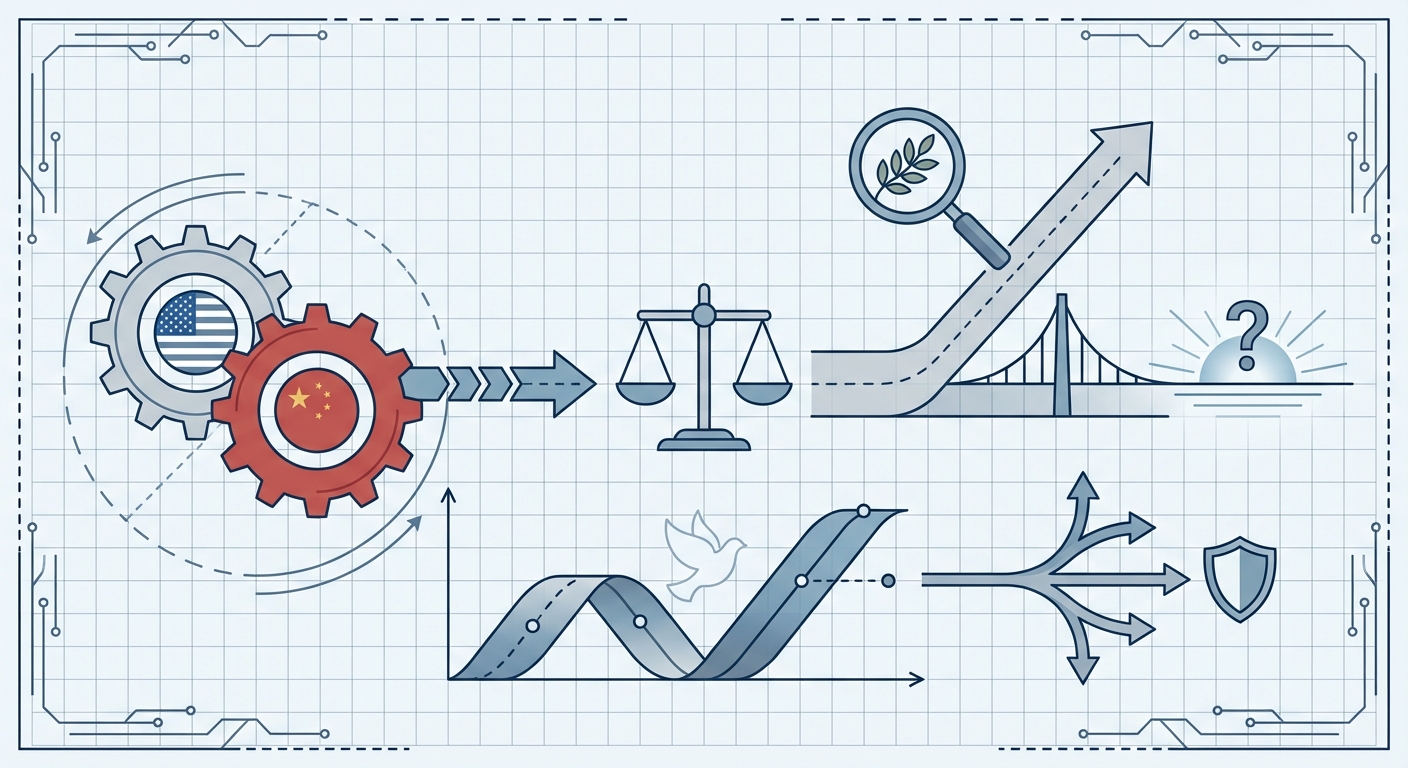
In December 2024, a retired US Navy Admiral was asked during congressional testimony: if China and the US went to war in the Taiwan Strait, who would win? Milley remained silent for a long time, then said something that brought a hush over the room: "Senator, if you are asking who would ultimately occupy the battlefield, there is an answer to that. But if you are asking who would 'win'—in a conflict of this scale, there may be no winners, only the difference between those who lose more catastrophically and those who lose slightly less so."
This statement captures the core conclusion of this report: in military competition between great powers, "who is stronger" may be the wrong question.
After sixteen chapters of detailed analysis covering military economics, air power, naval power, nuclear weapons, space warfare, cyber warfare, the defense industry, and logistics systems, the analysis can draw some clear conclusions while also acknowledging significant uncertainties. The truly important question is not "who would win," but rather "how to avoid a war with no winners."
The Equation of Endurance
But "who is stronger" is itself the wrong question. The correct question is: if war breaks out, who can better endure attrition? The answer depends on three variables: geographic depth, industrial capacity, and political will, rather than a comparison of numbers on a weapon specification sheet.
Geographically, China possesses an irreversible interior lines advantage in the Taiwan Strait, while the US must project power across the Pacific. Industrially, China's shipbuilding and ammunition production capacity change the mathematics of a war of attrition. Politically, the domestic thresholds for enduring the costs of war differ significantly between the two sides, and these thresholds are nearly impossible to measure before a conflict begins.
Before World War II, the French Army was considered the strongest in Europe, yet it collapsed within six weeks. In 1973, Arab nations overwhelmed Israel in quantity but were defeated again. Quantity, quality, geography, morale, leadership, and luck collectively determine the outcome of a war, and most of these factors cannot be accurately assessed beforehand. The true lesson of the China-US military comparison is that both sides are sufficiently powerful that any war would be an unwinnable war of attrition for both.
The Time Factor: Is the Window Closing or Opening?
Static analysis of power dynamics ignores a key variable: trends. If China's relative strength is rising, it may be more inclined to wait; if its relative strength is declining or about to decline, an impulse for a "preemptive strike" may arise. The same logic applies to the US: if the US believes time is on its side, it can wait; if it believes the window is closing, it may take riskier preventive actions.
Currently, signs of "time anxiety" exist on both sides. Beijing worries that the US is accelerating the arming of Taiwan, strengthening alliance systems, and pushing for technological decoupling—all of which could weaken China's future military options. Washington worries that China's shipbuilding capabilities, missile production, and nuclear arsenal expansion are shifting the balance of power, and that waiting might mean facing a much stronger adversary. This dual anxiety is dangerous: if both sides believe time is working against them, it may create the illusion that "acting now is better than acting later," even if both would objectively prefer to avoid conflict.
Historically, the logic of such "preventive wars" has led to many avoidable disasters. In 1914, the German General Staff believed that Russia's military modernization would deprive Germany of its advantage within a few years, thus favoring "starting the war early." One argument for the 2003 US invasion of Iraq was that "Saddam's WMD programs are progressing, and waiting will only make the problem harder to solve"—a judgment that proved entirely incorrect. Perceptions of time pressure are often exaggerated, while the costs of action are often underestimated. For policymakers in both China and the US, the greatest danger may not be the objective change in power dynamics, but rather the subjective perception of that change and the resulting sense of urgency.
Four Outcomes of Power Transition
Historical power transitions between great powers offer four distinct models. The Anglo-German competition (1890-1914) is a case of catastrophic failure. The naval arms race, nationalist sentiment, and the chain reaction of alliance systems eventually erupted into a world war in 1914, resulting in 20 million deaths and the collapse of the German Empire; while Britain was "victorious," it was severely weakened.
The US-Soviet Cold War (1947-1991) is an example of successfully avoiding a hot war. Nuclear deterrence made both sides soberly realize that the consequences of conflict were unacceptable. Following the Cuban Missile Crisis, crisis communication mechanisms and arms control frameworks were gradually established. Ultimately, the Soviet Union failed in economic competition, and the Cold War ended peacefully. The lesson: the outcome of long-term competition depends on economic and institutional resilience rather than military force.
The Anglo-American power transition (1890-1945) is the most successful case, with no war occurring throughout the process. But its conditions (shared language, culture, values, and common enemies) are almost non-existent between China and the US. The true secret of the peaceful Anglo-American handover was not Britain's "wisdom," but rather Britain's discovery that the new hegemon happened to speak the same language and worship the same God. The gap between China and the US goes far beyond trust; it lacks a shared understanding at the civilizational level.
The Japan-US competition (1920-1941) offers particularly sharp insights for today. The US responded to Japanese expansion with an oil embargo; Japan believed that rather than waiting to be "strangled," it should strike first, resulting in a catastrophic strategic miscalculation. If Washington's chip ban leads Beijing to conclude that "the US is doing to China what Roosevelt did to Japan in 1941," the architects of the sanctions will face a question they are reluctant to answer: where is Plan B if sanctions fail?
History is not a menu; you cannot pick and choose the cases you like. The real lesson is that the outcome of a power transition depends on the choices of both sides, not some historical "law." The future of China-US relations depends on the decision-makers in Beijing and Washington, not on any "inevitable" historical forces.
Four Future Scenarios
Based on the analysis in this report, China-US relations could evolve into four basic scenarios. The following probability estimates are based on a synthesis of historical base rates, current power dynamics, and crisis frequency; they are not precise predictions but rather a structured expression of uncertainty.
Scenario 1: Competition without Conflict (Probability ~50-60%)
Why 50-60% and not higher? Factors supporting this probability include: nuclear deterrence makes it clear to both sides that the cost of all-out war is unacceptable (the 44-year precedent of the Cold War); approximately $800 billion in US Treasury bonds and over $700 billion in bilateral trade establish an economic interdependence that continues to act as a constraint; and the Taiwan issue has maintained the status quo for over seventy years, with inertia itself being a stabilizing force. Factors lowering this probability include: the frequency of Taiwan Strait crises is rising (the scale of military exercises after Pelosi's 2022 visit was unprecedented), economic decoupling is weakening the constraints of interdependence, and domestic nationalist sentiments in both countries are narrowing the room for maneuver for leaders.
The premise of this scenario is: both leaderships remain rational and recognize that the cost of war is unacceptable; Taiwan does not take radical steps toward independence; no serious accidental incidents (such as mid-air collisions resulting in casualties) escalate out of control; and domestic political pressures are effectively managed.
In this scenario, the form of competition might resemble the late Cold War—intense but managed. Economic decoupling would continue but not result in a total severance; technological competition would intensify, but academic exchanges would not drop to zero; military standoffs would occur periodically, but both sides would brake at the brink. This is not an ideal state of "peace," but it is far better than war. The key is that both sides need to accept an uncomfortable reality: the other side will not disappear, nor will they change according to one's own will.
Scenario 2: Limited Conflict (Probability ~20-30%)
The derivation of this probability is based on crisis frequency and escalation risk. Over the past decade, the frequency of military standoffs in the Taiwan Strait and the South China Sea has risen steadily; since 2022, PLA military activities around Taiwan have become normalized. Historically, military standoffs between great powers have a roughly 1-3% annual probability of escalating into limited conflict (during the Cold War, the US and USSR experienced at least 15 serious crises, with the Korean and Vietnam Wars involving indirect fire). Over a ten-to-twenty-year timeframe, a cumulative probability of 20-30% is not surprising. Both sides would attempt to control escalation, with the conflict confined to specific regions and limited objectives. Possible forms include: precision strikes on specific military targets, naval blockades and counter-blockades, and limited engagements in the air and at sea.
The key question is: can a limited conflict remain "limited"? Historically, the logic of escalation often exceeds the expectations of those who initiate it. Once fighting begins, domestic political pressure, changes in the battlefield situation, and misjudgments of the opponent's intentions can all drive escalation.
Limited conflict scenarios might include: a Chinese blockade or attack on Taiwan's outlying islands (Kinmen, Matsu); "punitive" strikes against US military assets in the Western Pacific; or air and sea skirmishes in the South China Sea or East China Sea. Any of these scenarios would test the escalation control capabilities of both sides. If one side perceives it is "losing," will it accept a limited defeat or double down? If one side achieves initial success, will it stop while ahead or expand its gains? These decisions will be made in extremely short timeframes, with incomplete information, and under immense domestic pressure. History shows that decisions under such conditions are often catastrophic.
Scenario 3: Multi-front Conventional War (Probability ~10-15%)
A multi-front war would require the escalation of a limited conflict to spiral out of control, or a deliberate strategic decision by one side (e.g., Beijing judging that the window for peaceful reunification has closed). The 10-15% probability reflects two judgments: first, the historical probability of a limited conflict escalating into a multi-front war is approximately 30-50% (WWI escalated from the Balkan crisis; the Korean War escalated from limited goals to a multi-front war); second, the probability of a limited conflict itself is around 20-30%. The product of these two falls within the 6-15% range; the upper limit is chosen because the possibility of a deliberate invasion of Taiwan exists independently of the limited conflict path. According to CSIS wargames, this would be a bloody war of attrition: the US could lose 2 aircraft carriers, 10 to 20 large surface combatants, hundreds of aircraft, and thousands of personnel killed in action; China could lose most of its amphibious fleet and suffer tens of thousands of personnel killed or captured; Taiwan, regardless of the outcome, would be turned into a battlefield ruin.
The outcome of the war is highly uncertain; what is certain is that both sides would pay costs far exceeding expectations, and the global economy would fall into a severe recession due to semiconductor supply disruptions and shipping blockages.
Scenario 4: Nuclear War (Probability ~1-5%)
Nuclear war would almost exclusively occur through the path of conventional war escalation. During the Cold War, the US and USSR came close to the brink of nuclear war at least three times (the 1962 Cuban Missile Crisis, the 1983 Soviet early warning system false alarm, and the 1995 Norwegian rocket incident), but the nuclear threshold was never crossed. The 1-5% probability reflects: the probability of a multi-front conventional war (10-15%) multiplied by the conditional probability of conventional war escalating to nuclear war (roughly 10-30%). The 5% upper limit considers that the rapid expansion of China's nuclear arsenal might change the stability of the nuclear posture, and that conventional strikes on nuclear facilities during a war could trigger nuclear retaliation. Paths from conventional to nuclear war could include: the losing side in a conventional war using tactical nuclear weapons to try to turn the tide; conventional strikes on nuclear forces being misinterpreted as a prelude to nuclear war, triggering retaliation; or misjudgments and communication failures during a crisis leading to accidental escalation.
Even a "limited" nuclear exchange would result in millions of deaths, global economic collapse, and environmental disaster. The concept of a "limited nuclear war" may itself be an illusion; once the nuclear threshold is crossed, escalation control may fail completely.
Implications for All Parties
For China, the fundamental question is: is unifying Taiwan worth the potential cost? The military option carries the risk of failure, and failure could lead to a regime crisis. Even if "successful," the cost could be tens of thousands of casualties, international isolation, economic sanctions, and long-term confrontation with the West. More importantly, a bloody forced reunification could permanently alienate the hearts and minds of people on both sides of the strait; "unification" in military terms might signify complete fragmentation in political terms.
For the US, the core dilemma is: how much is it willing to pay for Taiwan? A clear commitment might strengthen deterrence but could also encourage Taiwanese adventurism; a vague stance might tempt China into miscalculation. A deeper issue is that if the US cannot maintain military superiority in the Western Pacific, the credibility of its security commitments in Asia will be profoundly questioned, potentially shaking the entire alliance system.
For Taiwan, this is a matter of survival. Taiwan needs sufficient self-defense capabilities to make an invasion costly, while also requiring enough political wisdom to avoid triggering Beijing's red lines. A "porcupine strategy" (making oneself hard to swallow rather than trying to confront the adversary head-on) may be the wisest path. Regardless, Taiwan's fate depends largely on the decisions of Beijing and Washington—the tragic reality for a small state caught between great powers.
For the international community, a China-US conflict would be a global catastrophe. Disruptions in semiconductor supplies would paralyze the global electronics industry, shipping blockages would hit world trade, financial markets would experience violent turbulence, and countries would be forced to take sides. No one can remain unaffected by a China-US war.
For neighboring countries, the choices are particularly painful. Japan will face the toughest decision: participation could lead to attacks on its homeland, while non-participation would mean the failure of the alliance. South Korea is caught between the North Korean threat and China-US confrontation, a dilemma sharper than for almost any other nation. ASEAN countries hope to hedge their bets; if war breaks out, "not taking sides" will no longer be an option. Australia has already made its choice through AUKUS; the cost of war will far exceed anything imagined in peacetime strategic planning.
For the global order, regardless of the war's outcome, the international system established since World War II will undergo profound changes. If the US wins but pays a heavy price, its global leadership may still be shaken; if China wins, it will mark a major restructuring of the Asian order; if the war reaches a stalemate and both sides are exhausted, a more divided and unstable world may emerge. The only certainty is that regardless of who "wins," the world will be more dangerous than it was before the war.
Key Uncertainties
Xi Jinping's judgment on time: Does Beijing believe time is on China's side or that it is slipping away? If the judgment is the latter—that US chip blockades, alliance strengthening, and the arming of Taiwan are closing the window for peaceful reunification—the impulse for a "preemptive strike" will override the rationality of waiting. If the judgment is the former, the Taiwan issue can be shelved for another decade. This judgment, rather than any objective power comparison, is the primary variable determining war or peace.
The lack of crisis management mechanisms: During the Cold War, the US and USSR established multi-layered crisis communication channels: hotlines, military-to-military contacts, and arms control negotiation frameworks. Similar mechanisms between China and the US are far from mature: military hotlines exist but have low usage, and military exchanges have been repeatedly interrupted for political reasons. If an accidental incident occurs in the Taiwan Strait (mid-air collision, naval standoff), both sides might interpret each other's intentions without communication channels—and misinterpretation is almost inevitable in a situation room at 3:00 AM.
The acceleration effect of economic decoupling: The economies of China and the US are deeply intertwined, with approximately $800 billion in US Treasury bonds and over $700 billion in bilateral trade; theoretically, this should deter conflict. However, Europe in 1914 was also highly globalized. The real danger is not interdependence itself, but the direction of decoupling: if both sides reduce economic ties, the economic cost of war will decrease accordingly, making conflict more "bearable." Current chip bans, supply chain shifts, and investment screenings are each lowering the economic threshold for starting a war.
The one-way shift in Taiwanese identity: "Taiwanese" identity among the younger generation has reached a historical high, while identification as "Chinese" has dropped to its lowest. While most Taiwanese citizens want to maintain the status quo, the "status quo" itself is disappearing; pressure from the mainland is increasing, and US involvement is deepening. If this identity trend continues, Beijing will face an increasingly clear reality: for every year it waits, the foundation for "unification" in Taiwanese public opinion thins further, which may in turn accelerate the timetable for military adventurism.
The temptation to predict is immense; people crave certainty. The future is uncertain and shaped by countless decisions. Anyone claiming to know where China-US relations are "inevitably" headed is either deceiving themselves or others. What can be done is to understand the key variables shaping the future and recognize the consequences of different choices, thereby making wiser decisions at critical moments. Uncertainty is not an excuse for ignorance; it is an honest acknowledgment of a complex reality.
Conclusion: An Uncomfortable Judgment
The most important conclusion of this report: Avoiding war is more important than winning one. This is a cold strategic calculation; regardless of which side "wins," the costs will far outweigh the benefits.
During the forty years of the Cold War, the US and USSR engaged in the most intense confrontation in human history but never went to war—not because both sides were weak, but because both soberly recognized that the consequences of nuclear war were unacceptable. Can China and the US reach a similar understanding? Based on the analysis in this report, the answer is: yes, but the conditions are harsh.
For Beijing, peace means accepting that the Taiwan issue will maintain the status quo for a considerable period. The Taiwan issue has existed for over seventy years; its continued existence for another twenty or even fifty years would cause far less damage to China's core interests than a failed war. In 1962, Khrushchev withdrew missiles from Cuba; it seemed like "losing face," but it avoided a nuclear war, and the Soviet Union's international status did not collapse as a result. Strategic patience is not a synonym for weakness.
For Washington, peace means acknowledging that China's growing military presence in the Western Pacific is a long-term reality, not a temporary phenomenon that can be reversed through alliance strengthening and technological blockades. Chip bans and AUKUS can slow the pace of China's military modernization, but they cannot change the fundamental equations of geography and industrial capacity.
The European leaders of 1914 all thought the war would be over by Christmas. The Japanese leaders of 1941 believed the US was "weak-willed." Policymakers always believe they can control escalation when they start a war; history repeatedly proves such confidence is an illusion.
Based on the analysis of sixteen chapters, the core judgment of this report is: military competition between China and the US will continue for decades, during which the probability of conflict is not low, but an all-out war can still be avoided—provided that neither side makes the mistakes made by Germany in 1914 or Japan in 1941, namely transforming the anxiety that "time is against us" into the impulse for a "preemptive strike." Currently, the greatest risk is not the Taiwan Strait itself, but rather the misjudgment of the time window by both sides: Beijing worries the US is closing the door on peaceful reunification, while Washington worries China's military modernization is shifting the balance of power. Both anxieties have some basis in fact, and both have been amplified by their respective domestic politics.
Peace does not require trust; it only requires that fear be sufficiently symmetrical. Currently, the fear between China and the US is symmetrical: both sides have the capability to make the other pay an unacceptable price. As long as this symmetry exists, there is room for rationality to operate. The real danger lies in one side beginning to believe it can achieve a "quick victory," or believing that the cost of waiting is greater than the cost of action. All the analysis in this report points to one conclusion: under current technological conditions and power dynamics, a "quick victory" is an illusion, and the cost of waiting is almost always less than the cost of action.
Limitations of This Report
Every analysis has limitations, and this report is no exception. Information is incomplete; many key parameters of military capability are classified, and data from public sources are often estimates with potentially large margins of error. Significant uncertainties exist regarding the actual scale of China's military spending, the true accuracy of its missiles, and the actual level of its cyber warfare capabilities.
The inherent difficulty of prediction: the outcome of a war depends on the interaction of countless variables, many of which—such as leaders' decisions, accidental events, morale, and luck—cannot be predicted before a war. Any wargame is merely a simplified simulation of reality and cannot serve as a prophecy.
Limitations of perspective: this report primarily analyzes China-US competition from a military angle, but military force is only one dimension of great power competition. Economics, technology, ideology, demographics, and social stability are equally important and may even be more decisive. A purely military perspective may overemphasize the possibility of conflict while underestimating the resilience of peace.
Limitations of time: the international landscape is changing rapidly, and today's analysis may soon become outdated. The emergence of new technologies, changes in leadership, and shifts in domestic politics could all alter strategic calculations. This report reflects the situation as of early 2025; the coming years may look very different.
Nevertheless, the author believes that seeking understanding amidst uncertainty is wiser than acting blindly in ignorance.
References
- Center for Strategic and International Studies (CSIS). The First Battle of the Next War. 2023. The most comprehensive wargaming study of a Taiwan Strait conflict to date.
- Allison, Graham. Destined for War: Can America and China Escape Thucydides's Trap? Houghton Mifflin Harcourt, 2017.
- Kissinger, Henry. On China. Penguin Press, 2011.
- Clark, Christopher. The Sleepwalkers: How Europe Went to War in 1914. Harper, 2012.
- Gaddis, John Lewis. The Cold War: A New History. Penguin Press, 2005.
- International Institute for Strategic Studies (IISS). The Military Balance 2025-2026. London, 2025.
- US Department of Defense. 2025 Report on Military and Security Developments Involving the People's Republic of China.
- RAND Corporation. Research Reports on US-China Military Competition Series. 2020-2025.
- Bloomberg Economics. The Economic Costs of a Conflict over Taiwan. 2024.
- Kennedy, Paul. The Rise and Fall of the Great Powers. Random House, 1987. A classic study on great power transitions.
- Mearsheimer, John. The Tragedy of Great Power Politics. W. W. Norton & Company, 2001. A seminal work on offensive realism.
- US Naval War College. China Maritime Studies series. 2020-2025.
- Center for a New American Security (CNAS). The Future of Indo-Pacific Competition. 2024.
- Brookings Institution. Managing US-China Competition series. 2023-2025.
- Australian Strategic Policy Institute (ASPI). Tracking China's Military Modernization. 2025.
- Center for Strategic and Budgetary Assessments (CSBA). Operational Challenges for US Forces in the Western Pacific. 2024.
- Foreign Affairs. Articles on US-China relations and Taiwan Strait security. 2020-2025.
- The Economist. Special reports on Taiwan. 2024.
附Data Sources and Methodology
Appendix: Data Sources and Methodological Notes
<!-- The appendix mainly contains reference tables and lists, not suitable for audio conversion -->I. Report Limitations
| Limitation | Description |
|---|---|
| Information Lag | Military information changes rapidly; some data may be outdated |
| Source Restrictions | Based only on open sources; classified information is inaccessible |
| Estimation Uncertainty | Much of the data consists of estimates, which are subject to error |
| Analytical Subjectivity | Analysis and judgment inevitably involve subjective factors |
This report does not represent the position of any government, agency, or organization.
II. Primary Data Sources
Primary Sources: Official Data
U.S. Government Sources
| Source | Type | Reliability Assessment |
|---|---|---|
| U.S. Department of Defense Annual Reports | Official Position | High, but may have policy biases |
| Military and Security Developments Involving the People's Republic of China (CMPR) | Annual Assessment | High; the most authoritative public assessment of Chinese military power |
| Congressional Research Service (CRS) | Research Reports | High; relatively objective |
| Government Accountability Office (GAO) | Audit Reports | High; focuses on issues and costs |
| Joint Chiefs of Staff | Operational Assessments | High, but with limited public disclosure |
Chinese Government Sources
| Source | Type | Reliability Assessment |
|---|---|---|
| Defense White Papers | Official Position | Medium; tends to present a positive image |
| Defense Budget Reports | Fiscal Data | Medium; may underestimate actual expenditures |
| Official Media Reports | News | Medium-Low; heavy propaganda tone |
| Ministry of National Defense Press Conferences | Official Responses | Medium; selective disclosure |
Secondary Sources: Think Tanks and Research Institutions
U.S./Western Think Tanks
| Institution | Expertise | Reliability Assessment |
|---|---|---|
| RAND Corporation | Comprehensive military analysis | High |
| Center for Strategic and International Studies (CSIS) | Asia-Pacific security, wargaming | High |
| Brookings Institution | Policy analysis | Medium-High |
| Council on Foreign Relations (CFR) | Foreign policy | Medium-High |
| Carnegie Endowment for International Peace | Nuclear weapons, China studies | Medium-High |
| Jamestown Foundation | Chinese military | Medium-High |
| American Enterprise Institute (AEI) | Conservative perspective | Medium |
International Organizations
| Institution | Expertise | Reliability Assessment |
|---|---|---|
| International Institute for Strategic Studies (IISS) | The Military Balance yearbook | High |
| Stockholm International Peace Research Institute (SIPRI) | Military expenditure, arms trade | High |
| Royal United Services Institute (RUSI) | Military analysis | High |
Chinese Think Tanks
| Institution | Expertise | Reliability Assessment |
|---|---|---|
| China Institute of International Studies (CIIS) | Foreign policy | Medium; official perspective |
| China Institutes of Contemporary International Relations (CICIR) | Security studies | Medium; official perspective |
| Institute of International Relations, Tsinghua University | Academic research | Medium-High |
| School of International Studies, Peking University | Academic research | Medium-High |
Tertiary Sources: Media and Open-Source Intelligence (OSINT)
Professional Media
| Media | Type | Reliability Assessment |
|---|---|---|
| Jane's Defence Weekly | Professional military | High |
| Defense News | Military news | Medium-High |
| Foreign Affairs | Policy analysis | High |
| The Economist | Comprehensive analysis | Medium-High |
| South China Morning Post (SCMP) | China news | Medium-High |
Open-Source Intelligence (OSINT)
| Source | Type | Reliability Assessment |
|---|---|---|
| Satellite Imagery Analysis | Facility and equipment observation | Medium-High |
| Social Media | On-site information | Low to Medium |
| Military Forums | Enthusiast intelligence | Low to Medium |
| Expert Blogs | Analysis and commentary | Varies by individual |
III. Processing Methods for Key Data
Military Expenditure Data
Data Sources
- U.S.: Department of Defense budget documents, Congressional appropriation figures
- China: Officially released figures, SIPRI estimates, IISS estimates
Methodological Notes
| Issue | Processing Method |
|---|---|
| Under-reporting of Chinese military expenditure | Use the median of multiple estimates |
| Exchange rate fluctuations | Explain differences between nominal exchange rates and PPP |
| Hidden military spending | Note potential additional expenditures |
| Comparability | Use the same definitions and scopes as much as possible |
Common Estimates
| Source | 2024 Chinese Military Expenditure Estimates |
|---|---|
| Chinese Official | Approx. 1.67 trillion RMB (approx. $230 billion USD) |
| SIPRI | Approx. $296 billion USD |
| IISS | Approx. $224 billion USD |
| U.S. Department of Defense | Over approx. $270 billion USD |
This report typically cites SIPRI data as the baseline while noting other estimates.
Equipment Quantities
Data Sources
- IISS The Military Balance (the most authoritative annual compilation)
- Official data released by various countries
- OSINT observations
Methodological Notes
| Issue | Processing Method |
|---|---|
| Active vs. Reserve | Differentiate and explain |
| Service Status | Note whether equipment under maintenance is included |
| Model Differences | List by model or explain integration methods |
| Classified Equipment | Use terms like "approx." or "estimated" |
Performance Comparisons
Principles
- Based on public technical parameters
- Note data sources
- Acknowledge uncertainty
- Avoid oversimplification
Limitations
- Actual performance may differ from public parameters
- System integration effectiveness is difficult to assess
- Operational environment has a massive impact
Wargaming Results
Main Wargames Cited
- CSIS Taiwan Strait Wargame (2023)
- RAND Corporation series of wargames
- National Defense University (NDU) wargames
Methodological Notes
- Explain wargame assumptions and scenarios
- Present results under different assumptions
- Emphasize wargame limitations
- Do not equate wargame results with predictions
IV. Judgment Grading
Judgments in this report use the following grading:
| Terminology | Meaning | Confidence Level |
|---|---|---|
| "Certain" | Almost certain | >90% |
| "Highly Likely" | Highly probable | 70-90% |
| "Likely" | Relatively probable | 50-70% |
| "Unlikely" | Relatively improbable | 30-50% |
| "Highly Unlikely" | Low probability | 10-30% |
| "Almost Impossible" | Extremely low probability | <10% |
V. Common Abbreviations and Terminology
Abbreviations Table
| Abbreviation | Full Name | Definition/Translation |
|---|---|---|
| A2/AD | Anti-Access/Area-Denial | Anti-Access/Area-Denial |
| ASBM | Anti-Ship Ballistic Missile | Anti-Ship Ballistic Missile |
| ASW | Anti-Submarine Warfare | Anti-Submarine Warfare |
| BMD | Ballistic Missile Defense | Ballistic Missile Defense |
| C4ISR | Command, Control, Communications, Computers, Intelligence, Surveillance, Reconnaissance | Command, Control, Communications, Computers, Intelligence, Surveillance, Reconnaissance |
| ICBM | Intercontinental Ballistic Missile | Intercontinental Ballistic Missile |
| ISR | Intelligence, Surveillance, Reconnaissance | Intelligence, Surveillance, Reconnaissance |
| IRBM | Intermediate-Range Ballistic Missile | Intermediate-Range Ballistic Missile |
| MAD | Mutual Assured Destruction | Mutual Assured Destruction |
| MUM-T | Manned-Unmanned Teaming | Manned-Unmanned Teaming |
| PLA | People's Liberation Army | People's Liberation Army |
| PLAAF | PLA Air Force | PLA Air Force |
| PLAN | PLA Navy | PLA Navy |
| PLARF | PLA Rocket Force | PLA Rocket Force |
| PPP | Purchasing Power Parity | Purchasing Power Parity |
| SLBM | Submarine-Launched Ballistic Missile | Submarine-Launched Ballistic Missile |
| SSBN | Ship, Submersible, Ballistic, Nuclear | Ballistic Missile Submarine (Nuclear-powered) |
| SSN | Ship, Submersible, Nuclear | Attack Submarine (Nuclear-powered) |
| UAV | Unmanned Aerial Vehicle | Unmanned Aerial Vehicle |
| USV | Unmanned Surface Vehicle | Unmanned Surface Vehicle |
| UUV | Unmanned Underwater Vehicle | Unmanned Underwater Vehicle |
Terminology Definitions
Anti-Access/Area-Denial (A2/AD)
- An operational concept designed to prevent enemy forces from entering a specific area or operating freely within it.
- China's A2/AD capabilities are primarily aimed at the U.S. military presence in the Western Pacific.
First Island Chain
- The island arc stretching from the Japanese archipelago through Taiwan and the Philippines to Borneo.
- To China, it is an "encirclement"; to the U.S., it is a "defense line."
Gray Zone
- The competitive space between peace and war.
- Includes economic coercion, information warfare, paramilitary operations, etc.
Thucydides Trap
- The tendency toward conflict between a rising power and an established power.
- Derived from the analysis of the war between Athens and Sparta by the ancient Greek historian Thucydides.
VI. Bibliography
Books
- Allison, Graham. Destined for War: Can America and China Escape Thucydides's Trap?. 2017.
- Pillsbury, Michael. The Hundred-Year Marathon. 2015.
- Brands, Hal & Beckley, Michael. Danger Zone: The Coming Conflict with China. 2022.
- Clausewitz, Carl von. On War. 1832.
- Gaddis, John Lewis. The Cold War: A New History. 2005.
- Kissinger, Henry. On China. 2011.
- Kennedy, Paul. The Rise and Fall of the Great Powers. 1987.
- Mahan, Alfred Thayer. The Influence of Sea Power upon History. 1890.
- Mearsheimer, John. The Tragedy of Great Power Politics. 2001.
- Sun Tzu. The Art of War. c. 5th Century BC.
- Scharre, Paul. Army of None. 2018.
Annual Reports
- International Institute for Strategic Studies (IISS). The Military Balance. 2025-2026 Edition.
- Stockholm International Peace Research Institute (SIPRI). Yearbook. 2025.
- U.S. Department of Defense. Military and Security Developments Involving the People's Republic of China. 2025.
- U.S. Intelligence Community. Annual Threat Assessment. 2025.
Think Tank Reports
- RAND Corporation. Various research reports. 2020-2025.
- Center for Strategic and International Studies (CSIS). The First Battle of the Next War: Wargaming a Chinese Invasion of Taiwan. 2023.
- CSIS. Various research reports. 2020-2025.
- Brookings Institution. Various research reports. 2020-2025.
- Carnegie Endowment for International Peace. Various research reports. 2020-2025.
Government Documents
- Congressional Research Service (CRS). Various reports. 2020-2025.
- Government Accountability Office (GAO). Various reports. 2020-2025.
- State Council of the People's Republic of China. Defense White Paper series.
- Ministry of National Defense of the People's Republic of China. Press conference transcripts.
Databases
- SIPRI Military Expenditure Database
- SIPRI Arms Transfers Database
- Union of Concerned Scientists (UCS) Satellite Database
- IISS Military Balance Data
- Nuclear Threat Initiative (NTI) Nuclear Weapons Data
VII. Disclaimer
This report strives to maintain objectivity and neutrality and is for reference only; it does not constitute professional advice. Data and analysis may contain errors or omissions. This report may be freely shared and cited, provided the source is acknowledged.
Version 1.0 | January 2026